 Retro Replay Retro Replay gaming reviews, news, emulation, geek stuff and more!
Retro Replay Review
Gameplay
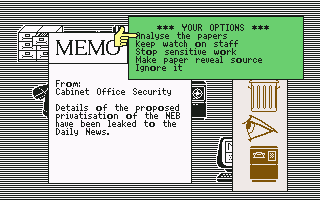
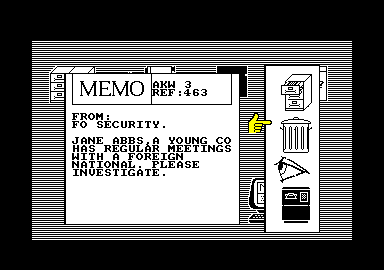
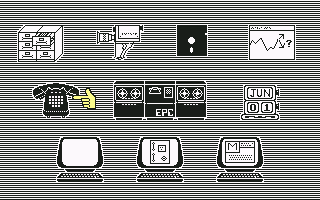
The Fourth Protocol’s gameplay focuses squarely on investigation, turning you into John Preston, head of the CI(A), as you uncover a Soviet plot codenamed AURORA. Rather than action sequences or real-time combat, the game relies on a detailed icon-based interface that you navigate with the keyboard. You’ll sort through Top Secret folders, set wiretaps, monitor conversations and interrogate suspects to piece together tantalizing fragments of intelligence. Each arrest, wiretap or document you find brings you one step closer to foiling the conspiracy.
(HEY YOU!! We hope you enjoy! We try not to run ads. So basically, this is a very expensive hobby running this site. Please consider joining us for updates, forums, and more. Network w/ us to make some cash or friends while retro gaming, and you can win some free retro games for posting. Okay, carry on 👍)
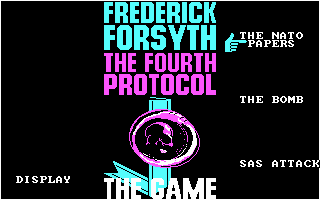
The structure is divided into three distinct phases—The NATO Documents, The Bomb and The SAS Assault—each requiring you to obtain a secret code before proceeding. This progression system creates a natural sense of momentum and accomplishment as you move from gathering raw intelligence in phase one to planning and executing a high-stakes assault in phase three. You’ll often find yourself flipping between dossiers, shifting resources to remote agents, and making judgment calls that directly influence how quickly you can unlock the next stage.
While the interface occasionally feels cumbersome—icons aren’t mouse-clickable, forcing you to cycle through them with hotkeys—it rewards methodical players who appreciate cerebral challenges. There’s no hand-holding; missed clues mean retracing steps or consulting additional documents. For those who relish slow-burn detective work and don’t mind trading flashy action for pure espionage, The Fourth Protocol offers a uniquely immersive puzzle experience that remains faithful to its Cold War roots.
Graphics
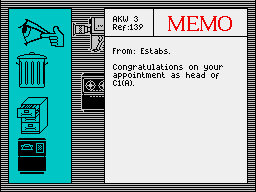
The Fourth Protocol deploys minimalist, icon-based graphics that serve purely functional roles. Each icon represents a tool or data source—bugging device, dossier, tape recorder—rendered in simple monochrome shapes. While these visuals lack detail by modern standards, they clearly convey each piece of equipment or information node and reinforce the game’s cerebral atmosphere.
Given the game’s 1984 origin, it wisely eschews ambitious pixel art in favor of a streamlined presentation that keeps the player’s focus on text and deduction. There are no animated cutscenes or richly rendered scenes; instead, ambient ASCII-style visuals accompany your text windows. This sparse aesthetic may feel austere, but it effectively places you behind Preston’s desk, surrounded by classified files and half-heard wiretaps.
Icon responsiveness and clarity can be a mixed bag. The non-clickable interface slows navigation, and beginners may need time to memorize hotkeys. Yet once familiar, the graphics become invisible facilitators, letting you zero in on reading transcripts, analyzing intelligence, and making strategic decisions. In an era before digital cinematics, The Fourth Protocol’s visuals underscore the tension of covert surveillance and strategic maneuvering.
Story
Adapted directly from Frederick Forsyth’s bestselling Cold War thriller, The Fourth Protocol plunges you into a credible world of espionage and geopolitical brinkmanship. You step into the shoes of John Preston as he unwinds a plot by extremist Soviet officers to reverse Mikhail Gorbachev’s reforms. The narrative faithfully captures the novel’s cat-and-mouse tension: each memo you examine or suspect you question brings you closer to a conspiracy that could spark global catastrophe.
Plot twists and new developments are conveyed entirely through text, with terse on-screen bulletins and dossier updates creating a strong sense of unfolding drama. There’s no voice acting or cinematic flair—just pure, unadorned exposition. For fans of Forsyth’s precise prose, this stripped-back approach allows his intricate plotting and dry humor to shine through, while newcomers get a masterclass in lean, purposeful thriller storytelling.
Despite its linear progression, the story feels dynamic thanks to timed events and random elements—wiretaps may yield different snippets, and suspects can behave unpredictably under questioning. This variability adds replay value and sustains suspense even on subsequent playthroughs. If you’re drawn to political intrigue and enjoy piecing together clues much like a spy novelist, The Fourth Protocol delivers a narrative experience that remains compelling over thirty years later.
Overall Experience
The Fourth Protocol stands out as a niche treasure for aficionados of interactive fiction and Cold War espionage. Its deliberate pacing favors strategy and critical thinking over reflexes, making it a rare breed of “thinking man’s game.” If you approach it expecting high-octane action, you may be disappointed—but for those who savor methodical investigation and narrative depth, it offers an engrossing challenge.
Its retro interface and minimalist presentation inevitably feel dated, but this austerity reinforces the game’s authentic spycraft vibe. You are not playing for graphical spectacle; you are playing to feel the weight of each intercepted phone call and to experience the rush of a coded breakthrough. And while modern gamers may balk at the keyboard-driven icon navigation, veteran players who appreciate bygone design will find charm in its unforgiving logic.
Ultimately, The Fourth Protocol is less a relic and more a time capsule—a distilled simulation of Cold War intelligence work. It’s best suited to those who value narrative fidelity, puzzle-solving depth and strategic resource management. If you yearn for a game that emphasizes the mental rigors of espionage over spectacle, stepping into John Preston’s shoes remains as engaging today as it was in 1984.


Reviews
There are no reviews yet.