 Retro Replay Retro Replay gaming reviews, news, emulation, geek stuff and more!


Retro Replay Review
Gameplay
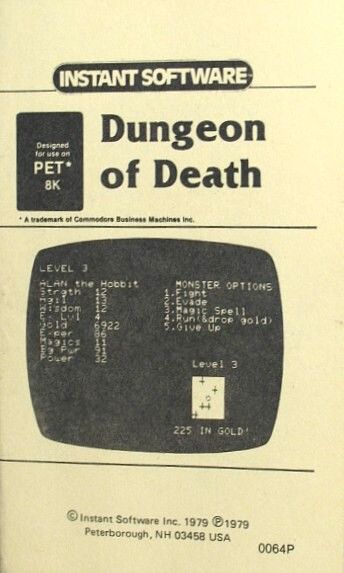
Dungeon of Death throws you into an early home-computer adaptation of the legendary PLATO mainframe game DND. Right from the start, you choose your character class and dive into a procedurally generated dungeon littered with traps, secret doors, and hordes of monsters. The controls are simple—move with the arrow keys, attack or interact with a single command key—yet they deliver a surprisingly deep experience given the game’s age.
(HEY YOU!! We hope you enjoy! We try not to run ads. So basically, this is a very expensive hobby running this site. Please consider joining us for updates, forums, and more. Network w/ us to make some cash or friends while retro gaming, and you can win some free retro games for posting. Okay, carry on 👍)
Combat is turn-based but unforgiving: one wrong move can send your hero back to the start, or worse, to a quick game over. As you explore, you’ll manage hit points, torches, and a modest inventory of weapons and potions. Resource management remains tense throughout, especially since save points are few and far between. This tension, while sometimes punishing, heightens the sense of achievement when you finally clear a level or defeat a powerful foe.
Dungeon layout feels both handcrafted and random: each playthrough yields new room arrangements, secret alcoves, and ambush points. You’ll learn to skim the walls with a torch outstretched, listening for the flicker that hints at a hidden passage. Puzzle elements—like pressure plates or riddle-locked doors—add variety, forcing you to experiment and pay attention to scant clues scattered in the dungeon’s depths.
Graphics
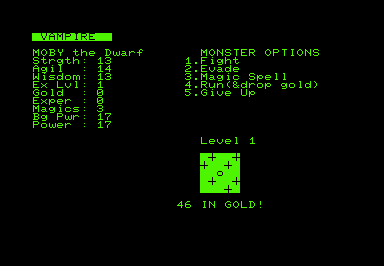
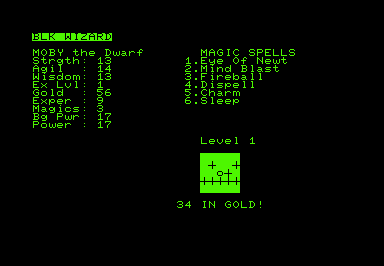
On its original platform, Dungeon of Death sports a blocky, tile-based look that proudly wears its 8-bit heritage. Walls are represented by simple stone patterns, monsters by rudimentary sprites, and the player character by a lone pixelated knight. While primitive by modern standards, the art style conveys atmosphere effectively: dark corridors come alive under the glow of your torch, and each new enemy carries a distinct silhouette that you quickly learn to recognize.
Color is used sparingly but purposefully. Gold shines vividly on the screen when you discover treasure, red splatters momentarily punctuate combat, and the dragon Smaug’s lair is bathed in deep crimson, signaling danger. The limited palette forces your imagination to fill in the gaps, a hallmark of early computer RPGs that many modern players find charm in discovering.
Animation frames are minimal—attacks and movements often flicker between just a couple of states—but this limitation actually speeds up gameplay on original hardware. Even on emulators, you’ll find there’s a certain rhythm to the animations that feels almost meditative as you wind through each dungeon level. In short, the graphics may be nostalgic, but they’re never confusing or obtrusive.
Story
At its core, Dungeon of Death hooks you with a simple yet classic premise: search for the Holy Grail, rumored to be guarded by the great dragon Smaug. While the name “Smaug” might raise eyebrows—yes, it borrows Tolkien’s iconic dragon moniker—the game never takes itself too seriously, balancing mythic stakes with tongue-in-cheek references that early computer enthusiasts would have appreciated.
The narrative unfolds quietly through short text prompts and cryptic inscriptions on dungeon walls. There’s no deep exposition or branching dialogue trees; instead, you absorb the lore by surviving encounters and piecing together clues. This minimalist approach lets the mystery of the Grail and the menace of Smaug’s presence grow organically as you delve deeper.
Despite the sparse storytelling mechanics, memorable moments abound. Discovering a hidden shrine illuminated by candles, stumbling upon a treasure chest that rattles ominously before bursting open, or hearing that first roar echo through the caverns—all of it weaves a tapestry of tension and wonder that keeps you invested until the final confrontation.
Overall Experience
Dungeon of Death stands as a landmark in home-computer RPG history, offering a raw but rewarding dungeon-crawling experience. Its blend of exploration, resource management, and tactical combat feels surprisingly modern at times, even if the interface and visuals clearly belong to a bygone era. For retro gamers and RPG historians, it’s a fascinating time capsule of design ideas that would go on to shape the genre.
That said, new players should be prepared for its steep difficulty curve and lack of hand-holding. There’s no quest log, no minimap, and no quest markers—only your wits and your torch to guide you. But if you relish the sense of discovery that comes from mapping out rooms by hand, deciphering sparse clues, and celebrating every small victory, Dungeon of Death will reward your perseverance.
In the end, the real treasure isn’t just the Grail, but the joy of uncovering one of the earliest Dungeons & Dragons–style adventures on a home computer. Whether you’re revisiting an old favorite or experiencing it for the first time via emulator, Dungeon of Death remains an engrossing challenge that highlights both the ingenuity and limitations of its era.



Reviews
There are no reviews yet.