 Retro Replay Retro Replay gaming reviews, news, emulation, geek stuff and more!




Retro Replay Review
Gameplay
Idol Project places you in the shoes of Takashi, a newly hired agent at the talent agency Mobius. From the very first day, you’re tasked with scouting raw talent, nurturing aspiring singers, and guiding them through grueling training regimens. The game strikes a careful balance between simulation and RPG, offering a detailed calendar system where every decision—whether to hold a vocal lesson, arrange a photoshoot, or schedule a promotional event—impacts your idol’s growth. Time management is crucial: you must allocate Takashi’s Power carefully to keep both your client’s skills and your own stamina in check.
(HEY YOU!! We hope you enjoy! We try not to run ads. So basically, this is a very expensive hobby running this site. Please consider joining us for updates, forums, and more. Network w/ us to make some cash or friends while retro gaming, and you can win some free retro games for posting. Okay, carry on 👍)
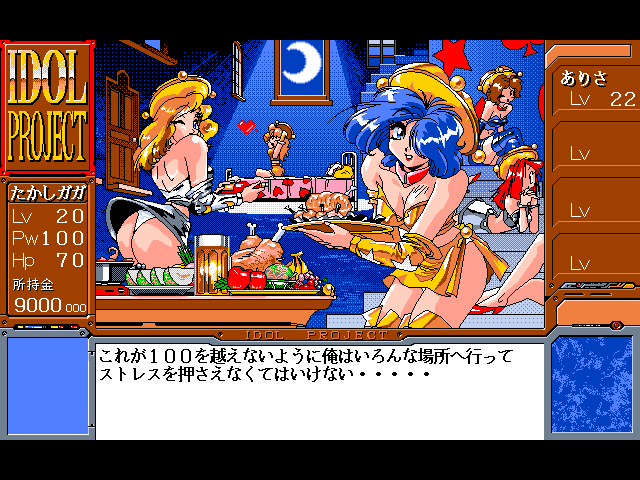
As idols perform on stage, they earn experience points which translate into level ups, unlocking new moves, costumes, and performance venues. At the same time, Takashi his Power (stamina) and HP (stress) must be monitored closely. Power depletes with each activity—from rehearsals to travel—forcing you to plan downtime, meals, or rest. Meanwhile, unchecked stress (HP) can lead to burnout, requiring “release” activities that range from a soothing spa day to more risqué outings, injecting an unexpected layer of moral choice into what might otherwise be a straightforward management sim.
The RPG elements become more prominent as your idols ascend the charts. Stat customization allows you to focus on vocal prowess, dance skills, or even public charisma. Mini-games pepper the experience, testing your rhythm skills during live performances or your negotiation tactics when securing sponsorships. Blending these systems keeps gameplay dynamic, though new players may find the learning curve steep at first. Once you get into a rhythm, however, the satisfaction of watching a fresh-faced trainee evolve into a pop superstar is immensely rewarding.
Graphics
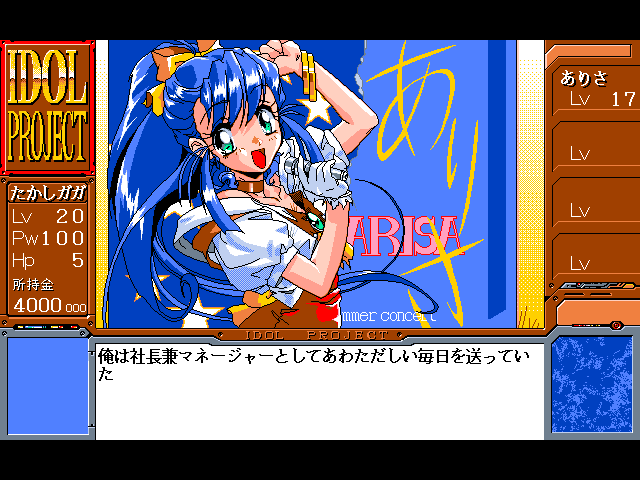
Graphically, Idol Project embraces a vibrant anime-inspired aesthetic. The character portraits boast clean linework, expressive faces, and a laundry list of costume options that capture the sparkle of J-pop culture. During live shows, 3D models of your idols take center stage against colorful, flashing backdrops, and while the animations aren’t hyper-realistic, they convey energy and movement with surprising fluidity.
Between performances, the UI leans toward a more utilitarian style: detailed menus track stats, schedules, and inventory. While some players may find the abundance of data a bit overwhelming at first glance, the interface is logically organized, with tooltips that explain each parameter. Pop-up event windows are framed with character sketches and evocative artwork, emphasizing the narrative beats that follow your decisions.
Backgrounds—from bustling city streets where you scout for talent to cozy recording studios—are richly detailed watercolor illustrations that set the mood without distracting from the main action. Cutscenes are occasionally presented in still-image panels reminiscent of a visual novel, punctuated by carefully timed sound effects and voice lines that elevate key story moments. Overall, the graphics strike a pleasing balance between style and function, drawing you into Takashi’s world without bogging you down in technical frills.
Story
At its heart, Idol Project is a character-driven tale about ambition, friendship, and the price of fame. You follow Takashi’s journey from eager rookie to seasoned manager, all the while forging bonds with each recruit. Dialogue choices influence relationships, unlocking side stories that explore your idols’ hopes, fears, and backgrounds. This personal layer keeps the gameplay from feeling like mere number-crunching.
The narrative doesn’t shy away from the darker side of show business. As Takashi’s HP meter tips into the red, the game forces you to confront how your protagonist copes with work stress, providing a glimpse into the emotional toll of the industry. These sequences are handled matter-of-factly, offering a mature perspective that sets Idol Project apart from lighter, more sanitized management sims.
While the main story arc centers on climbing the charts and winning industry awards, plenty of side events flesh out the world. You’ll attend fan meet-and-greets, negotiate with studio executives, and even face rival agencies looking to poach your talents. Though some plot threads feel a bit episodic, the overall progression keeps you invested in your idols’ rise to stardom—and in Takashi’s own personal growth.
Overall Experience
Idol Project delivers a rich blend of simulation, RPG progression, and narrative depth. Its multifaceted gameplay loop—scout, train, perform, and recover—offers a steady stream of goals and rewards, making it easy to lose track of time. Managing Takashi’s dual meters of Power and HP adds strategic tension, requiring you to choose wisely between pushing for another rehearsal or giving everyone a deserved break.
The game’s mature themes and occasional adult content may not be for everyone, but they reinforce the realism of your managerial role. If you appreciate character-centric storytelling and don’t mind adult-oriented scenes handled tactfully, you’ll find plenty to enjoy. The anime-style presentation and catchy J-pop tracks further immerse you in the idol-trainer fantasy.
While there’s a bit of a grind as your idols climb the ladder, the satisfaction of staging a sold-out concert or seeing your stars trend on social media is unparalleled. For fans of management sims, RPGs, or anime-infused storytelling, Idol Project represents a compelling package that challenges you both strategically and emotionally—ensuring that every victory (and every well-timed stress break) feels earned.



Reviews
There are no reviews yet.