 Retro Replay Retro Replay gaming reviews, news, emulation, geek stuff and more!

Retro Replay Review
Gameplay
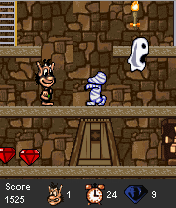
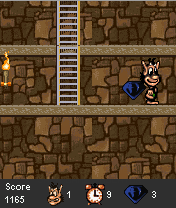
Hugo: Black Diamond Fever offers a fast-paced platforming challenge that will appeal to fans of classic arcade-style games. You guide Hugo through a series of compact, multi-tiered levels reminiscent of early 2D platformers, each filled with ladders, moving platforms, and hidden alcoves. The core objective is to collect all the red diamonds scattered around the stage before you can focus on eliminating enemies for the coveted black diamonds.
(HEY YOU!! We hope you enjoy! We try not to run ads. So basically, this is a very expensive hobby running this site. Please consider joining us for updates, forums, and more. Network w/ us to make some cash or friends while retro gaming, and you can win some free retro games for posting. Okay, carry on 👍)
The combat mechanics are built around Hugo’s trusty whip: the first strike stuns an enemy, and the second finishes them off. Timing and positioning are crucial, since dispatching foes too early yields only coins or power-ups rather than black diamonds. This layer of strategy keeps you constantly weighing risk versus reward as you maneuver around ghosts, alligators, mummies, and other hazards.
Adding tension to each mission is the strict time limit imposed on you. Should the clock run down, every monster on the level turns bright red and gains a significant speed boost, transforming even routine pickups into nail-biting escapes. It’s a clever twist that maintains a sense of urgency and ensures that no two playthroughs feel entirely predictable.
Beyond the mandatory diamond-collecting and enemy-stunning, levels occasionally introduce new platform types or environmental traps—collapsing floors, conveyor belts, and teleporter doors that respawn foes in unexpected corners. These variations keep the formula fresh as you progress, steadily increasing in complexity without ever feeling unfair.
Graphics
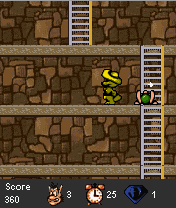
The visual presentation in Hugo: Black Diamond Fever strikes a nostalgic chord, with brightly colored sprites and evocative backgrounds that pay homage to 16-bit platformers. Each level has a distinct theme—cryptic tombs, dank sewer pipes, haunted mansions—craftily rendered in a palette that pops on modern screens without feeling oversaturated.
Character animations are smooth and expressive. Hugo’s whip-lashing motion is satisfyingly crisp, and enemy movements—whether the floaty glide of a ghost or the lumbering shuffle of a mummy—are animated with enough personality to keep you smiling even as you dodge danger. Subtle idle animations, like Hugo tapping his foot or dust motes drifting in the air, add a layer of polish often missing in budget platformers.
Special effects, such as the brief flash when an enemy is stunned or the swirl of particles when a black diamond drops, provide instant feedback on your actions. Although the game doesn’t push the boundaries of modern hardware, its art direction is consistently clear and readable, ensuring you always know what’s safe ground, what’s a threat, and where the next ladder awaits.
Menus and HUD elements are cleanly designed, with easily readable timers and score indicators that don’t intrude on the action. Gear icons for power-ups and coins collected sit unobtrusively at the screen edges, allowing full focus on the platforming without cluttering your view.
Story
While Hugo: Black Diamond Fever is firmly centered on its arcade-style gameplay, it weaves in a simple but endearing narrative: you’re guiding Hugo, the beloved TV troll hero, on a mission to rescue his friend Kiku from the clutches of vile monsters. The premise is lighthearted yet motivating, giving context to the relentless diamond chase.
Story beats are delivered through brief in-game messages and charming static illustrations between worlds. These snapshots depict Hugo’s determination and Kiku’s predicament, reinforcing why each level feels important beyond mere point accumulation. It’s not a sprawling epic, but the minimal plot does enough to keep you invested in reaching the next rescue opportunity.
Character designs for both allies and adversaries carry a cartoonish flair. Enemies aren’t gruesome; instead, they’re designed with a playful edge that suits the game’s family-friendly tone. Watching Hugo confront a bouncing ghost or a wide-mouthed alligator feels more whimsical than terrifying.
Further narrative depth could have been squeezed in via more elaborate cutscenes, but the decision to focus on tight gameplay over lengthy exposition is understandable. The result is a storyline that never overstays its welcome, offering just enough flavor to drive you onward without interrupting the action.
Overall Experience
Hugo: Black Diamond Fever captures the essence of classic platforming with a modern twist on enemy interactions and time-based challenges. Each level presents a bite-sized puzzle: gather red diamonds, avoid or stun foes, then harvest your black diamonds before the clock hits zero. The interplay between exploration, timing, and combat keeps the experience engaging from start to finish.
The pacing is consistently brisk, with new hazards and level designs introduced at a steady clip. Difficulty ramps up in a fair manner, rewarding players who learn enemy patterns and master quick whip attacks. The high-tension finale of every stage—when enemies go into overdrive if time expires—ensures that no playthrough feels routine.
Although the storyline is minimal, it provides enough motivation to press on, and the game’s bright, animated visuals and catchy background tunes add to the overall charm. Performance is solid across various platforms, and the intuitive controls require little explanation, making it accessible for both seasoned gamers and newcomers alike.
For those seeking a retro-inspired platformer with bite-sized levels, strategic combat, and a dash of cartoon whimsy, Hugo: Black Diamond Fever is a thoroughly enjoyable ride. Its blend of collectible-driven objectives and time-based threats creates a compelling loop that’s easy to pick up, hard to put down, and satisfying to master.



Reviews
There are no reviews yet.