 Retro Replay Retro Replay gaming reviews, news, emulation, geek stuff and more!


Retro Replay Review
Gameplay
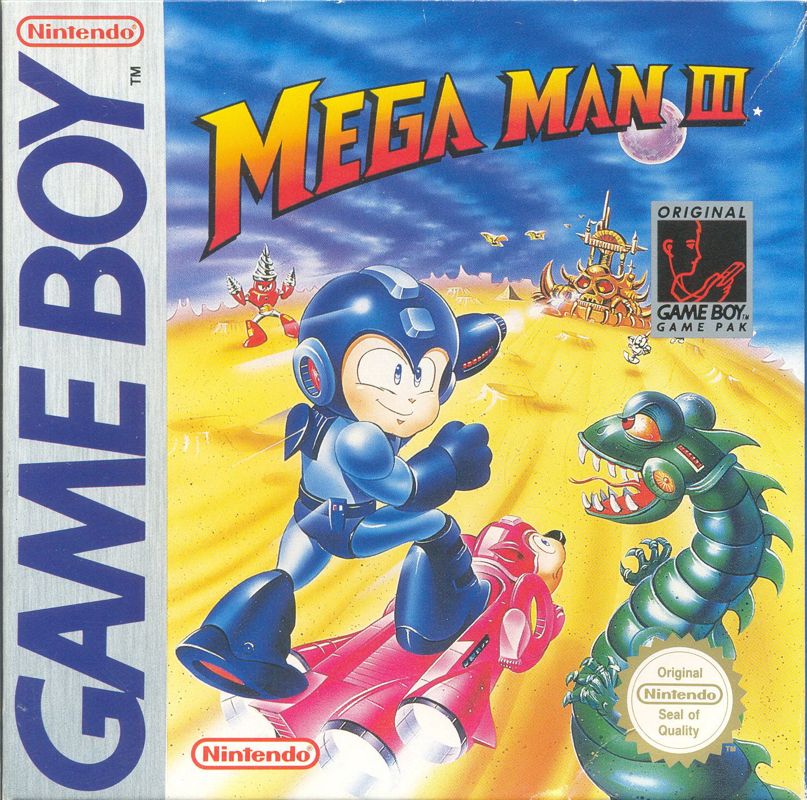
Mega Man III retains the pick-your-stage structure that defines the series, tasking players with running, jumping, and blasting through four initial boss worlds before tackling an intermission level and a second set of four stages. The introduction of the chargeable Mega Buster—borrowed from Mega Man 4 on the NES—adds a fresh layer of depth to combat. Holding down the B Button lets you unleash a more powerful shot, which is key for dealing with tougher enemies and bosses.
(HEY YOU!! We hope you enjoy! We try not to run ads. So basically, this is a very expensive hobby running this site. Please consider joining us for updates, forums, and more. Network w/ us to make some cash or friends while retro gaming, and you can win some free retro games for posting. Okay, carry on 👍)
Each boss stage ends with a unique Robot Master whose weapon you can appropriate for later use. You’ll face Snake Man, Gemini Man, Shadow Man, and Spark Man from Mega Man 3, then go on to challenge Dust Man, Skull Man, Dive Man, and Drill Man from Mega Man 4. In between these two halves, an intermission level serves as a gauntlet filled with environmental hazards and miniboss encounters—serving as both a palate cleanser and a skill checkpoint before Wily’s forces ramp up the difficulty.
Controls remain tight and responsive, with Mega Man’s jump arc and slide maneuver feeling especially precise on the Game Boy hardware. The charge shot mechanic is simple to execute but carries strategic weight: deciding when to use rapid small shots versus waiting for a charged blast can make the difference between success and taking a Game Over. Additionally, the inclusion of the exclusive boss Punk—who attacks with spinning screw-like projectiles—keeps veteran players on their toes and spices up the familiar formula.
Graphics
On the original Game Boy’s monochrome screen, graphical clarity is paramount, and Mega Man III delivers with sharply defined sprites and readable backgrounds. The oil rig and magma-core themes are conveyed through simple but effective tile work, ensuring that hazards like molten pits and industrial machinery stand out clearly against the playfield.
Mega Man’s animations—running, sliding, and charging—feel smooth and fluid, lending weight to each movement despite the system’s technical limitations. Buster charge effects are visually distinct, with a sprite flash that telegraphs power buildup. Boss sprites, particularly the detailed designs of Gemini Man’s mirror shield and Drill Man’s rotating drill arms, are impressively rendered on the small LCD.
Stage variety helps stave off visual fatigue: from the oppressive metal girders of Drill Man’s domain to the swirling gears of Dust Man’s workshop, each environment has its own look and hazard set. While the palette is restricted to four grayscales, careful use of contrast keeps foreground and background elements separate, making platforming challenges fair and approachable.
Story
Dr. Wily is at it again! This time, he’s established an oil rig in the middle of the ocean and is drilling deep down to the earth’s magma core. His sinister objective: harness the incredible geothermal power to fuel yet another diabolical robot creation. With planetary safety on the line, it’s up to the blue bomber, Mega Man, to infiltrate Wily’s latest base of operations and shut down the scheme at its source.
The narrative is delivered via brief text sequences before and after boss encounters, offering little in the way of cinematic flair but enough context to justify the action. Each Robot Master brings a dash of personality—Skull Man’s macabre theatrics or Spark Man’s shock-and-awe showmanship—though dialogue remains sparse to keep the focus squarely on gameplay.
Between the first quartet of bosses and the second half of the game sits an intermission level that ties the two acts together, hinting at Wily’s growing desperation and setting the stage for the final fortress. While not a story-heavy adventure, Mega Man III’s narrative is succinct and serviceable, effectively pacing your journey toward the ultimate confrontation with Dr. Wily.
Overall Experience
Mega Man III for the Game Boy is a superb translation of the series’ core platform-shooting formula to a handheld format, bolstered by the introduction of the chargeable Mega Buster and one of the strongest boss lineups in the portable lineup. The balance of stage selection, weapon-stealing mechanics, and boss weaknesses ensures that the experience remains engaging from start to finish.
Fans of the first two Game Boy episodes will appreciate the subtle refinements, particularly the sense of progression that comes with mastering charge shots and memorizing each boss’s attack patterns. The eight-boss structure, plus an intermission gauntlet, delivers solid playtime, and the option to tackle stages in any order grants a degree of freedom uncommon on the original Game Boy.
Whether you’re a long-time Mega Man enthusiast or a newcomer seeking a challenging action platformer on the go, Mega Man III stands out as one of the system’s must-play titles. Its tight controls, cleverly designed levels, and the thrill of uncovering all eight boss weapons create a well-rounded package that remains enjoyable decades after its initial release.


Reviews
There are no reviews yet.