 Retro Replay Retro Replay gaming reviews, news, emulation, geek stuff and more!

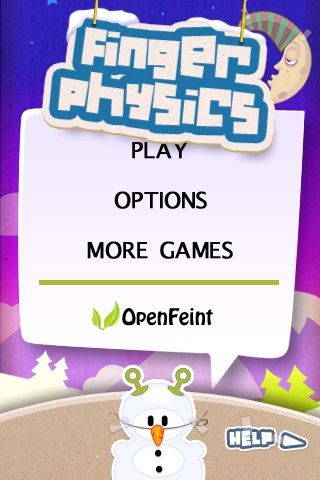
Retro Replay Review
Gameplay
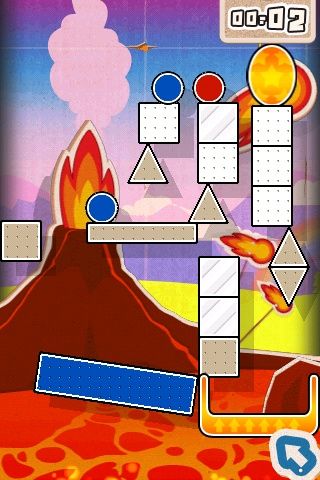
Finger Physics offers an impressive array of over 100 levels that challenge your problem-solving skills and your understanding of basic physics. Right from the start, players encounter Egg Mode, where the goal is deceptively simple: tap away the right glass panels so that a fragile egg lands safely in its basket. Despite its apparent simplicity, this mode quickly reveals layered complexity as you learn how gravity, momentum, and block structure interact.
(HEY YOU!! We hope you enjoy! We try not to run ads. So basically, this is a very expensive hobby running this site. Please consider joining us for updates, forums, and more. Network w/ us to make some cash or friends while retro gaming, and you can win some free retro games for posting. Okay, carry on 👍)
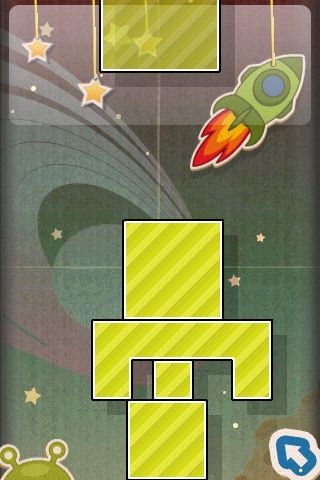
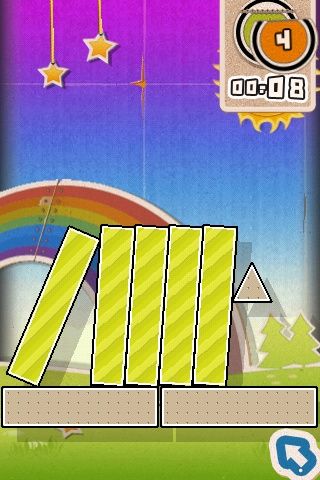
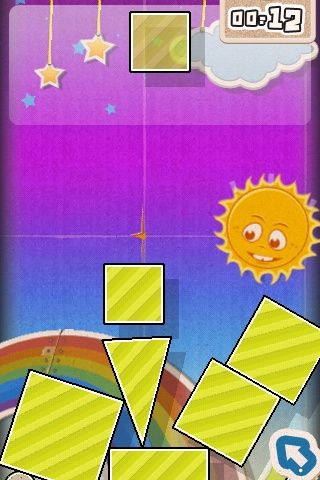
As you progress to Lawn, Lunar, Underwater, and Free modes, the game keeps its mechanics fresh by tweaking environmental factors and success criteria. In Lawn Mode, you must build a stable structure using all available blocks, and in Lunar Mode, that same structure must not only be stable but reach a marked height to earn medals. Underwater Mode flips expectations by giving blocks buoyancy characteristics, forcing you to account for upward or downward floatation. Finally, Free Mode tests both your speed and architectural creativity as you race the clock to deploy as many blocks as possible into a self-supporting tower.
The introduction of special magnetic and explosive blocks elevates the gameplay further. Blue and red magnetic blocks either cling together or push apart, requiring careful planning if you want a balanced build. Orange explosive blocks add another layer of risk and reward—place them incorrectly, and your tower collapses in a fiery bang. These mechanics ensure each level feels distinct, always keeping you on your toes and fostering that “just one more try” mentality.
One of the most appealing aspects of Finger Physics is its generous progression curve. Early levels act as a tutorial, gently guiding you through fundamentals. Intermediate levels start to combine multiple mechanics—magnets, explosions, buoyancy—in innovative ways, compelling you to revisit earlier strategies. Later stages demand a true mastery of timing, block placement, and quick thinking, ensuring that both casual players and puzzle aficionados find a satisfying challenge.
The control scheme is intuitive and responsive: a simple tap or drag is all it takes to place or remove blocks. This low barrier to entry makes it easy for players of all ages to dive in, while the depth of the physics engine keeps advanced players engaged. The immediate feedback—blocks shattering, eggs rolling, magnets snapping—is both satisfying and instructive, reinforcing how your actions translate to in-game consequences.
Graphics
Finger Physics features crisp, minimalist visuals that put the spotlight squarely on your creations and the physics at play. Each block type is color-coded and textured just enough to convey its unique properties—orange blocks look primed to explode, while translucent glass barriers subtly hint at fragility. The clarity of design ensures you never misidentify a block, which is critical when a misplaced piece could ruin an entire level.
The backgrounds are tastefully subdued, using soft gradients and gentle animations (like drifting clouds or slowly spinning planets) to complement the various modes without overstimulating the eye. This restraint in art direction allows players to focus on the puzzle itself, rather than getting distracted by overly elaborate scenery. Transitions between day, lunar, and underwater backdrops are smooth and reinforce the theme of each mode without feeling gimmicky.
Animation plays a pivotal role in the game’s charm. Watch as your lawn-mode structures wobble precariously before settling, marvel at the graceful arc of an egg as it hurtles toward its basket, or gasp as a poorly placed explosive block detonates in a satisfying chain reaction. Particle effects are modest but well-timed, enhancing immersion without draining device performance. Finger Physics runs smoothly on a wide range of hardware, ensuring that these graphical flourishes remain consistent even on older smartphones or tablets.
Moreover, the user interface is elegantly simple. Level menus are easy to navigate, progress markers clearly indicate your achievements (bronze, silver, gold), and you can instantly replay or skip levels with a single tap. The absence of intrusive ads or pop-ups further underscores the developer’s commitment to an uninterrupted experience.
Overall, Finger Physics strikes a perfect balance: it’s visually clean enough to keep attention where it belongs—on puzzle-solving—yet polished enough that each element feels thoughtfully crafted. The graphics support the core gameplay loop without ever overshadowing it, making each level both a visual and intellectual delight.
Story
While Finger Physics is primarily a puzzle game without a conventional narrative, it weaves a subtle thematic thread through its various modes. The progression from grassy lawns to the depths of water and the heights of space creates an implicit journey: from a familiar backyard environment, through the challenging terrains of underwater physics, and finally to the low-gravity expanse of the moon. This sense of exploration adds a layer of context to otherwise standalone puzzles.
The “story” here is less about characters or dialogue and more about your personal arc of mastery. You begin as a casual tapper and evolve into a structural engineer of sorts, capable of anticipating how different forces combine in a virtual sandbox. In that way, the game fosters a narrative of self-improvement, with each medal earned symbolizing your increasing understanding of physics and spatial reasoning.
Although there are no voiced characters or cutscenes, the game occasionally surprises you with playful text prompts and subtle visual cues that guide or congratulate you. These bite-sized messages offer just enough personality to keep you engaged without turning the game into a story-driven experience. The focus remains squarely on creative problem-solving, letting players craft their own sense of achievement.
For players seeking a deeper lore or character-driven plot, Finger Physics may feel sparse. However, for fans of pure puzzles and physics experiments, this minimalistic approach is a feature, not a flaw. The lack of a rigid storyline frees you to interpret each level as a sandbox for invention, rather than a chapter in a predetermined arc.
Ultimately, the narrative strength of Finger Physics lies in its ability to tell the story of your triumphs and near-misses. Every shattered block and successful build contributes to a personal chronicle of trial, error, and eventual success. It’s a quiet, player-driven narrative that unfolds one satisfying level at a time.
Overall Experience
Finger Physics stands out in the crowded mobile puzzle market by offering a robust mix of accessibility and depth. Its diverse modes and increasing difficulty curve ensure that beginners can learn at their own pace, while veterans can pursue gold medals and perfect builds. The intuitive controls and forgiving checkpoints (instant retries) make it easy to jump right back in after a failed attempt, minimizing frustration.
Replayability is one of the game’s strongest suits. Each level often supports multiple solutions—one player’s minimalist tower might be another’s elaborate magnetic sculpture. Collecting all the medals and finding novel approaches to familiar puzzles can keep you hooked for hours. Add the thrill of discovering how certain blocks interact—explosive combos, magnetic repulsion, buoyant balancing—and you’ve got a game that continually rewards experimentation.
The game’s modest size and efficient performance make it a perfect fit for quick sessions on the go or longer, more focused puzzle marathons at home. Whether you’ve got thirty seconds or thirty minutes, Finger Physics adapts to your schedule, offering bite-sized challenges that still feel substantial. The absence of intrusive monetization—no energy bars to refill, no pay-to-win mechanics—reinforces its status as a premium puzzle experience.
In terms of social features, Finger Physics keeps it simple: you can share your progress or compete for leaderboard spots, but there’s no complex social network to navigate. This streamlined approach ensures the game remains a personal journey rather than a social obligation, allowing you to focus on the puzzles themselves.
Overall, Finger Physics is a masterclass in physics-based puzzle design. It combines clear visuals, responsive controls, and a variety of game modes to deliver a thoroughly engaging experience. If you’re looking for a game that will challenge your mind, reward your creativity, and provide countless “aha!” moments, Finger Physics is an excellent choice.



Reviews
There are no reviews yet.