 Retro Replay Retro Replay gaming reviews, news, emulation, geek stuff and more!
Retro Replay Review
Gameplay
1001 Nights: The Adventures of Sindbad offers a solid hidden-object experience, inviting players to scour intricately detailed scenes for items listed at the bottom of the screen. The core mechanic revolves around clicking on each listed object, rewarding keen observation and patience. For newcomers to the genre, the straightforward list keeps things approachable, while seasoned hidden-object fans will appreciate the subtle challenges as items become more cleverly concealed.
(HEY YOU!! We hope you enjoy! We try not to run ads. So basically, this is a very expensive hobby running this site. Please consider joining us for updates, forums, and more. Network w/ us to make some cash or friends while retro gaming, and you can win some free retro games for posting. Okay, carry on 👍)
What distinguishes this title from standard “find-and-click” adventures are the varied gameplay modes that emerge as you progress. Photo-based challenges replace text lists with small snapshots of target areas, silhouettes demand you visualize each object, and riddle modes test your lateral thinking as you decode poetic clues. These rotations prevent monotony, ensuring that repeat visits to familiar backdrops remain engaging and fresh.
Beyond spotting hidden trinkets, Sindbad’s journey integrates an interactive inventory system. Collected items must be dragged and dropped onto the correct scenery hotspots to solve environmental puzzles—unlocking new routes, repairing mechanisms, or triggering narrative events. This adds a light adventure flavor, blending object hunting with task-driven progression.
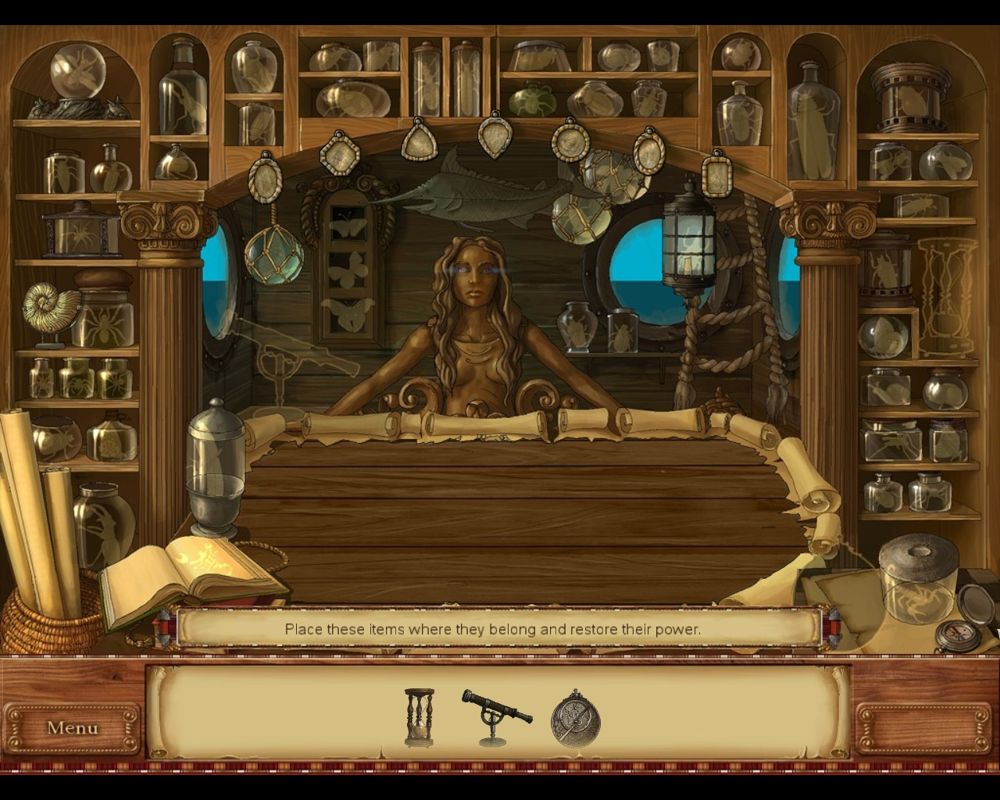
Adding another layer of strategy, players can capture colorful bugs crawling across many scenes. These insects are stored on Chalida’s bridge screen in jars, bolstering the power of Sindbad’s talisman—your in-game hint tool. Although hints recharge slowly, judicious use can steer you through particularly tricky spot-the-object segments or puzzle dead-ends.
Graphics
The visual design of 1001 Nights: The Adventures of Sindbad is steeped in vibrant Middle Eastern aesthetics. Each scene is crafted with warm color palettes, ornate architecture, and detailed props that evoke the feel of an Arabian marketplace or a coastal shipwreck. The artwork often borders on painterly, offering a feast for the eyes as you hunt for hidden items.
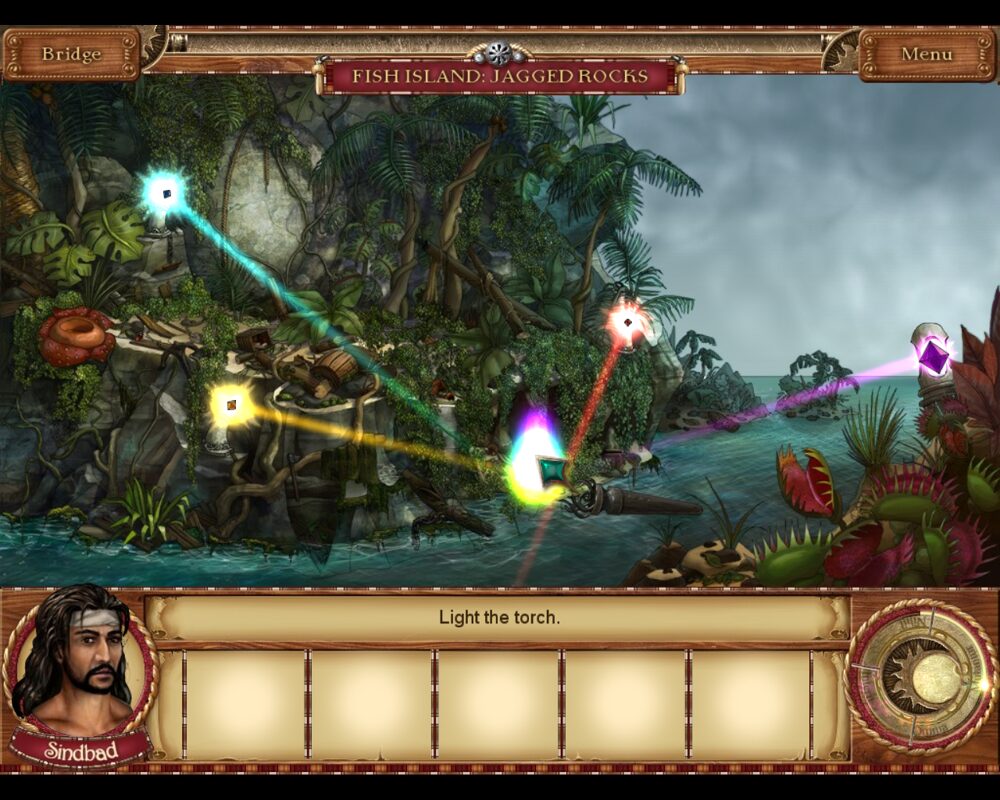
Environments vary from desert oases to royal palaces and the deck of a cursed ship, showcasing a pleasing diversity of locales. While some backgrounds are reused with minor tweaks, subtle weather effects, lighting changes, and rearranged objects maintain enough novelty to prevent glaring repetition. Animations—like flickering torches or gently rolling waves—enhance immersion without drawing focus away from the gameplay.
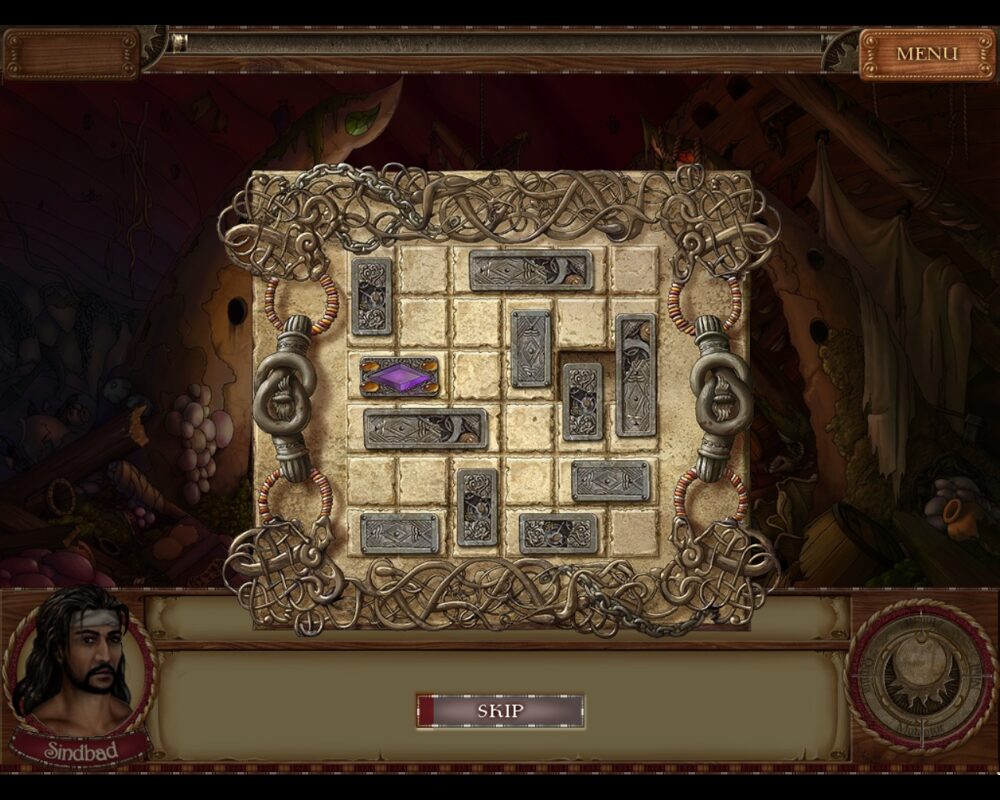
Mini-games also boast distinctive visual touches. The jigsaw puzzles of map fragments feature aged parchment textures, sliding-block lava challenges glow with molten hues, and the pipeline segments nod to classic titles like Pipe Dream with slick, animated lava flows. These side activities retain the same attention to design, ensuring that each diversion feels integrated rather than tacked on.
Story
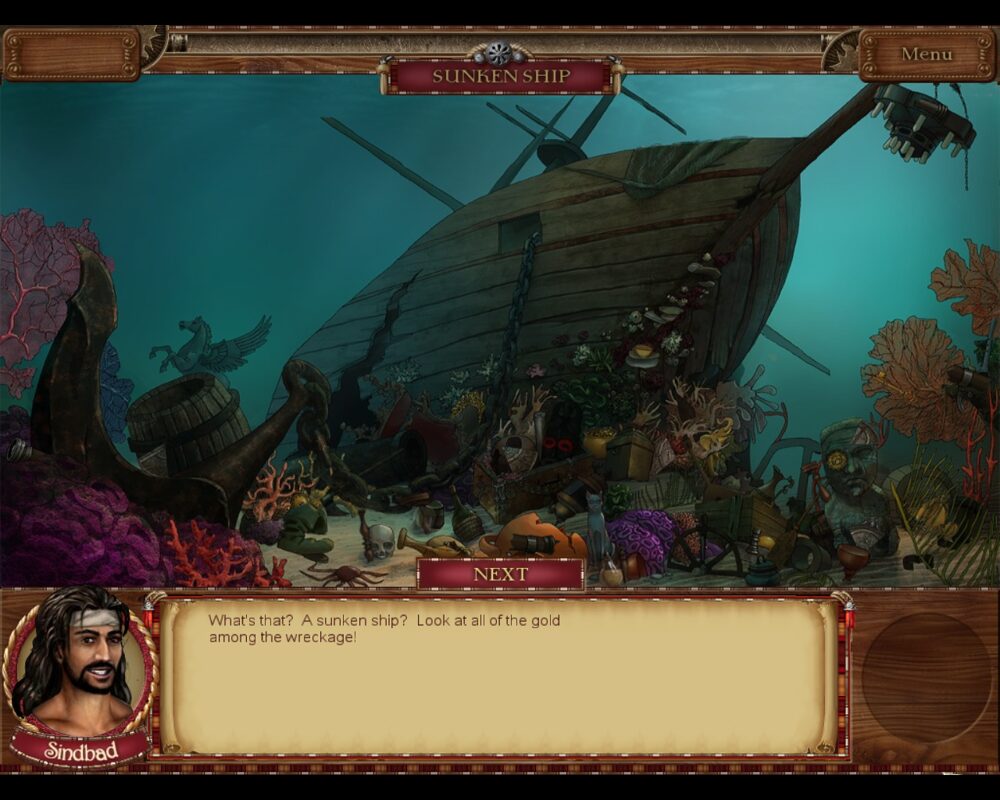
The narrative overhead is rooted in the legendary saga of Sindbad, recast here as a humble fisherman whose life is upended by a miraculous treasure near a sunken ship. After sharing his riches with his village, he incurs the wrath of an evil wizard, leading to a dramatic betrayal and near-death at sea. This opening establishes high stakes and emotional resonance, hooking players from the outset.
Rescued by Princess Chalida—a royal cursed by a sea demon to serve as a wooden figurehead—Sindbad embarks on a globe-trotting quest to recover the scattered jewels of her magical crown. The story is delivered through a mix of text-based dialogue and brief cutscenes, striking a balance between clarity and pacing. While voice acting is minimal or non-existent, the dialogue is concise and driven by a genuine sense of adventure.
Story beats are intertwined with gameplay, as each newly acquired gem unlocks fresh narrative snippets and world details. Although the plot doesn’t delve into deep character development, it effectively motivates each stage’s hidden-object challenges. The overarching tale of loyalty, magic, and retribution resonates well within the hidden-object framework.
Overall Experience
1001 Nights: The Adventures of Sindbad is a well-rounded hidden-object title that blends traditional search mechanics with light puzzle-solving and an engaging Arabian Nights backdrop. The rotating object-finding modes and occasional environmental tasks maintain momentum throughout the estimated 6–8 hour playtime, appealing to both casual gamers and genre enthusiasts.
The hint system, tied to a talisman powered by captured bugs, introduces an element of resource management. Players must decide when to rely on hints and when to trust their own sleuthing skills. Combined with a variety of mini-games, this keeps the challenge curve steady without ever feeling punitive or overwhelming.
While the story remains relatively straightforward, it provides ample motivation to continue exploring new scenes and unlocking hidden jewels. The vibrant art style and culturally rich settings add flavor, even if some backgrounds cycle through multiple times. Overall, this title is an inviting port of call for those who appreciate leisurely puzzle-solving set against a timeless tale of heroism and magic.
In summary, 1001 Nights: The Adventures of Sindbad offers a satisfying blend of hidden-object gameplay, thematic puzzles, and an evocative storyline. Whether you’re drawn by the legendary hero or simply seeking a beautifully crafted puzzle journey, Sindbad’s adventure delivers a charming and varied experience from start to finish.


Reviews
There are no reviews yet.