 Retro Replay Retro Replay gaming reviews, news, emulation, geek stuff and more!
Retro Replay Review
Gameplay
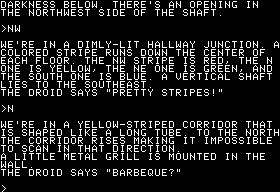
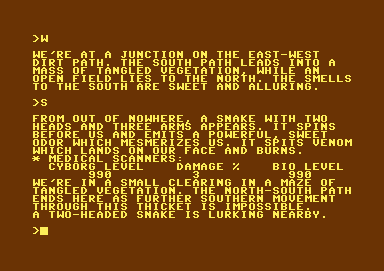
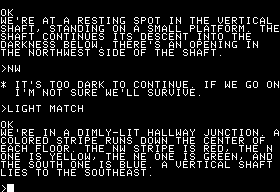
Cyborg delivers a classic text-adventure experience, relying on a robust parser that responds intelligently to typed commands. Players type simple phrases like “search lab” or “activate reactor” to interact with the environment, uncover clues, and solve puzzles. The parser’s design is surprisingly forgiving, understanding a range of synonyms and interpreting intent rather than punishing mis-typed keywords.
(HEY YOU!! We hope you enjoy! We try not to run ads. So basically, this is a very expensive hobby running this site. Please consider joining us for updates, forums, and more. Network w/ us to make some cash or friends while retro gaming, and you can win some free retro games for posting. Okay, carry on 👍)
Character interaction is handled through a streamlined menu system: whenever you encounter another person or entity, you’re presented with a list of predefined questions. This approach keeps conversations focused and purposeful, allowing you to probe for critical information without wading through dozens of irrelevant dialogue options. It also enhances pacing, so the narrative doesn’t stall with overly verbose exchanges.
The core challenge of the game revolves around resource management and strategy. As a human merged with an AI, you must locate and secure an energy source before your life support systems fail. This sense of urgency fuels every decision, whether you’re exploring abandoned corridors, repurposing spare parts, or negotiating with allied characters. Puzzle difficulty scales nicely; early challenges teach you the mechanics, while later obstacles demand creative thinking and careful planning.
Graphics
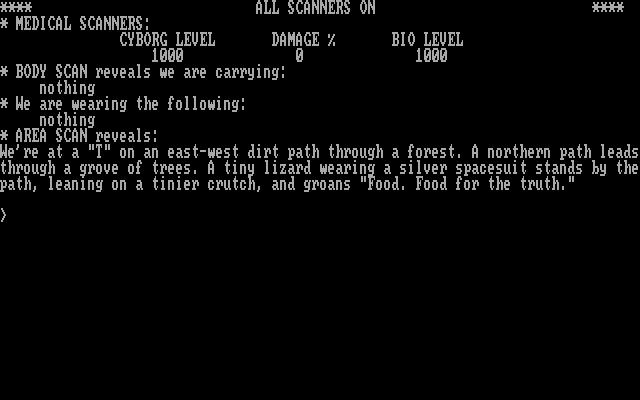
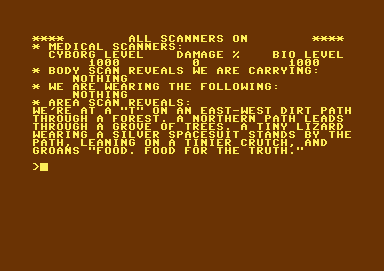
Although Cyborg is fundamentally text-based, it makes impressive use of typography, screen layout, and occasional ASCII art to evoke futuristic environments. The minimalist design keeps distractions to a minimum, focusing your imagination on the story rather than flashy visuals. Descriptive passages are punctuated by small illustrative elements—like a schematic of your integrated AI chip—that add visual flair without breaking immersion.
The user interface is clean and intuitive. Command prompts are clearly separated from narrative text, and important keywords or location names are often highlighted in color. This subtle use of color-coding guides your attention to crucial details and helps track inventory or system status at a glance. The result feels akin to reading a high-tech operating system manual brought to life.
Transitions between scenes employ brief animations of ASCII sequences, such as power-handles flipping or circuit diagrams flowing across the screen. These moments are short but effective, reinforcing the game’s cybernetic theme. While it won’t compete with modern 3D engines, Cyborg’s visual presentation is more than adequate for a text adventure and adds personality to an otherwise word-centric experience.
Story
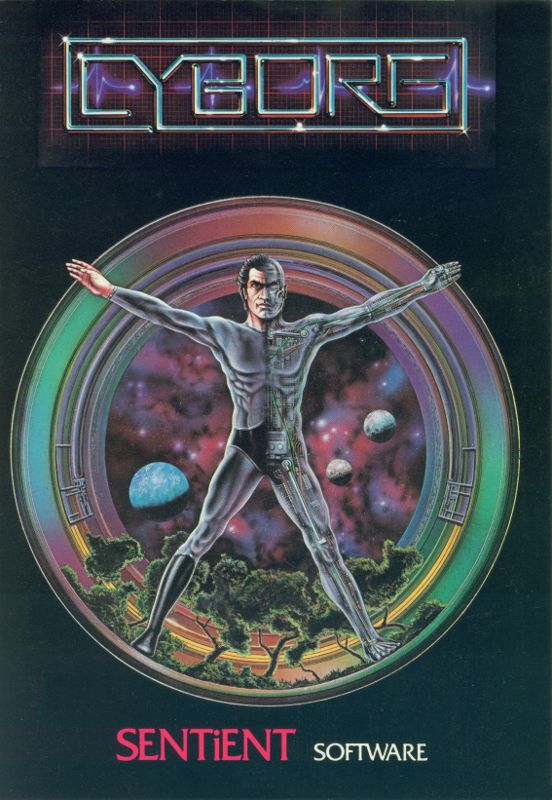
At the heart of Cyborg is a compelling narrative about identity and survival. After a scientific experiment fuses an AI into your neural network, you awaken disoriented and low on power. The AI partner in your skull provides guidance, warnings, and occasional commentary, creating an intimate dynamic that evolves over the course of the game. Are you the master of the simulation, or is the AI quietly steering your every move?
The mission to find an energy source drives the plot forward, but the true intrigue lies in the ethical questions raised. Do you sacrifice your humanity for computational prowess? Can you trust the very machine that now shares your thoughts? Dialogues with other characters—accessed via the predefined question list—reveal layers of corporate intrigue, hidden agendas, and the blurred line between organic life and artificial intelligence.
Story pacing is thoughtfully balanced. Early chapters focus on exploration and exposition, while mid-game revelations upend your understanding of the experiment’s purpose. The finale ties together loose threads, presenting a choice-driven climax that rewards replayability. Multiple endings hinge on how deeply you embraced your AI companion versus retained your human instincts.
Overall Experience
Cyborg succeeds in delivering a tense, thought-provoking text adventure that never feels dated. The blend of parser-based exploration with menu-driven conversations keeps the gameplay fresh, while resource scarcity and time pressure add an undercurrent of suspense. If you enjoy puzzles wrapped in philosophical dilemmas, this game will hold your attention from start to finish.
Despite its low-tech presentation, Cyborg’s atmosphere is immersive. Strategic use of text formatting and occasional visuals create a convincing sci-fi setting. The AI’s dry humor and occasional moralizing lend personality to otherwise stark environments, making every corridor search or system reboot feel significant.
For fans of classic interactive fiction or players seeking a narrative-rich experience, Cyborg stands out as a memorable journey. It challenges you not only to think in logical “if-then” terms but also to weigh the consequences of merging man and machine. In an era of big-budget blockbusters, this title is a refreshing reminder of the power of words and imagination in gaming.



Reviews
There are no reviews yet.