 Retro Replay Retro Replay gaming reviews, news, emulation, geek stuff and more!
Retro Replay Review
Gameplay
Discover the World II puts you in the captain’s chair of a 16th-century sailing vessel, tasking you with crossing vast oceans, trading exotic goods and fending off ruthless pirates. From your home port in Lisbon, Portugal, you chart courses on a world map interface that lets you point and sail to any destination. Along the way, you must manage your crew’s provisions, hunt for fresh food on uncharted islands and negotiate trade deals with foreign ports to ensure both profit and survival.
(HEY YOU!! We hope you enjoy! We try not to run ads. So basically, this is a very expensive hobby running this site. Please consider joining us for updates, forums, and more. Network w/ us to make some cash or friends while retro gaming, and you can win some free retro games for posting. Okay, carry on 👍)
Resource management lies at the heart of the experience. Every day at sea, your sailors consume rations and risk scurvy if fruits and vegetables run low. You can hunt wild game or barter for supplies at native settlements, but miscalculations can leave your crew weakened. The ability to bury treasure or off-load cargo at secret cache sites adds an extra layer of strategy: you’ll plan future voyages around hidden hoards of gold, fine silks or native crafts that fetch high prices back in Lisbon.
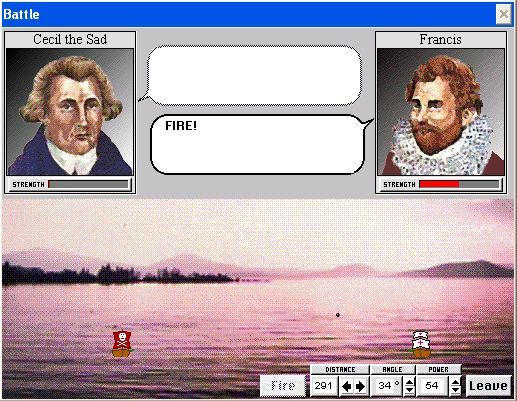
Missions range from routine trade runs to high-stakes naval combat. One moment you’re exchanging spices in Goa, the next you’re racing to intercept an evil pirate’s galleon before it ravages another merchant ship. The game balances educational objectives—learning real navigation techniques and period geography—with moments of genuine tension when sails rip in a storm or a cutthroat privateer hammers your hull. Overall, the pacing rewards careful planning but never lets the journey feel static.
Graphics
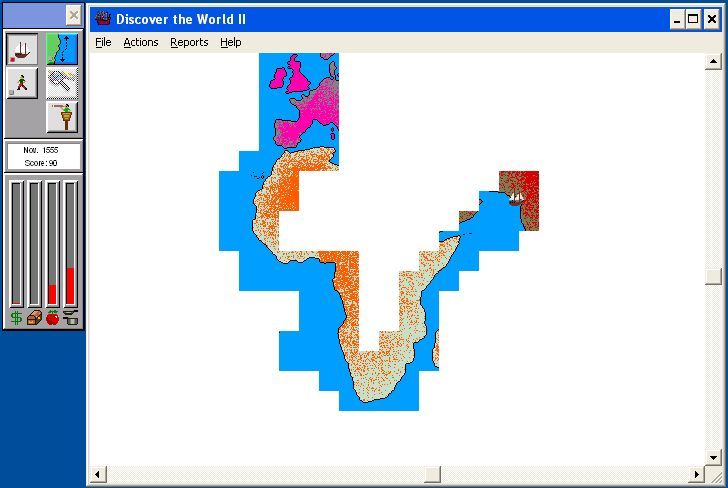
Visually, Discover the World II employs a clean, map-centric aesthetic that prioritizes clarity over flashy effects. The world map is rendered in subtle earth tones, with ports, islands and shipping lanes marked by distinct icons. Zooming in reveals simple but charming pixel art for your schooner or carrack, rival pirate vessels and coastal town skylines, each distinguished by regional architecture and color palettes.
The sea itself features subtle waves and shifting hues of blue, giving a sense of breadth to your voyages. Weather changes—sunny skies turning into rolling storm clouds—are communicated through color gradients and occasional sprite animations of rain or lightning flashes. Even with modest hardware requirements, the title maintains a consistent frame rate, ensuring that long sessions at the helm remain smooth.
User interface elements are straightforward: menus for trade goods, crew status and ship upgrades are laid out in paneled windows with period-style wood trim and parchment backgrounds. Tooltips and icons are large enough for easy reading, making navigation intuitive for younger players or classroom settings. While it doesn’t rival modern 3D simulations, the graphics effectively support both educational goals and immersive play.
Story
The narrative framework of Discover the World II is rooted in the real Age of Exploration, allowing you to encounter historical figures like Sir Francis Drake and follow trade routes that shaped the modern world. Though the story isn’t a linear cut-scene-driven saga, it unfolds organically through mission briefs, ship-to-ship radio logs and port governor requests, weaving an episodic tale of adventure and ambition.
Historical context is delivered via in-game journals and an encyclopedia that unlocks entries as you visit new regions. You’ll learn about navigation instruments, period-accurate cargoes and the geopolitical stakes of colonial expansion. The educational segments feel seamlessly integrated, often prompting you to apply your newfound knowledge—plotting latitude and longitude, timing your departure to avoid monsoon winds or researching profitable trade items.
While the overarching storyline focuses on accumulating wealth and reputation, emergent storytelling arises from your own choices: do you side with local leaders in a territorial dispute? Will you risk a detour to rescue stranded sailors, or push onward to meet a high-reward assignment? These branching decisions ensure that each captain’s log reads like a unique chronicle of discovery and danger.
Overall Experience
Discover the World II excels as both an educational tool and a genuinely engaging maritime simulation. Its balance of strategic depth, historical learning and emergent narratives keeps you invested in the fate of your crew and the success of your voyages. Whether you’re a history buff, a classroom looking for an interactive lesson or a gamer seeking thoughtful pacing, the title delivers ample substance.
The game’s learning curve is steady: early voyages teach basic navigation and resource management, while later missions challenge you with longer routes, harsher weather and more cunning adversaries. Replayability is high, thanks to non-linear mission selection, hidden treasure caches and variable trade prices that encourage experimenting with different itineraries.
Ultimately, Discover the World II stands out in the edutainment genre by offering a faithfully rendered slice of the Age of Exploration that never skims on challenge or detail. It may lack the graphical bells and whistles of modern blockbusters, but its rich strategic layers and educational value make it a rewarding purchase for anyone eager to sail uncharted seas.


Reviews
There are no reviews yet.