 Retro Replay Retro Replay gaming reviews, news, emulation, geek stuff and more!
Retro Replay Review
Gameplay
Europa Universalis II builds upon its predecessor’s foundation by introducing a wealth of new mechanics and finer control over virtually every aspect of your empire. From selecting between centralized or decentralized government structures to toggling offensive and defensive doctrines, players can now tailor their nation’s internal workings to suit their strategic vision. The addition of free subjects and serfdom adds a layer of socio-economic depth, forcing rulers to balance popular contentment with a steady flow of manpower and resources.
(HEY YOU!! We hope you enjoy! We try not to run ads. So basically, this is a very expensive hobby running this site. Please consider joining us for updates, forums, and more. Network w/ us to make some cash or friends while retro gaming, and you can win some free retro games for posting. Okay, carry on 👍)
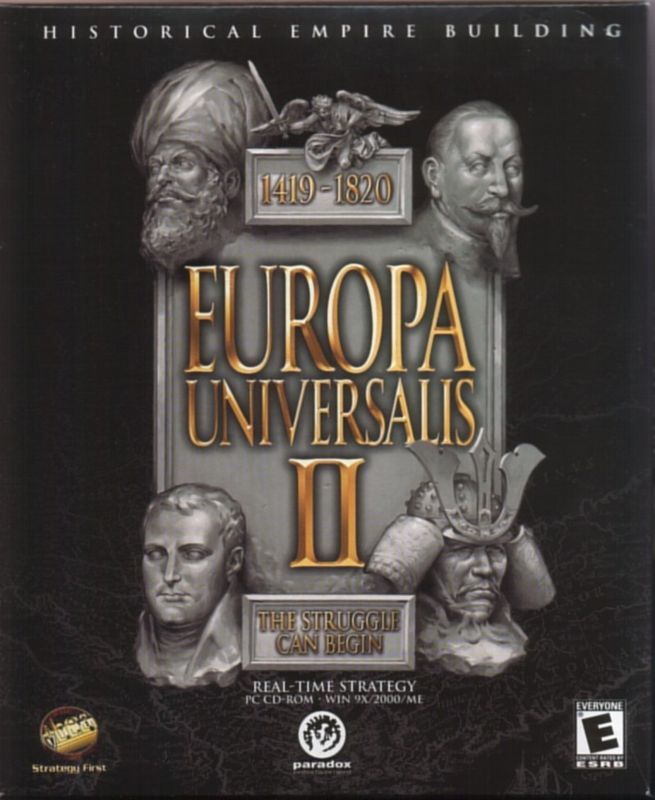
The expanded geopolitical map stretches the timeline from 1419 to 1819, allowing for a full 400 years of world-shaping decisions and empire building. You can play as any historical nation—be it a minor duchy or a world-spanning great power—and even annex rivals through diplomacy, war, or subterfuge. With new provinces and empires to explore, every campaign feels fresh, and no two playthroughs will unfold alike.
Europa Universalis II also introduces more dynamic event-driven gameplay. Random events keep you on your toes, while historically grounded, empire-specific events present authentic dilemmas drawn from real-world history. Your choices in these moments can alter the political, economic, and religious trajectory of your nation—leading to a deeply immersive and replayable strategy experience.
Graphics
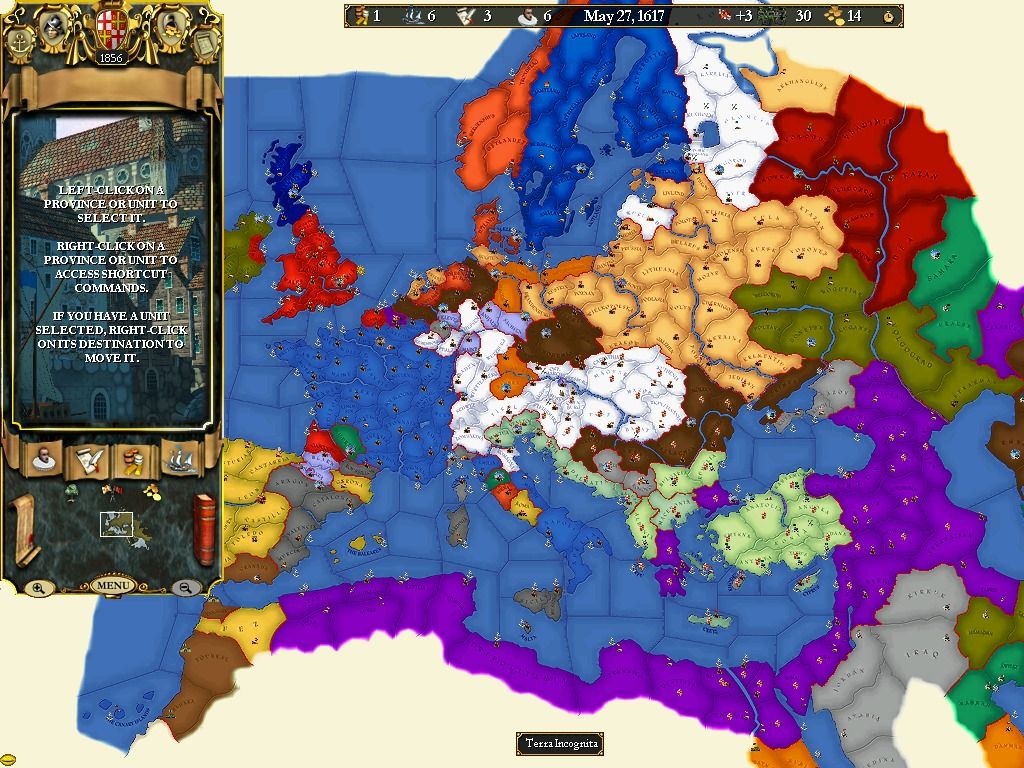
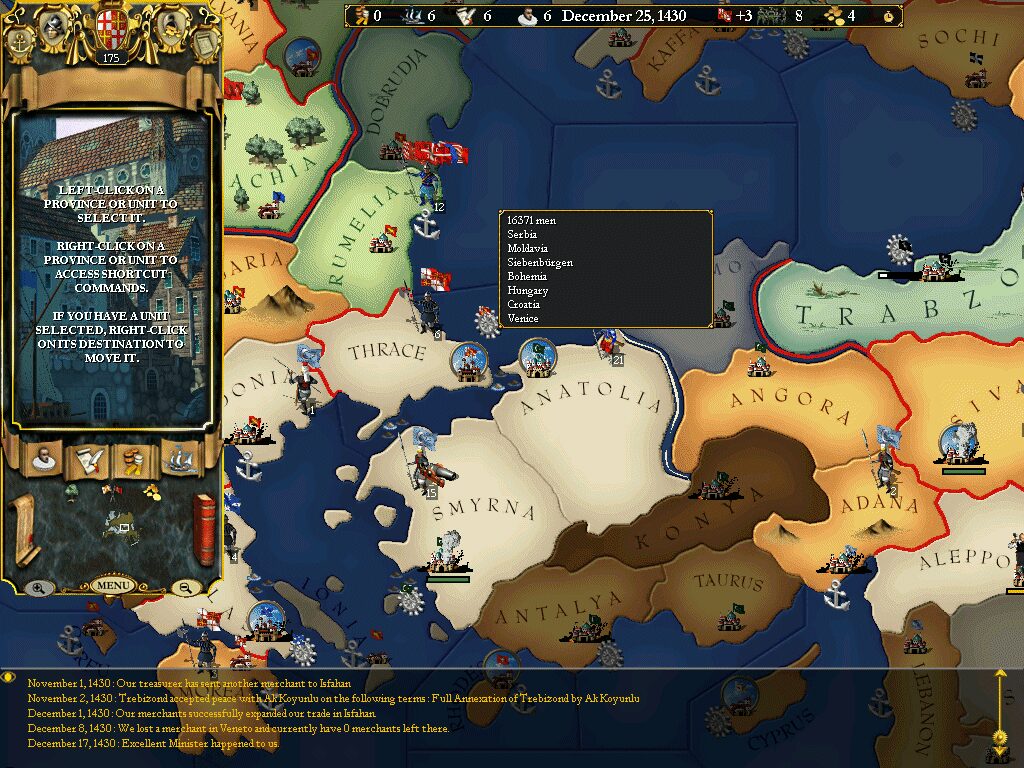
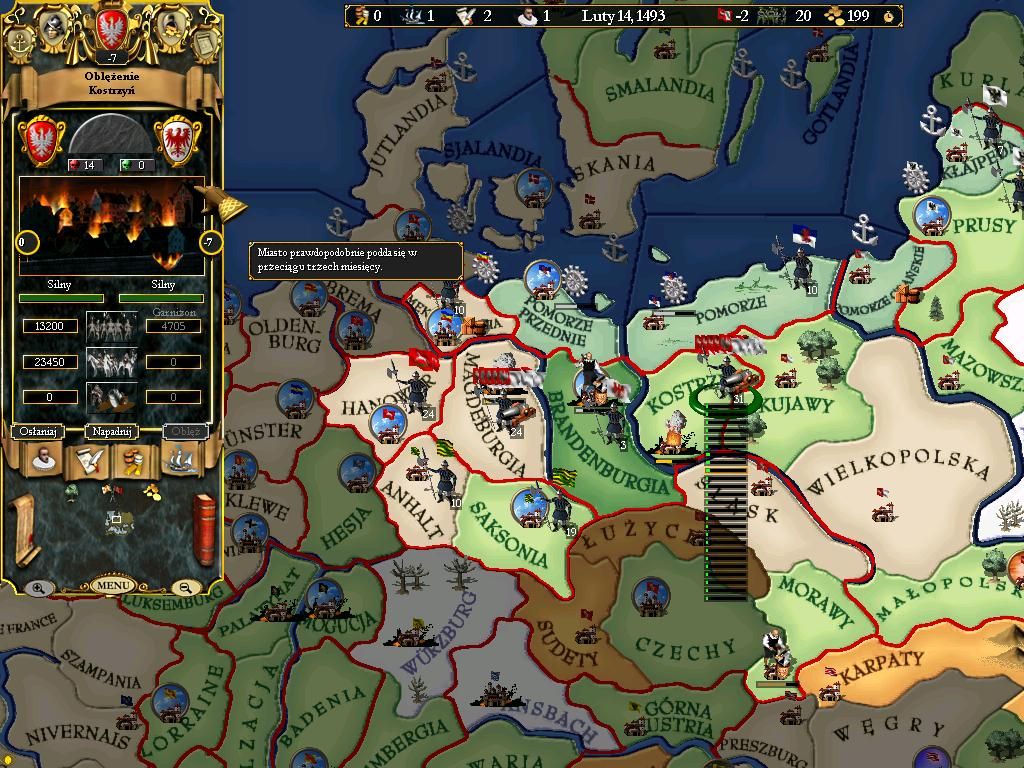
While Europa Universalis II’s visuals may feel dated by modern standards, they retain a timeless charm that strategy fans will appreciate. The map view is detailed and functional, clearly delineating provinces, borders, and terrain types. Each region boasts unique colors and icons that help you instantly identify political allegiances and geographic features.
Unit sprites and naval vessels are modest in detail but serve their purpose well, especially when zoomed out for a grand strategy perspective. Animations for movement and combat are simple yet effective, conveying troop deployments and battles without distracting from the broader strategic picture. For its era, the graphics strike a solid balance between form and function.
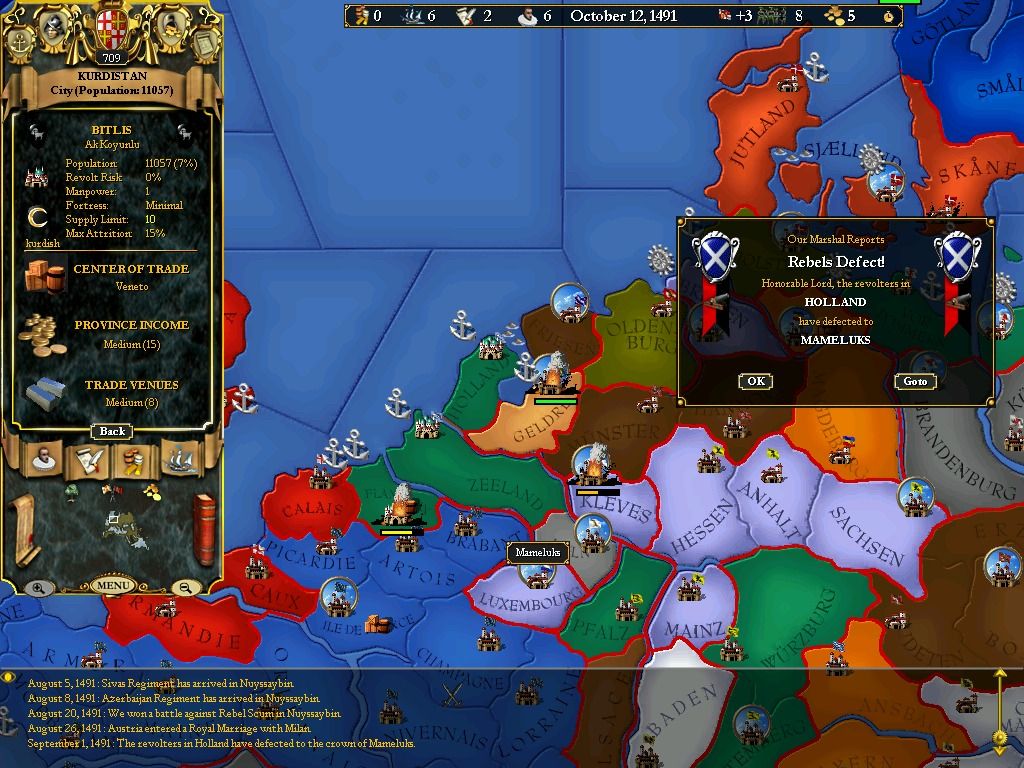
Europa Universalis II’s user interface receives subtle refinements over the original, with streamlined menus and pop-up event notifications that keep vital information at your fingertips. Portraits for rulers, advisors, and diplomats add a dash of personality to the bureaucratic world of 15th–19th century politics, enhancing immersion without cluttering the screen.
Story
As a grand strategy title, Europa Universalis II does not follow a traditional narrative but instead lets players craft their own historical sagas. The emergent storytelling arises from the interplay of diplomacy, warfare, trade, and event choices. Whether you guide Portugal to dominate global trade routes or steer the Ottomans through centuries of reform and expansion, your decisions write the unfolding drama of your chosen nation.
The introduction of historically accurate, empire-specific events adds layers of authenticity to the unfolding story. Decisions you make during these events—such as handling succession crises, religious upheavals, or colonial rebellions—can have cascading effects that resonate for decades within the game. These narrative junctures provide memorable “what-if” scenarios, making every campaign feel like a personalized alternate history.
Even without a scripted storyline, the political rivalries, diplomatic marriages, and shifting alliances generate moments of high tension and intrigue. By the 18th century, you’ll find yourself embroiled in global conflicts or negotiating complex peace treaties that mirror historical realities—yet unfold in unique ways determined by your strategic approach.
Overall Experience
Europa Universalis II offers a compelling blend of strategic complexity, historical depth, and sandbox freedom, making it a must-play for fans of grand strategy. The expanded timeline and added mechanics deliver hundreds of hours of replayability, whether you’re exploring Europe’s Renaissance era or navigating the upheavals of the Napoleonic age. The sense of achievement that comes from guiding a minor kingdom to world power is deeply satisfying.
Despite its age, the game’s interface and presentation remain serviceable, and a thriving modding community has produced graphical and quality-of-life enhancements that keep the title feeling relevant. Newcomers might face a steep learning curve, but comprehensive tutorials and active online guides help flatten that slope, ensuring you’ll soon be commanding armies and negotiating treaties like a seasoned ruler.
In conclusion, Europa Universalis II stands as a benchmark in the grand strategy genre. Its combination of rich mechanics, historical events, and true sandbox freedom provides an engrossing playground for history buffs and hardcore strategists alike. Whether you crave empire-building, economic management, or diplomatic intrigue, this classic title delivers an unparalleled strategic experience that remains worthy of your time.


Reviews
There are no reviews yet.