 Retro Replay Retro Replay gaming reviews, news, emulation, geek stuff and more!
Retro Replay Review
Gameplay
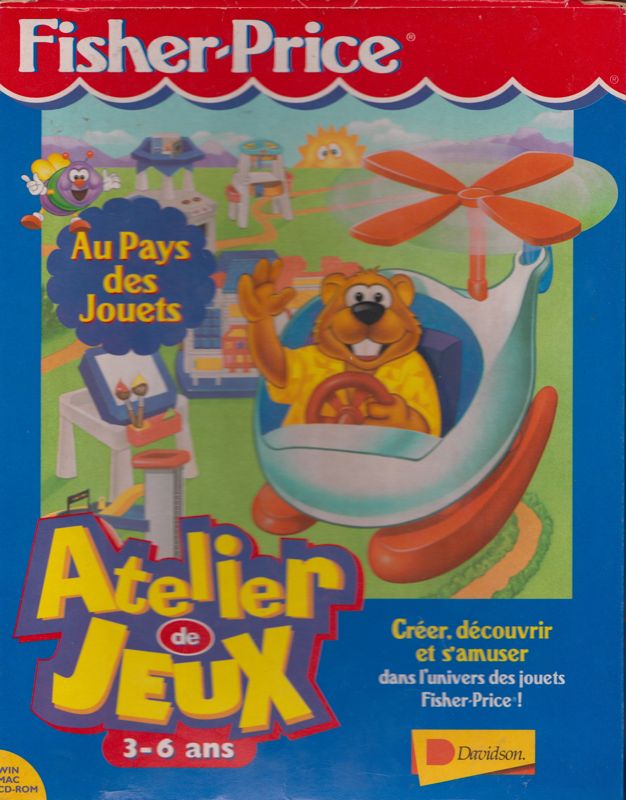
Fisher-Price Learning in Toyland offers six distinct activities that blend open‐ended creativity with guided tasks, making it ideal for young learners. In Big Action Garage, children assemble vehicles by choosing from assorted bodies, wheels, and decorations, then match their creation to a reference image. For those seeking more freedom, a creative mode allows endless combinations and even printing of their custom designs—an excellent way to bridge on‐screen fun with real‐world keepsakes.
(HEY YOU!! We hope you enjoy! We try not to run ads. So basically, this is a very expensive hobby running this site. Please consider joining us for updates, forums, and more. Network w/ us to make some cash or friends while retro gaming, and you can win some free retro games for posting. Okay, carry on 👍)
All‐in‐1 Workshop introduces basic tool concepts through wood projects that require drilling, screwing, and hammering in the correct spots. After construction, youngsters tidy up their virtual workbench using a vacuum, reinforcing responsibility alongside fine motor skills. Like the Garage, the Workshop features a free‐form mode, empowering kids to plan their own builds and maintain a sense of ownership over each project.
Fliptrack Mountain focuses on transportation logistics, inviting players to route cars, boats, trains, and helicopters to deliver objects to various destinations. This activity subtly teaches sequencing and planning: deciding which vehicle fits each terrain encourages strategic thinking without imposing high difficulty. Meanwhile, Talking Smart Street serves as an interactive alphabet and animal sound board, reinforcing letter recognition, counting, and animal noises through immediate audio feedback.
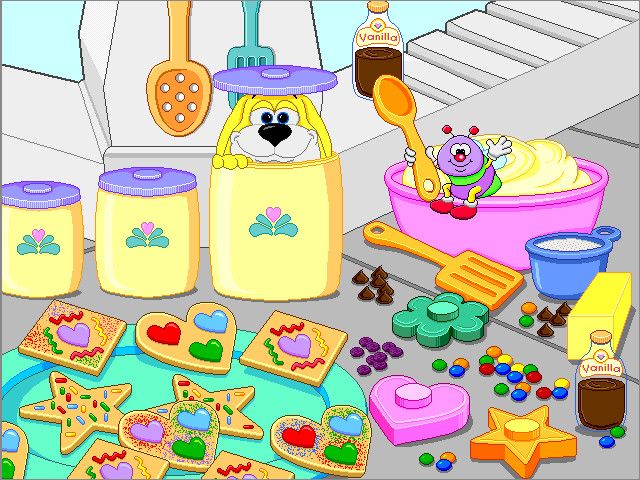
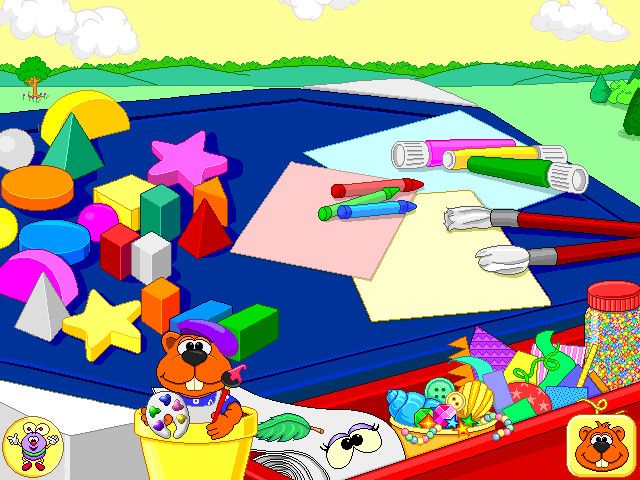
In All‐in‐1 Kitchen, learners follow a recipe by mixing, rolling, cutting, baking, and decorating cookies in the correct order. The cooking simulation combines reading comprehension with sequential tasks, and the free‐form baking mode lets creativity shine as children invent their own cookie designs. Finally, the 3‐in‐1 Creativity Table merges coloring by instruction, free‐draw canvases, crafts with glitter and shapes, and block assembly to match reference pictures—cementing color theory, hand‐eye coordination, and shape matching in a single hub.
Graphics
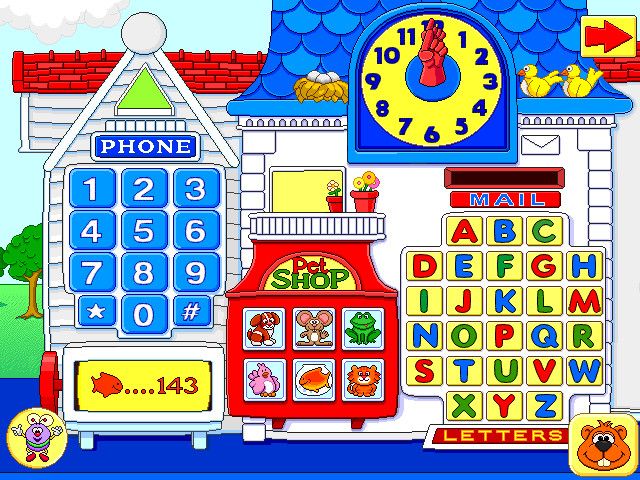
True to Fisher‐Price’s iconic aesthetic, Learning in Toyland features bold, primary colors and chunky, cartoony visuals that immediately appeal to preschoolers. Buttons and interactive elements are oversized and clearly labeled, reducing frustration and misclicks for small hands. Each activity screen is uncluttered, with a straightforward layout that guides young eyes to the next task.
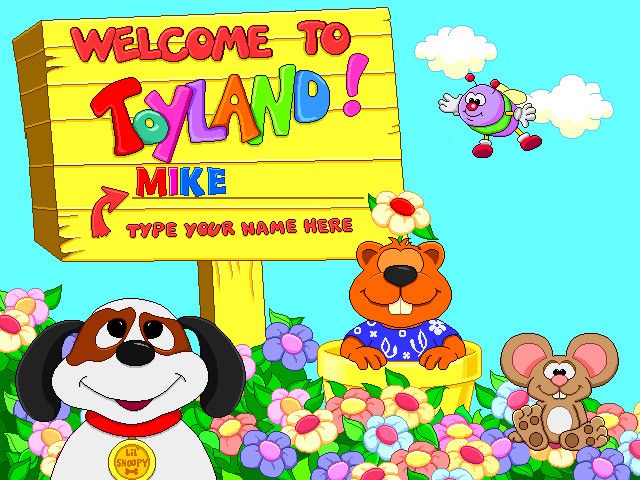
The character designs of Gotcha Gopher and Bippity Bug are charming and approachable, with exaggerated expressions that help children identify emotions and stay engaged. Backgrounds in each mini‐game are rendered in flat, vibrant hues, ensuring the focus remains on playable elements. Although the graphics are simple by modern standards, they perfectly suit the game’s educational intent by minimizing distractions.
Animations are smooth and purposeful: drilling sparks, wheel spins, and baking timers all convey cause and effect, reinforcing learning through visual feedback. Sound effects accompany each action, while transitions between tasks are accompanied by friendly character prompts. This audiovisual consistency not only holds attention but also strengthens the link between action and result.
Printing functions in the creative modes allow children to transfer their digital artwork into tangible form—often in full color—bridging the gap between screen time and hands‐on play. These printable assets retain the vivid hues and simple shapes of the original graphics, making them suitable for display on refrigerators or sharing with family members.
Story
While Fisher‐Price Learning in Toyland does not feature an elaborate narrative, it builds a gentle thematic framework around Toyland’s residents. Gotcha Gopher acts as the enthusiastic host, welcoming players to each activity with a warm voice and clear instructions. His pal Bippity Bug often appears to offer tips or playful commentary, fostering a sense of companionship that keeps young learners motivated.
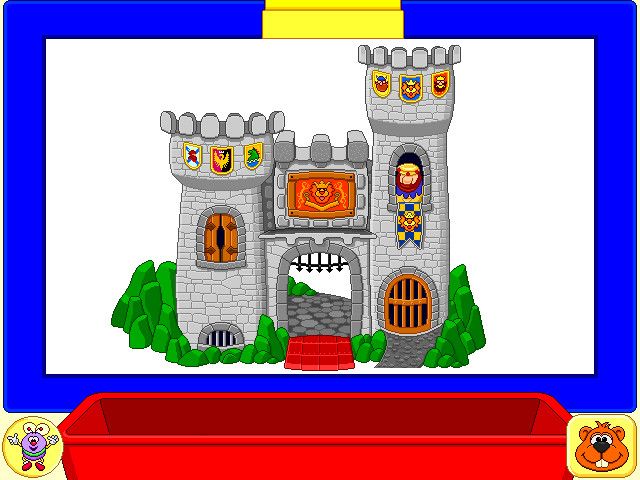
The minimal story structure revolves around exploring different “neighborhoods” of Toyland—each corresponding to a particular activity zone: the Garage, Workshop, Mountain, Street, Kitchen, and Creativity Table. This neighborhood design fosters a reassuring sense of progression: children move from one familiar locale to the next, discovering new learning opportunities at each turn.
Occasional narrative interludes—such as Bippity Bug celebrating a completed cookie batch or Gotcha Gopher admiring a finished block picture—reinforce positive feedback loops. These short moments of praise and encouragement feel like mini‐stories that reward effort and celebrate achievement, rather than detracting from the core educational tasks.
By keeping the storyline simple and character‐driven, the game avoids overwhelming players who may be new to digital learning. Instead, Toyland functions as a safe, colorful playground where tasks are subtly framed as adventures. Children gain confidence not only in the individual skills they practice but also in following prompts and completing multi‐step sequences.
Overall Experience
Fisher‐Price Learning in Toyland delivers a comprehensive early‐learning package that balances structure with creative freedom. The six activities cater to a wide range of developmental milestones—from letter and number recognition to fine motor coordination and basic problem solving. Parents and educators will appreciate the clear learning objectives embedded in each mini‐game.
Replayability is a standout feature: free‐form modes in Big Action Garage, All‐in‐1 Workshop, Kitchen, and Creativity Table invite unlimited exploration. By printing artwork and blueprints, children can share their accomplishments offline, extending the educational value beyond the screen. These printouts also serve as tangible reminders of skills practiced, whether it’s letter sounds, tool sequences, or recipe steps.
The game’s intuitive interface and gentle pacing ensure that even the youngest players can navigate menus with minimal assistance. At the same time, the variety of activities keeps curiosity alive, preventing boredom from setting in. Voice narration by Gotcha Gopher and Bippity Bug provides guidance without feeling condescending, striking the right tone for a preschool audience.
In summary, Fisher‐Price Learning in Toyland is an engaging, well‐rounded educational title that parents can trust. Its thoughtful mix of directed lessons and open‐ended creativity makes it a versatile tool for at‐home learning, preschool classrooms, or library programs. For families seeking a digital companion to classic Fisher‐Price toys, Toyland offers a colorful, supportive environment where young minds can explore, build, and learn at their own pace.



Reviews
There are no reviews yet.