 Retro Replay Retro Replay gaming reviews, news, emulation, geek stuff and more!


Retro Replay Review
Gameplay
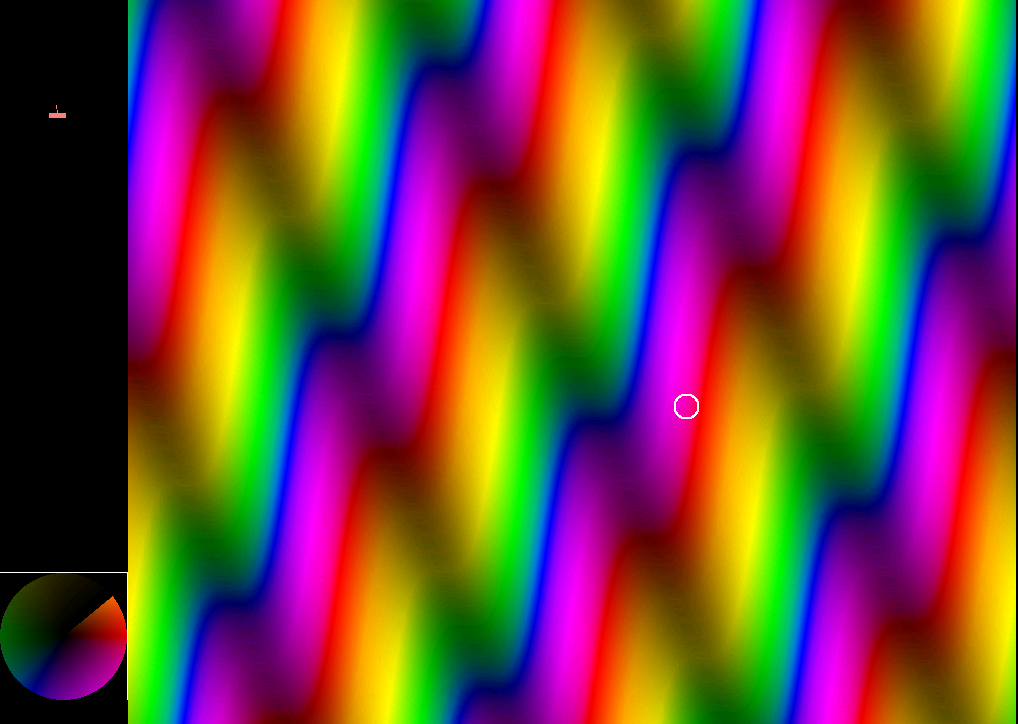
Frequon Invaders turns the classic shoot-’em-up formula on its head by hiding its enemies in a living, breathing canvas of waves. Instead of sharp pixel sprites descending in neat rows, you’re presented with a dynamic, multicolored waveform that ripples and shifts in real time. The core mechanic is elegantly simple: move your mouse until the hidden “frequon” reveals itself as a dark spot, then click to detonate it before it reaches the bottom of the screen. Though the goal echoes vintage arcade standards, the method forces you to think in terms of signal processing rather than pixel hunting.
(HEY YOU!! We hope you enjoy! We try not to run ads. So basically, this is a very expensive hobby running this site. Please consider joining us for updates, forums, and more. Network w/ us to make some cash or friends while retro gaming, and you can win some free retro games for posting. Okay, carry on 👍)
The game eases you in through an optional training mode, where you can experiment with different wave patterns at leisure. Here you develop an intuitive feel for how the frequon’s displacement changes the interference bands and color gradients. What starts as an abstract curiosity quickly turns into a genuine skill challenge: subtle shifts in amplitude and phase become your only clues. As you grow comfortable, the training mode doubles as a playful tool for generating mesmerizing, ever-changing wave art.
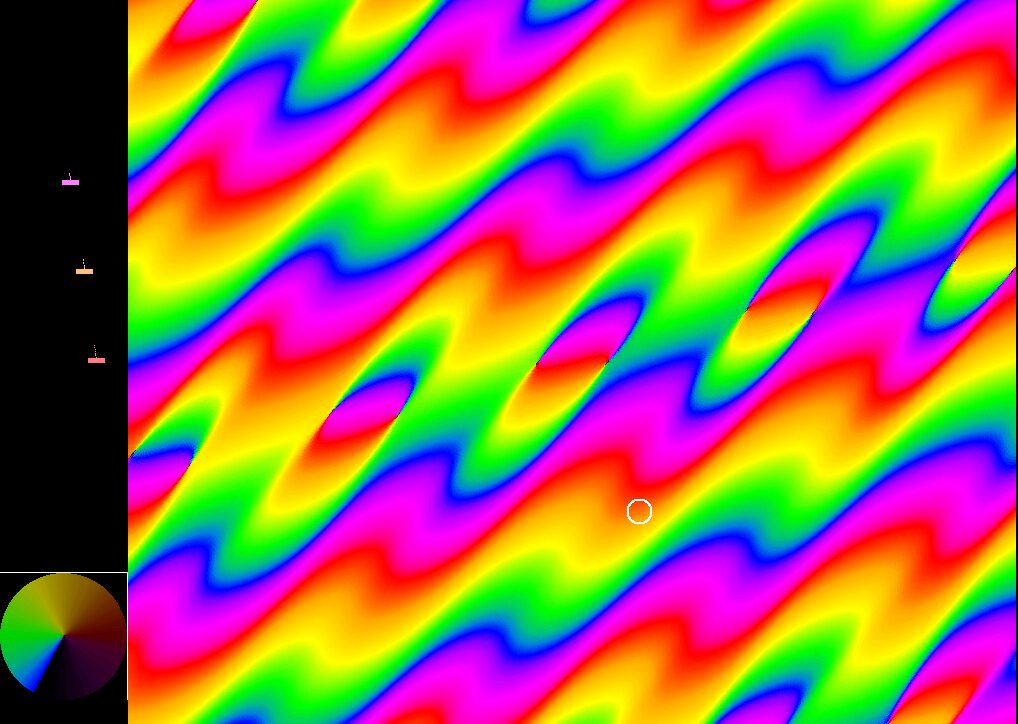
Once you dive into the live levels, the difficulty ramps up swiftly. Early waves introduce sporadic frequons that reveal themselves clearly. But soon, multiple targets populate the field at once, spawning overlapping interference patterns that twist your perceptions. To complicate matters further, the game occasionally “damages” your radar by stripping away color channels or hiding phase information, leaving only magnitude or a single primary hue. These constraints force you to adapt on the fly, honing your detection strategy under pressure.
With no final boss to conquer, Frequon Invaders embraces the endless high-score chase. Each frequon you detonate inches you closer to the top of the table, while every escape adds to your growing frustration. Short, intense sessions make for an addictive loop—you’ll find yourself restarting levels to shave precious milliseconds off your reaction time, all while marveling at the interplay of waves that both hides and reveals your quarry.
Graphics
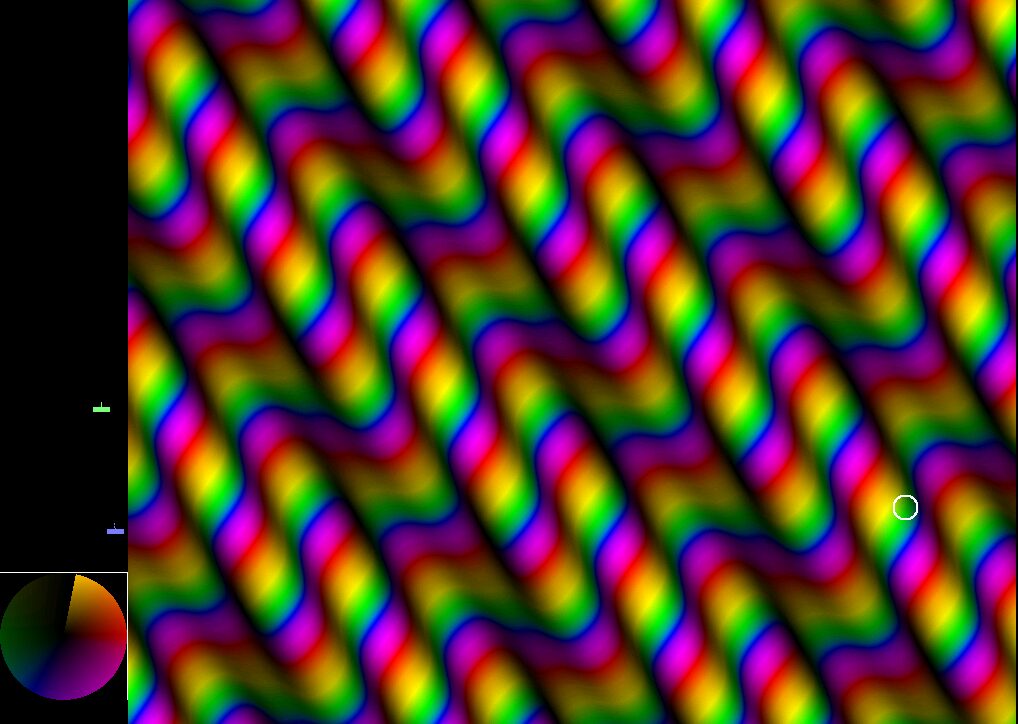
Visually, Frequon Invaders is a study in abstract beauty. The entire battlefield is rendered as a time-space plot of colors that shift with your input. Bright sine-like bands ripple across the screen, offering hints of your target’s coordinates without ever explicitly showing it. The color palette ranges from sharp neon primaries to muted pastels, each hue corresponding to a specific component of the underlying Fourier transform.
As frequons draw nearer, the waveform’s structure changes dramatically. Dark, moiré-style bands emerge, thickening until the enemy finally materializes as a solid black dot. This reveal is both satisfying and startling, like watching a hidden image come into focus under a microscope. The smooth transitions between states ensure that you’re never completely lost, yet the abstraction always keeps you guessing.
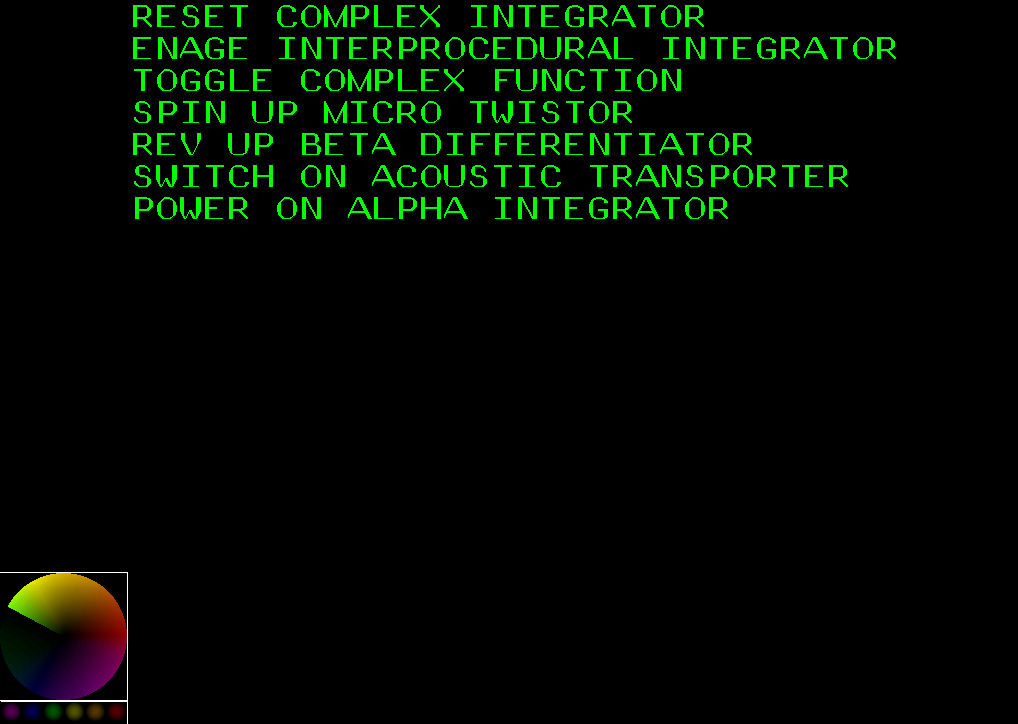
The minimalist HUD refrains from clutter, showing only your current score and remaining lives. When the radar is “damaged,” visual filters apply in real time—reducing color depth, hiding phase lines, or desaturating the display entirely. These visual handicaps not only up the challenge but also introduce fresh aesthetic moods, from stark monochromes to ghostly outlines that feel more like experimental art than a game screen.
Though Frequon Invaders doesn’t boast high-fidelity textures or cinematic cutscenes, its graphics are remarkably effective for the concept. Every frame feels alive, reacting instantly to your movement. The result is a hypnotic, almost meditative experience that stands out sharply in a market saturated with photorealistic shooters.
Story
Story isn’t the main draw here, but there’s enough context to give your mission weight. The Frequons—an otherworldly swarm of invisible invaders—are on a relentless descent toward Earth. Your role: stop them before they breach the atmospheric boundary. It’s a classic “last defense” scenario, but one told entirely through mechanic and presentation rather than dialogue or cutscenes.
The narrative unfolds in fragments: a brief intro text, sporadic flavor lines when you lose a life, and the growing intensity of the waves themselves. Each level feels like a deeper incursion into the Frequon hive mind, reflected in the increasingly chaotic interference patterns you must navigate. You start to feel like you’re not just shooting enemies—you’re decoding a hostile signal.
With every high score milestone, you engrave your name on the global leaderboard, weaving your own backstory of triumph and near misses. Though minimalistic, this emergent storyline—driven by your performance—often feels more personal and compelling than the scripted arcs found in many big-budget titles.
Overall Experience
Frequon Invaders delivers a refreshingly original take on the arcade shooter genre. Its ingenious use of Fourier-based graphics turns a simple kill-’em-all premise into a brain-bending exercise in pattern recognition. The learning curve is steep at first, and you may feel bewildered until the “aha” moment clicks. But once you develop that intuition, each session becomes an exhilarating dance between perception and reflex.
The game’s replay value is high, thanks to its infinite progression model and global leaderboards. Sound design is minimal—just the right number of “blips” to accentuate successful kills and new enemy spawns—so the focus stays squarely on deciphering your visual cues. If you’re looking for a shooter that rewards cognitive effort as much as hand-eye coordination, you’ll be hard-pressed to find a more inventive experience.
Frequon Invaders isn’t for everyone. Casual players seeking straightforward, button-mashing thrills might find the abstraction frustrating. But for those intrigued by experimental game design, or anyone with a soft spot for unique, techno-art aesthetics, it offers a deeply satisfying challenge. It stands as a testament to what happens when gameplay and visualization merge in perfect harmony—transforming invaders into waves, and players into signal analysts on the ultimate mission to defend the realm.


Reviews
There are no reviews yet.