 Retro Replay Retro Replay gaming reviews, news, emulation, geek stuff and more!
Retro Replay Review
Gameplay
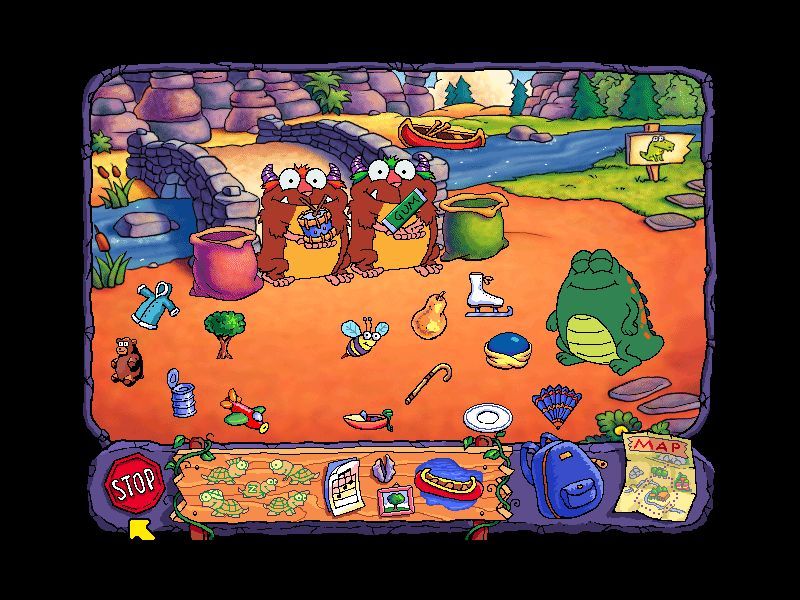
Huggly Saves the Turtles: Thinking Adventures delivers a seamless point-and-click interface that is perfect for young learners. The bottom tray houses a map for fast travel, a backpack for collected items, and an activity checklist that clearly tracks progress. When the cursor sparkles over an interactive element, children receive instant visual feedback, making navigation intuitive and frustration-free.
(HEY YOU!! We hope you enjoy! We try not to run ads. So basically, this is a very expensive hobby running this site. Please consider joining us for updates, forums, and more. Network w/ us to make some cash or friends while retro gaming, and you can win some free retro games for posting. Okay, carry on 👍)
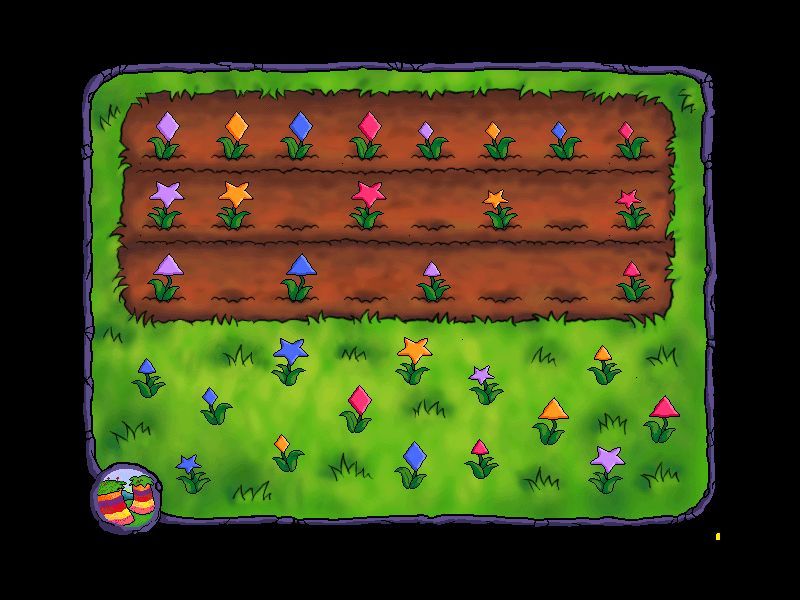
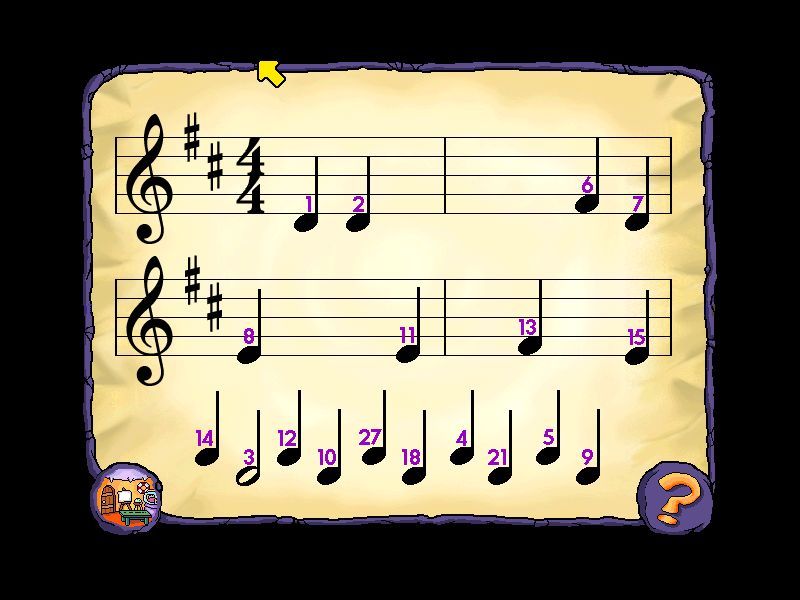
The core of the game lies in its 11 mini-games that span key kindergarten skills: from number sequencing in Turtleworks Theme Song to letter recognition in Al Lee Gator’s Stream. Each activity is introduced via friendly character prompts, ensuring children understand objectives before play begins. Challenges scale gently; early levels focus on simple matching or sorting, while later stages combine multiple skills—such as reading instructions, counting, and basic problem solving—in a single puzzle.
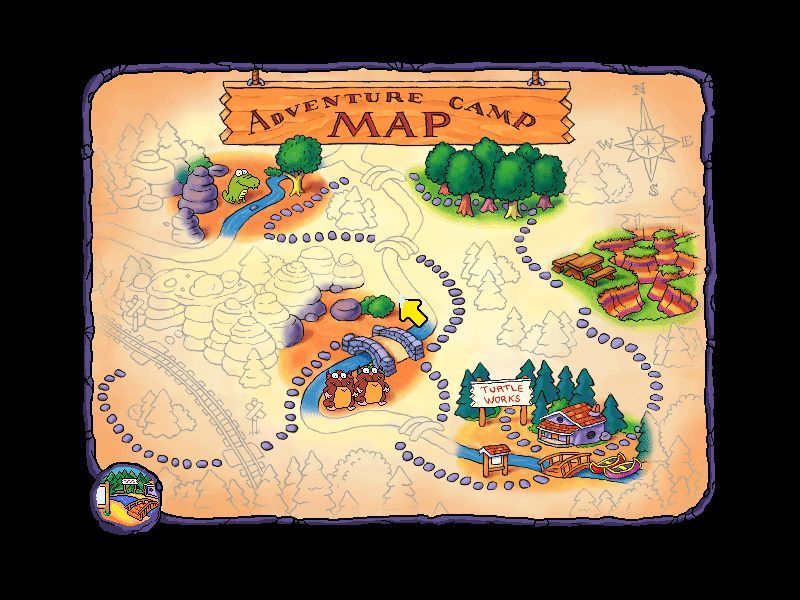
Traveling through Monster Adventure Camp is equally engaging. Young players can click on pathways or use the camp map to reach locations like the canoe river or Wild Woods. Along the way, environmental cues and gentle sound effects reward correct actions and guide kids back on track if they stray. The final reward, The Turtleworks pinball game, unlocks only after all activities are completed, adding an extra incentive for thorough exploration.
Graphics
The visual style of Thinking Adventures is bright, colorful, and imbued with cartoon charm. Huggly himself is rendered as a soft-edged, friendly green monster whose expressive animations—from excited arm waves to hopeful eye blinks—delight young players. Backgrounds such as the forest, riverbank, and cave are richly detailed without overwhelming the screen, ensuring important elements stand out.
Each mini-game features its own themed assets: rhyming toys in The Bridge are distinct and shape-based; scattered cargo at Irma’s Train Stop is clearly labeled with bold letters. Transitions between scenes use simple fades or playful wipes that maintain immersion without confusing players. Animations are smooth, and feedback—such as pearls popping into place or rocks stacking to form a staircase—is immediate and satisfying.
Icons and UI elements are sized generously for small hands and developing mouse skills. The backpack and stop icon are easily distinguishable, and the checklist updates with cheerful checkmarks. Subtle highlights and cursor sparkles emphasize actionable objects, while areas without interactivity remain static, helping children focus on their next task.
Story
At its heart, Huggly Saves the Turtles is a lighthearted rescue adventure. Huggly and his turtle friends anticipate the Grand Opening of Monster Adventure Camp, only to have a sudden windstorm scatter the turtles and toss debris across the site. This simple yet engaging premise provides just enough narrative motivation without bogging down the learning experience.
Each mini-game ties back to the central storyline: rescuing stranded turtles from river rapids, finding lost eggs in the Wild Woods, or rebuilding Uncle Chomper’s path down the cave. Brief character interactions—such as Irma the train conductor’s grateful wave or Zibble and Quibble’s rhyming cheers—add personality to each activity and reinforce the sense of helping friends in need.
Although geared toward children ages 5–7, the story’s gentle pacing and playful humor keep even reluctant readers engaged. Huggly’s optimistic commentary and the camp’s colorful denizens create a supportive world. After completing all challenges, players unlock The Turtleworks pinball finale—a celebratory return to the story’s theme of teamwork and fun.
Overall Experience
Huggly Saves the Turtles: Thinking Adventures is a well-crafted blend of education and entertainment. Its six core educational domains—math, language, problem solving, reading, creativity, and motor skills—are interwoven into a cohesive adventure that keeps young learners motivated. Activities are bite-sized yet substantial, allowing for short play sessions ideal for classroom settings or home use.
Replay value is high: children can revisit any mini-game at will, solidifying skills through repetition without monotonous repetition. The optional pinball game provides a novel twist on familiar characters, encouraging kids to return even after all educational goals are met. Parents and teachers will appreciate the clear progress tracking, making it easy to see which skills a child has mastered and which need further practice.
Overall, Huggly Saves the Turtles: Thinking Adventures offers an engaging, visually appealing, and pedagogically sound experience for early learners. Its straightforward gameplay, charming graphics, and playful story combine to create a game that young children will happily play and parents will confidently endorse. Whether at home or in the classroom, Huggly’s adventures promise hours of constructive fun.


Reviews
There are no reviews yet.