 Retro Replay Retro Replay gaming reviews, news, emulation, geek stuff and more!


Retro Replay Review
Gameplay
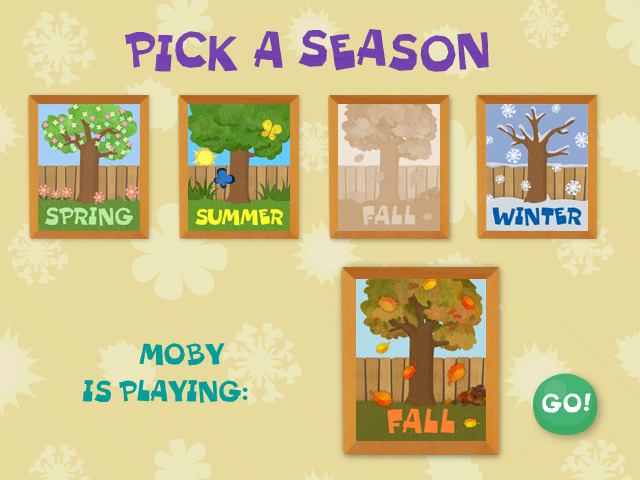
Little Bill Thinks Big offers a series of bite-sized mini-games that are both entertaining and educational. Players choose one of four seasonal paths—spring, summer, fall, or winter—each with its own light narrative twist and unique final surprise for Little Bill’s family. This variety encourages replayability, as completing all four paths reveals different story beats and keeps the experience fresh.
(HEY YOU!! We hope you enjoy! We try not to run ads. So basically, this is a very expensive hobby running this site. Please consider joining us for updates, forums, and more. Network w/ us to make some cash or friends while retro gaming, and you can win some free retro games for posting. Okay, carry on 👍)
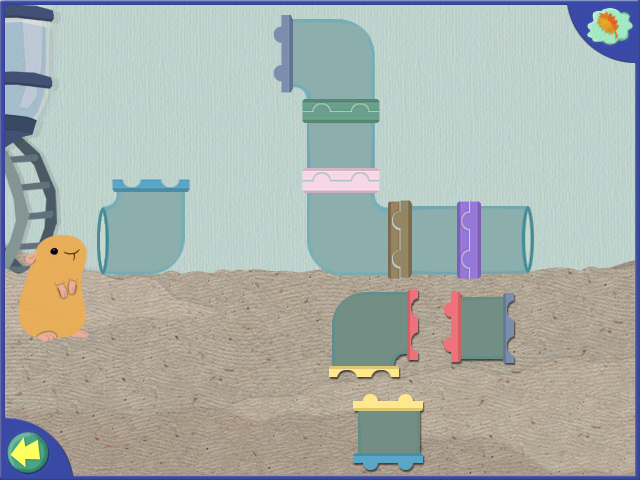
The core gameplay loop revolves around collecting five key items through distinct challenges: matching cookie templates, guiding a submarine through obstacles, grouping aliens by color and pattern, constructing a hamster tunnel, and sequencing photos. Each mini-game focuses on foundational skills such as pattern recognition, logical sequencing, and basic counting. Automatic difficulty adjustment ensures that players are neither bored nor overwhelmed—correct answers gradually increase complexity, while mistakes dial back challenges for steady progression.
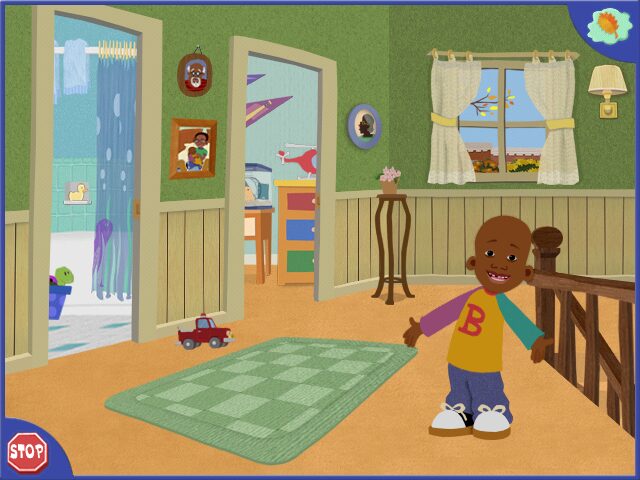
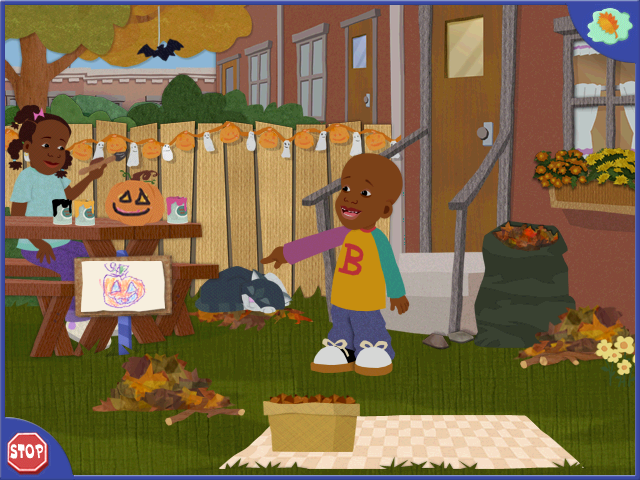
Beyond the main activities, the game world is peppered with interactive objects: clickable items animate or trigger quick bonus puzzles (spot the odd can, select a block by color and number, and so on). These touches add depth and encourage exploration of Little Bill’s house. Once all items have been gathered, players head to the backyard to assemble the surprise and create a custom picture, which can even be printed as a keepsake.
Overall, the gameplay is thoughtfully structured for young learners. The design balances open exploration with clear goals, and the seasonal paths provide an easy entry point for repeated playthroughs. As an educational title, Little Bill Thinks Big feels both purposeful and playful, seamlessly blending learning objectives with child-friendly mechanics.
Graphics
The visual style of Little Bill Thinks Big faithfully captures the charm of the original book illustrations and television animation. Bright, bold colors fill every screen, creating an inviting atmosphere for preschoolers. Character sprites and background art are rendered in a smooth, cartoon-like fashion with clear outlines and simple shading, ensuring that young eyes can easily distinguish focal elements from the backdrop.
Each seasonal path features unique environmental details: budding flowers in spring, sun-drenched lawns in summer, falling leaves in autumn, and snow-dusted shrubs in winter. These subtle changes not only reinforce the seasonal theme but also add variety that keeps the game visually engaging. Mini-games introduce their own thematic palettes—for example, the submarine challenge takes on cool blues and greens, while the cookie game bursts with pastel icing colors.
Animations are snappy and responsive. When children complete a task correctly, Little Bill and his friends celebrate with cheerful gestures or a little dance. Errors trigger gentle feedback—perhaps a disappointed look from Little Bill or a soft buzz—ensuring that young players learn without feeling discouraged. The seamless transitions between house rooms and backyard also maintain immersion and prevent jolts that could confuse new gamers.
Though the graphics won’t rival high-end consoles, they excel in clarity and personality, remembering that the primary audience is early learners. The art direction strikes a perfect balance between stimulating detail and uncomplicated forms, making it an ideal foundation for the game’s educational ambitions.
Story
At its heart, Little Bill Thinks Big tells a simple yet endearing tale: Little Bill, an imaginative five-year-old, has a “big idea” to surprise his family. The narrative is straightforward enough for preschoolers to follow, yet varied across the four seasonal paths to spark curiosity. Each path frames the mini-games as steps in gathering the making of that special surprise.
Cutscenes are brief but effective—Little Bill introduces the game, outlines his plan, and reacts excitedly as players collect items. The final backyard sequence, where the surprise comes together, feels rewarding and gives a sense of closure. Different surprises in each season add replay value and let kids experience new outcomes, like a surprise picnic in summer or a star-shaped winter craft.
The story remains true to the spirit of creator Bill Cosby’s franchise, focusing on family warmth, creativity, and problem-solving. There’s no complex plot, twists, or villains—just the joy of making something special for loved ones. This gentle, positive tone is perfect for the target age group and aligns with the show’s educational ethos.
While older players may find the narrative simplistic, young children will appreciate the clear objectives and friendly characters. Little Bill Thinks Big excels at delivering a narrative framework that motivates exploration and learning without overwhelming its novice audience.
Overall Experience
Little Bill Thinks Big succeeds as an entry-level educational title. Its easy-to-navigate menus, automatic leveling system, and forgiving error feedback create a safe learning environment. Parents and educators will appreciate the game’s alignment with early childhood skills—sequencing, sorting, pattern recognition, basic math, and creative play—all seamlessly integrated into fun activities.
Replayability is a standout feature. With four seasons to explore, children can revisit the same core mini-games yet enjoy fresh narratives and surprises each time. The ability to print the final creation adds a tangible reward, bridging the digital and physical worlds in a way that young learners find particularly satisfying.
While the game’s scope is modest, it remains engaging for its intended audience. Short, focused activities respect young attention spans, and the gentle progression curve helps build confidence. Though adults might yearn for deeper complexity, the title never overshoots the developmental stage it’s designed for.
In conclusion, Little Bill Thinks Big delivers a well-rounded educational experience wrapped in a sunny, cartoonish package. It stands out as a quality choice for parents seeking screen time that actively reinforces early learning goals, all while keeping children entertained and eager to play “just one more season.”


Reviews
There are no reviews yet.