 Retro Replay Retro Replay gaming reviews, news, emulation, geek stuff and more!


Retro Replay Review
Gameplay
Multiwinia: Survival of the Flattest takes the familiar real-time strategy foundation of its predecessor, Darwinia, and spins it into a high-octane, multiplayer-focused experience. You command one of four distinct factions of Multiwinians, each armed with basic rifles and grenades, but it’s the variety of game modes that truly sets the title apart. Whether you’re capturing spawn points in Domination, battling for zones in King of the Hill, or racing to launch rockets in Rocket Riot, each mode demands a different blend of quick thinking, map awareness, and tactical coordination.
(HEY YOU!! We hope you enjoy! We try not to run ads. So basically, this is a very expensive hobby running this site. Please consider joining us for updates, forums, and more. Network w/ us to make some cash or friends while retro gaming, and you can win some free retro games for posting. Okay, carry on 👍)
Rather than micromanaging every little unit, the interface lets you directly order swarms of Multiwinians. You can promote an individual to officer status, allowing it to autonomously command nearby units toward designated waypoints—an excellent tool for players who prefer high-level strategy over tedious unit-fiddling. The ability to form tight formations amplifies your squad’s firepower, though it removes grenade capabilities, forcing you to weigh raw strength against explosive utility on the fly.
Power-up crates periodically drop from the sky, containing game-changing abilities such as time dilation or deployable turrets. As soon as a crate touches the ground, any nearby Multiwinian—regardless of allegiance—can seize its contents. If you choose to personally pilot a power-up, the screen transitions to a thrilling “bodycount” interface where you can mow down enemy units in first-person, adding a delightful arcade twist to the RTS core.
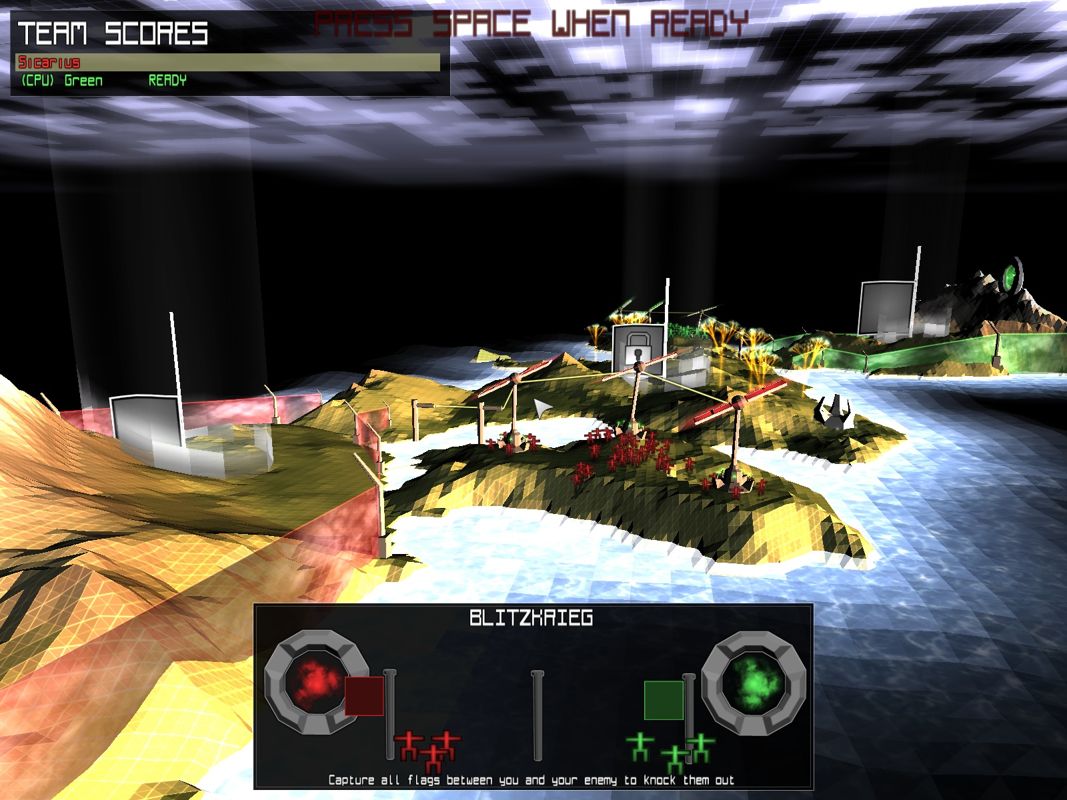
Beyond the six signature modes—Domination, King of the Hill, Capture the Statue (essentially Capture the Flag with statues), Assault, Rocket Riot, and Blitzkrieg—Multiwinia excels at keeping each match fresh. The asymmetric objectives push you to adopt new strategies: one moment you’re defending a doomsday device in Assault, the next you’re scrambling to move a statue back to base under fire. This diversity gives the multiplayer lobby a vibrant churn of tactics and counterplay that rarely gets stale.
The AI opponents can be surprisingly shrewd, laying traps and reacting to your maneuvers, which makes single-player skirmishes valuable practice before jumping online. In multiplayer, games scale nicely from 1v1 duels to frantic free-for-all brawls with up to four human or AI players. The learning curve is gentle, but true mastery comes from exploiting unit formations, timing power-ups, and reading opponents’ patterns—ensuring that each win feels hard-earned and each loss teaches you something new.
Graphics
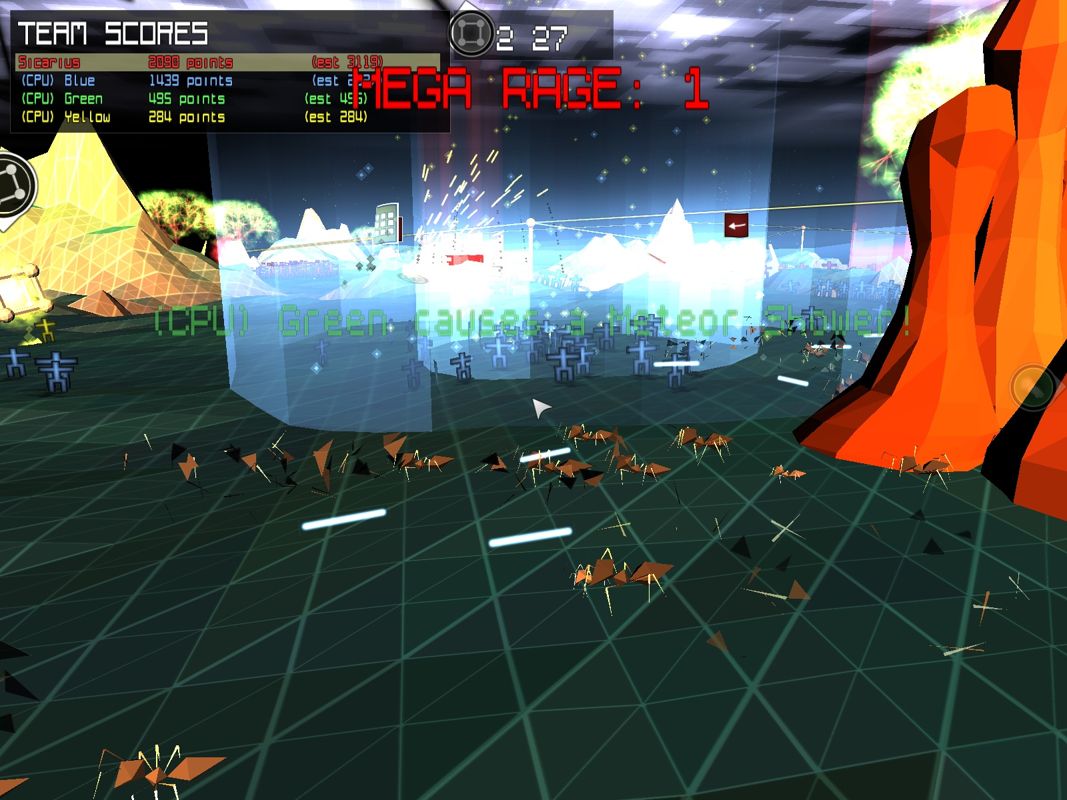
Graphically, Multiwinia retains the clean, stylized aesthetic that made Darwinia visually distinctive. The world is rendered in bright, blocky polygons with a colorful, almost toy-like palette that belies the intensity of the battles taking place. This minimalistic approach keeps the battlefield legible at all times, even when hundreds of Multiwinians are clashing in a single screen’s worth of real estate.
Animations are snappy and charming: squads march in formation with a mechanical precision, grenades arc smoothly, and officers wave little flags to rally their troops. Explosions and weapon effects are punchy without being overwhelming, maintaining clarity in the heat of combat. The sky periodically lightens as crates descend, their blinking lights guiding you to a power-up in a way that feels organically integrated into the battlefield.
The user interface is equally polished, with color-coded overlays showing territory control, resource nodes, and squad compositions. A simple radial menu lets you issue orders in a heartbeat, and you can easily zoom in for a first-person perspective when you take direct control of a power-up. There’s little guesswork involved, as every icon and marker has clear visual cues, which is crucial when the pace picks up and dozens of units swarm across the map.
Maps themselves are varied but always adhere to the same crisp design language—gridded turf, geometric obstacles, and intuitive chokepoints. Each terrain type affects line of sight and infantry movement in a predictable way, so you learn to navigate hills, forests, and bridges strategically rather than being stymied by confusing topography. Even veteran RTS players will appreciate the thoughtful layout of each stage, which consistently rewards tactical forethought.
Story
Unlike narrative-heavy strategy titles, Multiwinia’s storyline is succinct but effective: after you saved the digital utopia of Darwinia, its inhabitants grew restless, formed tribes, and erupted into civil war. Now rechristened “Multiwinians,” these pixelated warriors compete over dwindling resources, battling across six frantic game modes. This simple premise provides enough context to justify the chaos without bogging the action down with lengthy cutscenes or lore dumps.
The backstory is primarily conveyed through a few brief text panels and the tongue-in-cheek narration that promises both digital enlightenment and glorious mayhem. It’s a lighthearted take on the classic “AI turns rogue” trope, and it works because the gameplay itself becomes the story: each match is a self-contained mini-conflict, complete with its own twists, power struggles, and triumphs.
While you won’t unlock cinematic epilogues or plot twists, the colorful personalities of different tribes—suggested by their unique color schemes and unit designs—give each faction a playful identity. Whether you’re marshaling the blue “Techno-Troopers” or the red “Grenadier Guard,” it’s easy to imagine them as squabbling digital tribes vying for supremacy, and that idle narrative backdrop makes multiplayer sessions that much more engaging.
Overall Experience
Multiwinia: Survival of the Flattest is a breath of fresh air in the RTS genre. It cleverly strips away the micromanagement bloat of traditional strategy games while amplifying everything that makes multiplayer skirmishes thrilling. The result is an experience that’s immediately accessible yet deeply strategic, perfect for quick matches with friends or intense online showdowns.
The game’s polished presentation, varied modes, and dynamic power-up system ensure that no two battles feel the same. The friendly aesthetic belies a surprisingly deep tactical layer: formations, officers, and timed abilities all interact to create a dance of feints, ambushes, and last-second comebacks. Even after dozens of hours, you’ll find new wrinkles to exploit and fresh strategies to test.
While it lacks a sprawling single-player campaign, the AI skirmish mode offers enough challenge to prepare you for human opponents. And once you breach the learning curve, the multiplayer scene—whether with bots or real players—offers near-endless replayability. If you’re looking for a fast-paced, witty, and well-executed RTS that rewards both quick reflexes and clever planning, Multiwinia delivers in spades.
In the end, Survival of the Flattest stands out as an inventive evolution of the Darwinia universe. Its tight design, vibrant visuals, and intoxicating multiplayer hooks make it a must-try for strategy fans and casual gamers alike. The digital tribes of Multiwinia may be fighting for scraps, but players are guaranteed a richly rewarding battlefield feast.



Reviews
There are no reviews yet.