 Retro Replay Retro Replay gaming reviews, news, emulation, geek stuff and more!
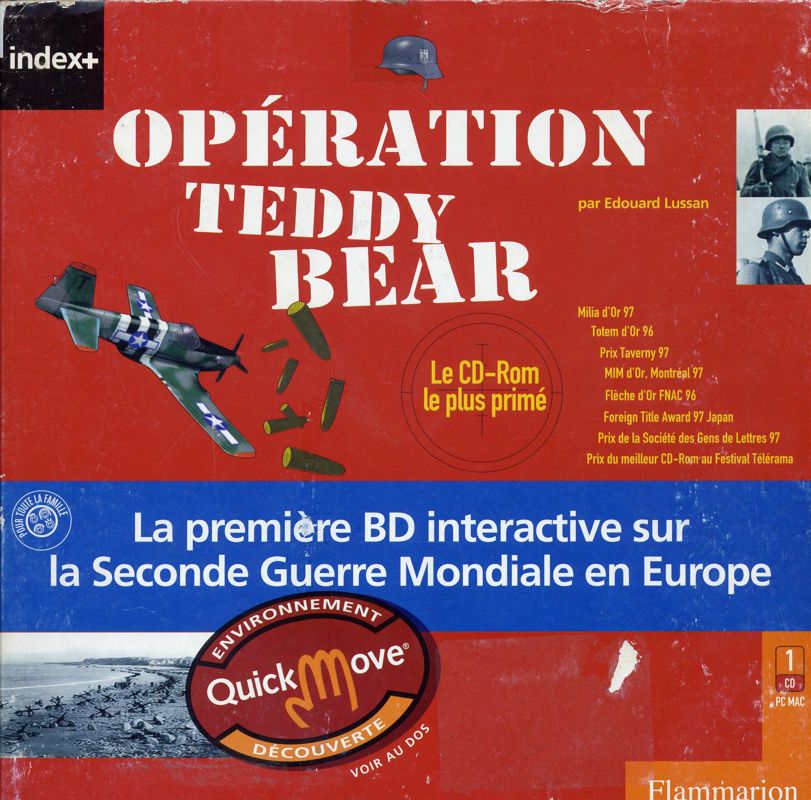
Retro Replay Review
Gameplay
Opération Teddy Bear departs from traditional point-and-click adventures by presenting its narrative as an animated comic book. Each panel unfolds sequentially, inviting you to advance the story at your own pace. Hovering your mouse over objects illuminates interactive elements and reveals contextual pop-ups—biographical notes, historical photographs, or archival maps—giving you the sense of exploring a living archive rather than simply clicking toward the next scene.
(HEY YOU!! We hope you enjoy! We try not to run ads. So basically, this is a very expensive hobby running this site. Please consider joining us for updates, forums, and more. Network w/ us to make some cash or friends while retro gaming, and you can win some free retro games for posting. Okay, carry on 👍)
The Quickmove feature is a standout mechanic that lets you control how new illustrations appear. You can move strictly in chronological order, jump only to panels you haven’t seen, display the entire volume at once, or even craft custom rules for panel progression. This flexibility turns the reading experience into an interactive choice, empowering both young readers and history buffs to explore at the pace and style that suit them best.
Underneath its comic-style presentation, Opération Teddy Bear incorporates light puzzle elements. Some objects hide clues or mini-games tied to deciphering code words, locating secret documents or piecing together torn photographs. These small challenges are never intrusive, but they do encourage active engagement, ensuring that you aren’t merely a bystander in the unfolding drama.
Graphics
The visual aesthetic of Opération Teddy Bear is reminiscent of hand-drawn storyboards brought to life. Illustrations boast clean lines, muted wartime palettes and careful attention to period detail—from the uniform insignias on German soldiers to the battered farmhouses dotting the Normandy countryside. Each frame feels lovingly crafted, evoking the texture of vintage comic books while still appearing crisp on modern displays.
Interlaced with the drawings are over 3,000 historical photographs and sketches—each one selectable for closer inspection. Flipping between an artist’s renderings and actual images of 1940s Europe helps ground the narrative in reality, while illustrated maps trace Paul’s journey from the coast through war-torn villages into the heart of occupied France. This blend of mediums creates a layered visual experience that is as informative as it is beautiful.
Navigation remains smooth even as the panels accumulate. A minimalist interface hides away when you’re simply reading, then reveals tooltips and timeline controls the moment you hover near the margins. Whether on PC or tablet, the frame-by-frame transitions feel fluid, with no noticeable lag, ensuring that the artwork always takes center stage.
Story
Set against the backdrop of the Normandy invasion in 1944, the narrative follows twelve-year-old Paul as he attempts to reach his mother in Paris. Unbeknownst to him, his teddy bear carries secret documents entrusted to his uncle, a member of the French Resistance. As Paul traverses fields and towns under German patrol, the stakes continually rise—creating a sense of urgent peril that resonates with modern young readers.
The game balances tension and empathy by framing wartime horrors through a child’s eyes. You witness Paul’s fear, his fleeting moments of hope when meeting sympathetic villagers, and the constant dread of discovery by the German Secret Service. It never feels gratuitous; instead, the story remains appropriate for preteens while still conveying the gravity of life under occupation.
Rich historical annotations complement the plot, letting you pause in mid-story to learn about D-Day strategies, resistance networks or the day-to-day hardships of civilians. These 3,000+ text entries are seamlessly woven into the experience, so you can dive deeper into any topic that piques your curiosity without breaking narrative momentum.
Overall Experience
Opération Teddy Bear offers a fresh take on edutainment by merging comic-book storytelling with interactive history. Children and adults alike will find themselves immersed in Paul’s desperate journey, guided by tasteful visuals and non-intrusive puzzles. The ability to customize how you consume the story via Quickmove makes it equally appealing for a quick history lesson or a prolonged deep-dive.
Performance is rock-solid on desktop and tablet platforms, with intuitive mouse or touch controls. Occasional typos or minor translation quirks appear in some pop-up texts, but they do little to detract from the overall polish. The absence of background music or voice acting places the emphasis squarely on the illustrations and your own reading pace—an intentional choice that underscores the game’s educational focus.
In the crowded field of historical games aimed at younger audiences, Opération Teddy Bear stands out for its innovative presentation and depth of content. It’s not just a story to watch or a quiz to complete—it’s a personalized journey through one of history’s most pivotal moments. For parents, educators or anyone curious about World War II, it’s a compelling interactive primer that entertains, informs and inspires further exploration.


Reviews
There are no reviews yet.