 Retro Replay Retro Replay gaming reviews, news, emulation, geek stuff and more!
Retro Replay Review
Gameplay
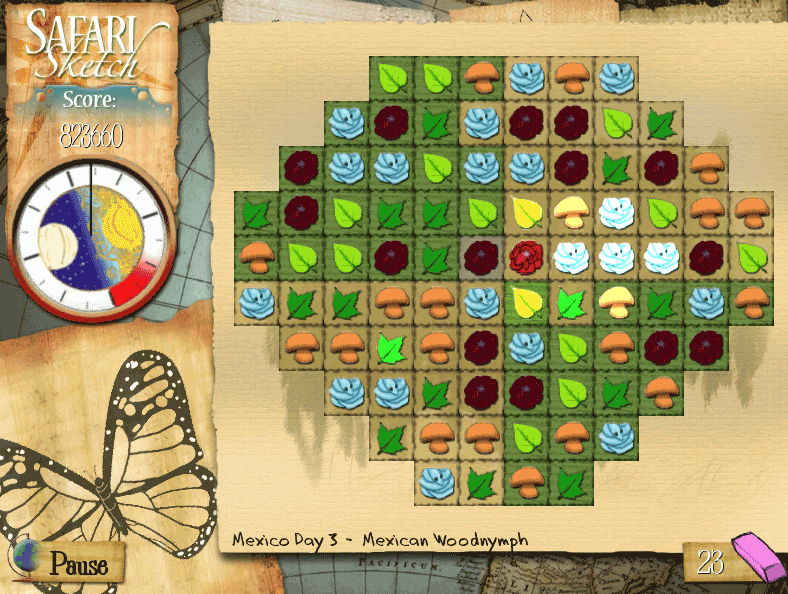
Safari Sketch adopts the familiar match-three formula, tasking players with swapping adjacent tiles to form rows or columns of three or more identical icons. Each successful match removes the tiles from the playfield and causes the tiles above to cascade down into the empty spaces, potentially creating chain reactions that reward the observant and strategic. Unlike basic jewel-matching titles, Safari Sketch layers in a secondary objective: clear the background grid underlying every tile space. Every time you match a tile, you also chip away at the illustrated backdrop until the entire board is revealed.
(HEY YOU!! We hope you enjoy! We try not to run ads. So basically, this is a very expensive hobby running this site. Please consider joining us for updates, forums, and more. Network w/ us to make some cash or friends while retro gaming, and you can win some free retro games for posting. Okay, carry on 👍)
The game’s progression introduces subtle twists to keep the core mechanics fresh. As you advance through levels, you’ll encounter locked tiles that require multiple matches to break, shaded areas that block cascades, and timed challenges that demand quick thinking. Power-up tiles appear regularly, such as painted frames that clear full rows or columns, and safari hats that explode in a small radius. These elements add a layer of tactical depth, forcing you to weigh immediate matches against long-term board control.
Level design balances accessibility with brisk difficulty scaling. Early stages serve as accessible tutorials, walking you through swap-and-match basics and journal interactions. Mid-game boards begin to feel more complex, with tight spaces and limited moves forcing careful planning. Later levels challenge even seasoned match-three veterans, requiring multi-stage combos and efficient use of power-ups. A generous undo feature and optional hints ensure that frustration rarely outweighs fun, making Safari Sketch suitable for both casual players and puzzle aficionados.
Graphics
One of Safari Sketch’s standout features is its hand-rendered art style. Each tile features a colorful icon—like zebra stripes, elephant silhouettes, or tropical foliage—that is crisp and easy to distinguish. The background art beneath the tiles is crafted in warm earth tones and lush greens, evoking an authentic safari atmosphere. As you clear tiles, the illustrations gradually reveal detailed sketches of exotic creatures, creating a satisfying visual payoff.
At the completion of each level, you’re treated to a full-screen drawing of an endangered animal, rendered with delicate line work and soft watercolor shading. These illustrations feel more like museum prints than typical video game rewards. The transition from puzzle board to finished artwork is smooth, with a quick fading animation that emphasizes the unveiling. This design choice makes each cleared board feel like a small artistic achievement.
The user interface is clean and unobtrusive, allowing the vibrant art to take center stage. Animated button presses, subtle tile movements, and gentle sound effects combine to reinforce the safari theme without overwhelming the player. Menus and HUD elements use natural textures—woodgrain panels, leather-stitched borders—that blend seamlessly with the game’s visual identity. Overall, Safari Sketch offers a polished, cohesive aesthetic that few match-three games attempt to achieve.
Story
While Safari Sketch isn’t a narrative-driven adventure, it weaves in an educational framing that feels both purposeful and engaging. Each level represents a “location” on your virtual safari, from arid savannas to dense rainforests. Clearing the board doesn’t just unlock the next puzzle—it also unlocks a new animal profile in your digital journal, encouraging a sense of exploration and discovery.
The in-game journal compiles over 50 entries, each featuring a brief but informative write-up about an endangered or exotic species. Topics range from the social behavior of meerkats to the migratory patterns of painted turtles. The text is concise, written in an approachable tone that’s accessible to players of all ages. This educational layer transforms the game from mere tile-matching into a small wildlife documentary that you carry in your pocket.
Safari Sketch’s narrative approach is subtle but effective: there’s no overarching villain or linear storyline, but the game still conveys a message of conservation and respect for nature. By tying puzzle completion to unlocking factual content, the developers create a rewarding loop that motivates players to progress not just for points, but for knowledge. The framing is gentle and never preachy, striking a rare balance between entertainment and education.
Overall Experience
Safari Sketch distinguishes itself in a crowded match-three market by blending polished puzzle mechanics with high-quality art and an educational bent. The core gameplay loop remains instantly accessible—anyone who’s enjoyed Bejeweled or Jewel Quest will feel right at home—and the added board-clearing objective injects fresh strategic layers. Occasional difficulty spikes keep things interesting without resorting to paywalls or excessively timed levels.
The combination of gorgeous illustrations and wildlife journal entries elevates the experience beyond simple tile-swapping. Completing a challenging puzzle and seeing a hand-drawn African elephant appear in your journal feels genuinely rewarding. These visuals, paired with informative facts, make Safari Sketch equally appealing to families looking for an edutainment title and adults seeking a relaxing yet mentally engaging pastime.
Overall, Safari Sketch offers a well-rounded package: addictive match-three gameplay, lush hand-rendered graphics, and a light educational narrative that celebrates endangered species. It’s a great choice for players who crave brain-teasing puzzles wrapped in a visually rich and thematically coherent experience. Whether you’re an animal lover, a casual gamer, or a puzzle enthusiast, Safari Sketch has enough depth and charm to keep you coming back for just one more level.


Reviews
There are no reviews yet.