 Retro Replay Retro Replay gaming reviews, news, emulation, geek stuff and more!
Retro Replay Review
Gameplay
Scholastic’s The Magic School Bus In Concert: Activity Center delivers a diverse array of interactive science-based mini-games that keep young players engaged from start to finish. Each activity is introduced by Ms. Frizzle or one of her adventurous students, providing clear instructions and friendly encouragement. From creating custom sound mixes to exploring ultrasound imaging inside Liz, the pacing strikes a balance between guided tasks and freeform experimentation.
(HEY YOU!! We hope you enjoy! We try not to run ads. So basically, this is a very expensive hobby running this site. Please consider joining us for updates, forums, and more. Network w/ us to make some cash or friends while retro gaming, and you can win some free retro games for posting. Okay, carry on 👍)
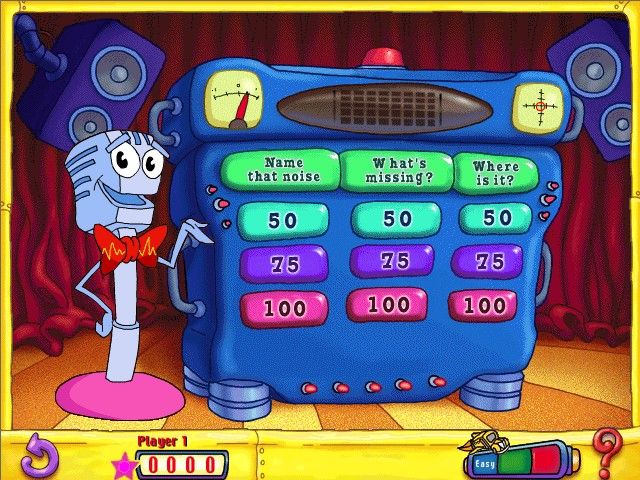
The game features three difficulty levels in every activity, ensuring that children of varying ages and skill levels can find an appropriate challenge. Beginners can dive straight into Scramble Sounds to sort out mixed-up audio clips, while more advanced players can tackle sound-wave puzzles and timed matching games. Each activity reinforces scientific concepts like frequency, vibration, and resonance through hands-on interaction and playful exploration.
Navigation is intuitive, with bright icons and simple menus that invite kids to choose their next experiment. Sound effects and character voices provide positive feedback, making even trial-and-error moments feel rewarding. The variety of games—from mixing beats with Carlos to designing concert posters with Keesha—ensures that children are never doing the same thing twice, fostering curiosity and replayability.
Graphics
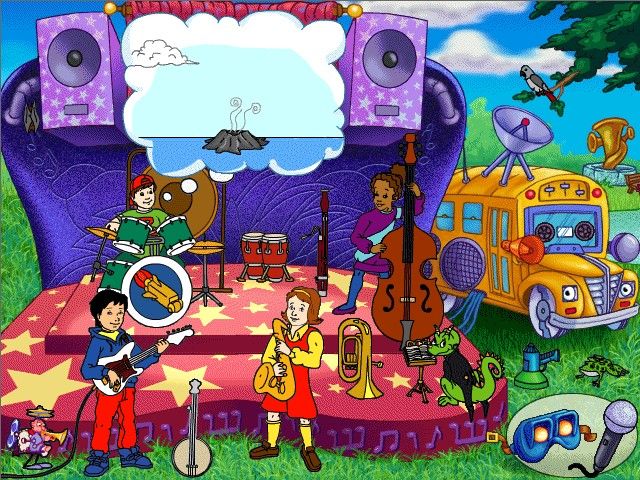
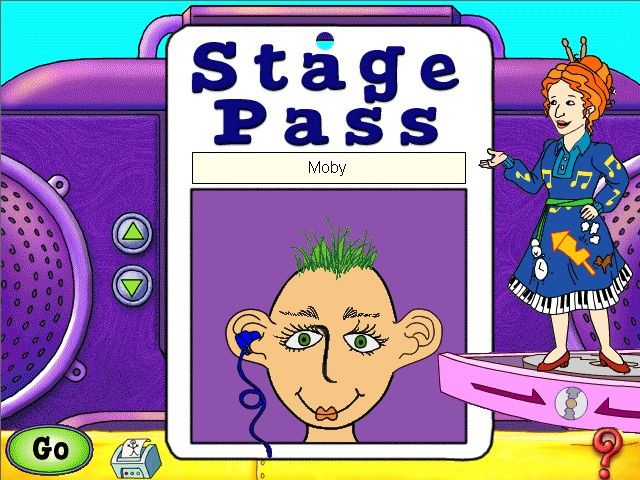
Visually, The Magic School Bus In Concert stays true to the vibrant, cartoon-style aesthetic of the beloved TV series. Characters like Ms. Frizzle, Ralphie, and Phoebe are rendered in bold lines and bright colors, capturing their personalities with expressive animations. Backgrounds range from a concert stage to a sound-lab workshop, each illustrated with playful details that invite closer inspection.
Interactive elements are highlighted with soft glows and subtle motion, guiding the player’s attention to hot spots without overwhelming the screen. In the ultrasound simulation, layers of semi-transparent graphics reveal Liz’s anatomy in a child-friendly way, blending educational accuracy with approachable art. Sound waves are visualized as colorful ribbons or bouncing balls, turning abstract physics concepts into something tangible and fun to watch.
The overall production values feel polished for a mid-’90s edutainment title. While the resolution and frame rate reflect the technological limitations of its era, the charm of the artwork and the clarity of the animations remain timeless. Kids familiar with the original TV show will instantly recognize their favorite characters, while newcomers will be drawn in by the energy and warmth of the presentation.
Story
Although The Magic School Bus In Concert focuses primarily on activities rather than a linear narrative, it still weaves a light story framework around its mini-games. Players join Ms. Frizzle and her class as they prepare for a big science concert, using each experiment to learn about the fundamentals of sound. This loose storyline provides context for each activity and gives children a goal to work toward.
Each character takes the lead on different tasks, adding personality and humor to routine experiments. For instance, Liz’s ultrasound investigation teaches anatomy and sound reflection, while Ralphie’s DJ-style mixing station emphasizes rhythm and pitch. These narrative touchpoints help young learners connect emotionally with the content and see how teamwork and curiosity drive scientific discovery.
Between activities, brief animated cutscenes feature the bus rolling in, characters cheering each other on, and Ms. Frizzle delivering her trademark catchphrases. Though simple, these segments maintain the spirit of exploration and excitement, reinforcing the idea that science is an adventure rather than just a set of facts. The lighthearted story serves as a friendly guide, keeping children motivated without overshadowing the educational goals.
Overall Experience
Scholastic’s The Magic School Bus In Concert: Activity Center strikes a successful balance between learning and play. By integrating hands-on experiments with the familiar world of Ms. Frizzle’s class, it encourages children to explore scientific principles in an engaging, memorable way. The variety of activities means that even after multiple play sessions, kids will still discover new challenges and surprises.
Parents and educators will appreciate the clear educational objectives embedded in each game, from sound sorting to art projects. The adjustable difficulty levels allow the title to grow with young learners, offering continued value as skills advance. Additionally, the positive messages about teamwork, problem-solving, and creative thinking make it a standout choice for both classroom and home use.
In terms of replayability, the game shines. Children can revisit favorite experiments, improve their best times, and experiment with different sound combinations. The charming graphics, friendly voiceovers, and playful soundtrack ensure that every session feels fresh. For anyone seeking an edutainment title that genuinely makes science fun, The Magic School Bus In Concert delivers an overall experience that’s both enriching and entertaining.


Reviews
There are no reviews yet.