 Retro Replay Retro Replay gaming reviews, news, emulation, geek stuff and more!



Retro Replay Review
Gameplay
The gameplay in Sophie’s World blends point-and-click exploration with interactive lessons on the history of philosophy. Players guide Sophie through richly detailed environments—from her cozy home to ancient Greek forums—unlocking puzzles that represent key philosophical ideas. Each puzzle encourages you to think critically; for example, reconstructing Socratic dialogues or piecing together logical syllogisms to advance the story.
(HEY YOU!! We hope you enjoy! We try not to run ads. So basically, this is a very expensive hobby running this site. Please consider joining us for updates, forums, and more. Network w/ us to make some cash or friends while retro gaming, and you can win some free retro games for posting. Okay, carry on 👍)
Though the core mechanics are relatively simple, the challenges steadily increase in complexity as Sophie encounters thinkers like Plato, Descartes, and Kant. Rather than relying on reflexes or timed sequences, progression hinges on observation, reading, and thoughtful decision-making. If you enjoy learning by doing, these mechanics turn abstraction into a tangible in-game reward system: solving a metaphysics riddle might open a secret chamber or reveal a hidden manuscript.
One of the game’s most notable design choices is its educational interludes. Periodically, the interface shifts from exploration to an illustrated lecture hall, where Sophie—or you—pick answers in a multiple-choice quiz or assemble philosophical principles in the correct order. While this can momentarily break immersion for players seeking nonstop action, it underscores the title’s mission to teach rather than merely entertain.
Despite its strengths, Sophie’s World occasionally stumbles in pacing. Long reading passages and essay-style questions may feel overwhelming to younger audiences or those accustomed to faster gameplay loops. However, for players willing to embrace its deliberate rhythm, the experience becomes a rewarding journey through intellectual history.
Graphics
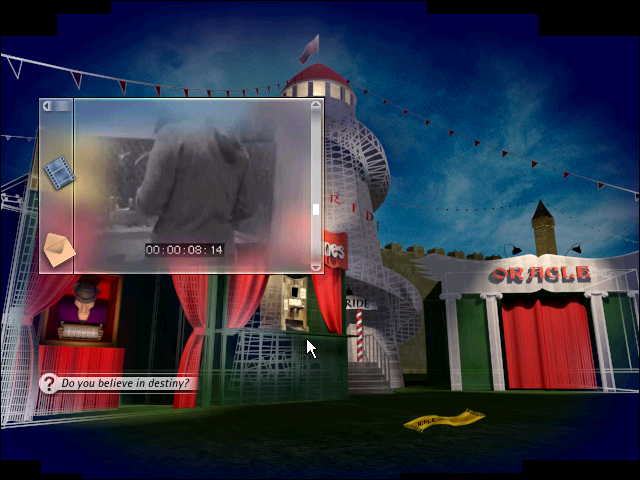
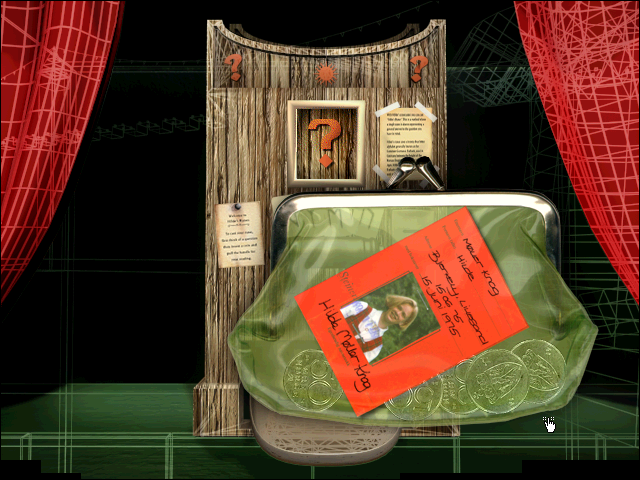
Visually, Sophie’s World strikes a balance between stylized realism and educational illustration. Character models are modestly detailed, with Sophie’s expressions subtly shifting as she reacts to new philosophical revelations. Backgrounds range from warm, book-lined interiors to sun-drenched Mediterranean plazas, each environment colored in soft pastels that evoke the era being explored.
The game’s use of period-appropriate architectural motifs and artifacts creates an immersive backdrop for Sophie’s quest. Marble columns, ancient scrolls, and classical statues are rendered with enough authenticity to feel educational without sacrificing aesthetic appeal. Transitions between locations are accompanied by smooth fades or gentle camera pans, reinforcing a museum-like atmosphere.
Animations are serviceable if not spectacular. Sophie’s walk cycle and gesture animations are clear and readable, though experienced gamers may note occasional stiffness in character movement. Cutscenes use static illustrations reminiscent of storybook panels rather than fully animated sequences, which helps conserve resources but occasionally breaks fluidity.
On the technical side, Sophie’s World runs smoothly on modern hardware with minimal load times. The UI remains uncluttered, presenting text and dialogue boxes at comfortable reading speeds. While purists might lament the absence of ultra-realistic visuals, the art direction here serves the game’s educational goals admirably—nothing feels superfluous, and all elements support philosophical discovery.
Story
Faithful to Jostein Gaarder’s acclaimed novel, the game’s narrative follows 14-year-old Sophie Amundsen as she receives mysterious letters prompting her to ponder life’s biggest questions. The adaptation captures the book’s whimsical tone, interweaving Sophie’s personal journey with guided tours through Western philosophy from the Pre-Socratics to modern existentialism.
Dialogues with Sophie’s enigmatic mentor, Alberto Knox, are presented as interactive cutscenes in which you select Sophie’s responses. These moments feel like choose-your-own-adventure vignettes that deepen your engagement with complex ideas. While the overarching storyline remains linear, the branching dialogue adds a sense of ownership over Sophie’s intellectual growth.
As Sophie’s world literally and figuratively expands—especially in the game’s surreal segments where philosophy blurs with reality—the plot builds toward a thought-provoking climax. Without spoiling the twists, it’s worth noting that the finale resonates on both an emotional and intellectual level, offering a payoff that feels earned after hours of guided study.
That said, some players may find the narrative slower than typical adventure games. The emphasis on philosophical discourse means fewer action beats and more quiet reflection. If you approach Sophie’s World as an interactive lecture or digital book, the story’s depth and charm will more than compensate for its deliberate pacing.
Overall Experience
Sophie’s World occupies a unique niche at the intersection of gaming and education. It won’t satisfy those seeking high-octane thrills, but it excels as an invitation to think deeply. By merging exploration, puzzles, and narrative, the title transforms abstract philosophical concepts into relatable in-game challenges that even newcomers can appreciate.
The production values—while not blockbuster-level—are consistent and purposeful, reinforcing the game’s dual mission as both entertainment and pedagogy. Voice acting is clear, if somewhat subdued, and background music sets an appropriately contemplative mood without ever overwhelming the dialogue. In short, the game’s presentation never distracts from its central focus: the mind’s journey.
For educators and parents, Sophie’s World offers a novel way to introduce students to philosophy through hands-on engagement. The modular quiz sections can be replayed independently, allowing learners to review topics at their own pace. Gamers with a thirst for knowledge will appreciate the sense of progress that comes from mastering each school of thought.
Ultimately, Sophie’s World stands out as a game that dares to be different. It asks players to slow down, read carefully, and reflect—a rare proposition in today’s market. If you’re intrigued by the history of ideas and willing to embrace a nontraditional game structure, Sophie’s adventure awaits as an inspiring bridge between literature, philosophy, and interactive media.



Reviews
There are no reviews yet.