 Retro Replay Retro Replay gaming reviews, news, emulation, geek stuff and more!


Retro Replay Review
Gameplay
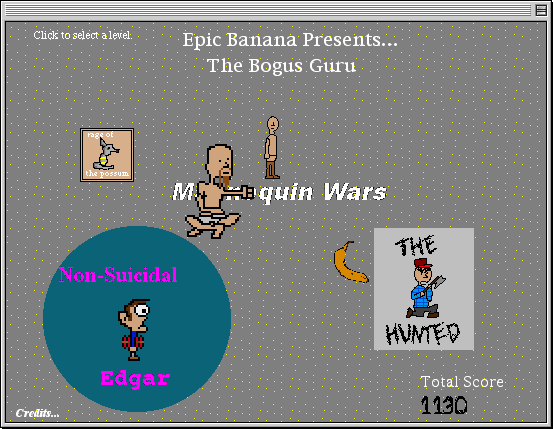
The Bogus Guru presents a curious mash-up of four distinct mini-games, each with its own mechanics and challenge curve. From the moment you navigate the level‐select screen, keeping your banana cursor away from the floating guru adds a light layer of tension to your decision of which game to tackle first. This playful bit of risk encourages quick decisions and keeps the opening screen from feeling static or uninteresting.
(HEY YOU!! We hope you enjoy! We try not to run ads. So basically, this is a very expensive hobby running this site. Please consider joining us for updates, forums, and more. Network w/ us to make some cash or friends while retro gaming, and you can win some free retro games for posting. Okay, carry on 👍)
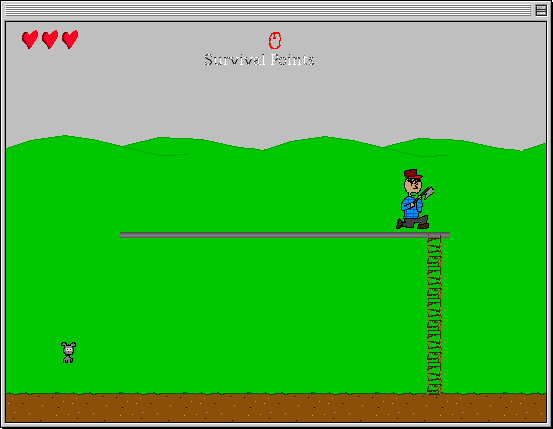
Once inside each mini-game, controls are intuitive but demand precise timing. In Rage of the Possum, you dash through fields to gobble carrots while dodging a relentless green monster that drains your health on contact. The simple move-and-collect loop ramps up in speed, forcing quick reflexes, especially when multiple threats converge. Meanwhile, The Hunted slows the pace slightly, focusing on survival as the lone rabbit sprints away from an axe-wielding hunter. Here, evasion and stamina management become paramount as each second alive translates directly to your score.
Mannequin Wars and Non-Suicidal Edgar round out the package with two very different experiences. Mannequin Wars is a button-mashing brawl where you trade limbs and punishing blows with a rival department-store mannequin. The lack of jump or block mechanics focuses the player’s attention on choosing between punch and kick, making each hit count more than endless combos. In Non-Suicidal Edgar, you shove bystanders in hopes of extracting the key to your explosive restraints. This odd crowd-manipulation puzzle rewards spatial awareness and strategic shoving angles, making every crowd encounter a miniature puzzle in itself.
Graphics
The Bogus Guru leans into a deliberately low-fi, retro aesthetic that evokes mid-90s shareware more than modern indie polish. Characters and backgrounds are built from chunky pixels with a limited color palette that, while simple, often exemplifies each game’s distinct atmosphere. The possum’s field in Rage of the Possum bursts with vibrant oranges and greens, whereas The Hunted’s makeshift forest is draped in muted browns and shadowy silhouettes.
Animation quality varies across the mini-games. The possum’s chomping motion and the monster’s lunge are satisfyingly fluid for the style, but the hunter in The Hunted occasionally slips into staccato frames that can hamper your spatial judgments. Mannequin Wars emphasizes static poses and exaggerated limb damage, making the tactical loss of an arm or leg visually and mechanically impactful. Edgar’s explosive predicament is communicated entirely through blinking sprites and a shaking fuse, which builds tension in an unexpectedly suspenseful way.
Interface elements remain minimalistic throughout. Score and health indicators are tucked neatly into corners, allowing the action to take center stage. The floating guru and banana cursor on the level‐select screen aren’t just charming thematic flair—they reinforce the game’s playful, irreverent tone. Though the graphics will not win awards for realism or high resolution, they serve each mini-game’s identity and provide a cohesive retro veneer that ties the collection together.
Story
Rather than presenting a unified narrative, The Bogus Guru uses a loose premise to frame its quartet of arcade-style diversions. The fruit-eating guru who looms over the level‐select screen is more comedic mascot than storyteller, reminding you that the game takes its silliness very seriously. There are no cutscenes or dialogue boxes to slow you down—each mini-game launches instantly and immerses you in its own microcosm of action and challenge.
Rage of the Possum and The Hunted share a survival-through-pursuit theme: one small animal racing against time and a predator. Their unspoken narrative—eat as much as you can or stay alive as long as possible—drives your motivation through raw gameplay stakes. Mannequin Wars flips the script into a quasi-satirical combat arena, where department-store mascots settle corporate grudges with bare-fisted brutality. The story here emerges from dismemberment animations and victory poses rather than text or voiceover.
Non-Suicidal Edgar delivers the collection’s most overtly humorous premise: a man strapped with explosives must hustle through crowds to find his salvation. The presence of bystanders, each a potential key-holder, gives Edgar’s frantic shoving a weak narrative thread that ties your actions to an underlying rescue mission. Altogether, The Bogus Guru’s storytelling may feel thin for players seeking a deep plot, but its bite-sized themes and playful absurdity complement the arcade-driven gameplay perfectly.
Overall Experience
The Bogus Guru is an exercise in focused arcade thrills, packaged with tongue-in-cheek humor and a dash of retro charm. Jumping between mini-games breaks up potential monotony, and the absence of save functions or high-score boards keeps each session short, sharp, and self-contained. It’s the kind of game you pick up for ten minutes of frantic fun rather than marathon play sessions.
Replay value hinges largely on your attachment to individual challenges. If you love tight, twitch-finger carrot-chomping or frantic crowd-pushing puzzles, you’ll find yourself cycling back to specific mini-games repeatedly. On the other hand, players seeking progression, unlockables, or narrative development may grow weary of the barebones presentation and lack of long-term goals. The minimalist interface and the ever-present threat of the floating guru on the select screen ensure you never forget the game’s irreverent spirit.
Ultimately, The Bogus Guru will best appeal to fans of quick arcade diversions who appreciate a strong dose of retro aesthetics and offbeat humor. It won’t replace sprawling story-driven epics or competitive leaderboards, but as a bite-sized collection designed for rapid-fire sessions, it delivers an engaging, if occasionally uneven, set of challenges that are easy to dip in and out of—and just as easy to remember once you’ve set down the controller.


Reviews
There are no reviews yet.