 Retro Replay Retro Replay gaming reviews, news, emulation, geek stuff and more!
Retro Replay Review
Gameplay
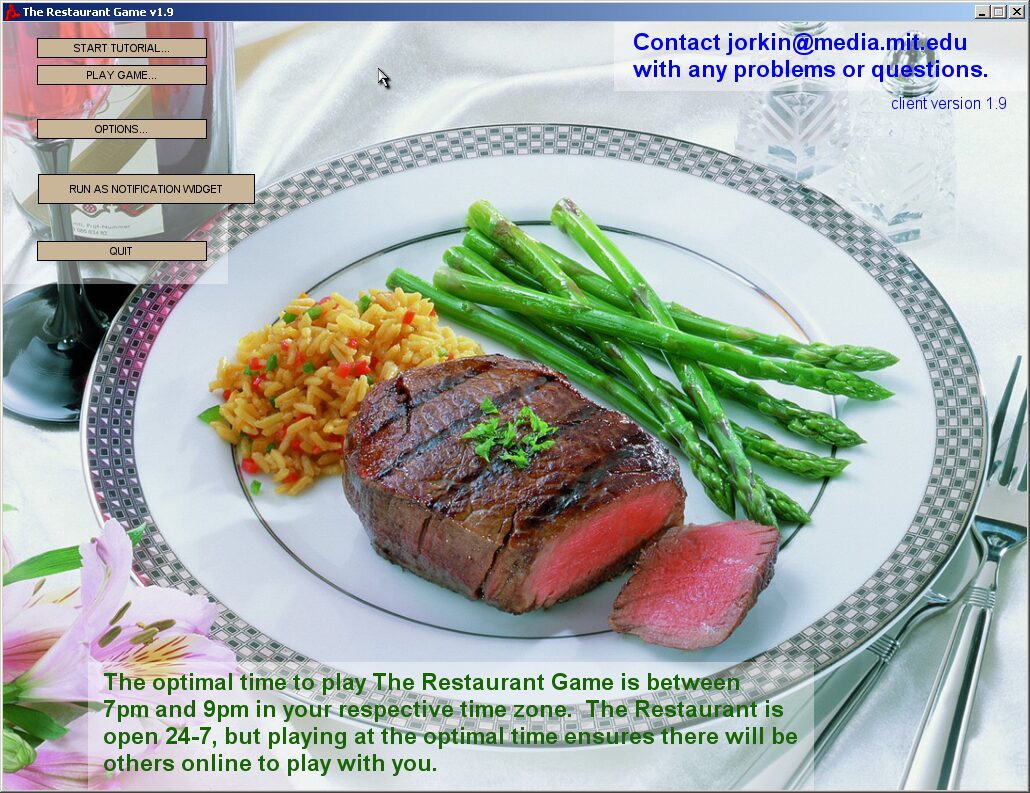
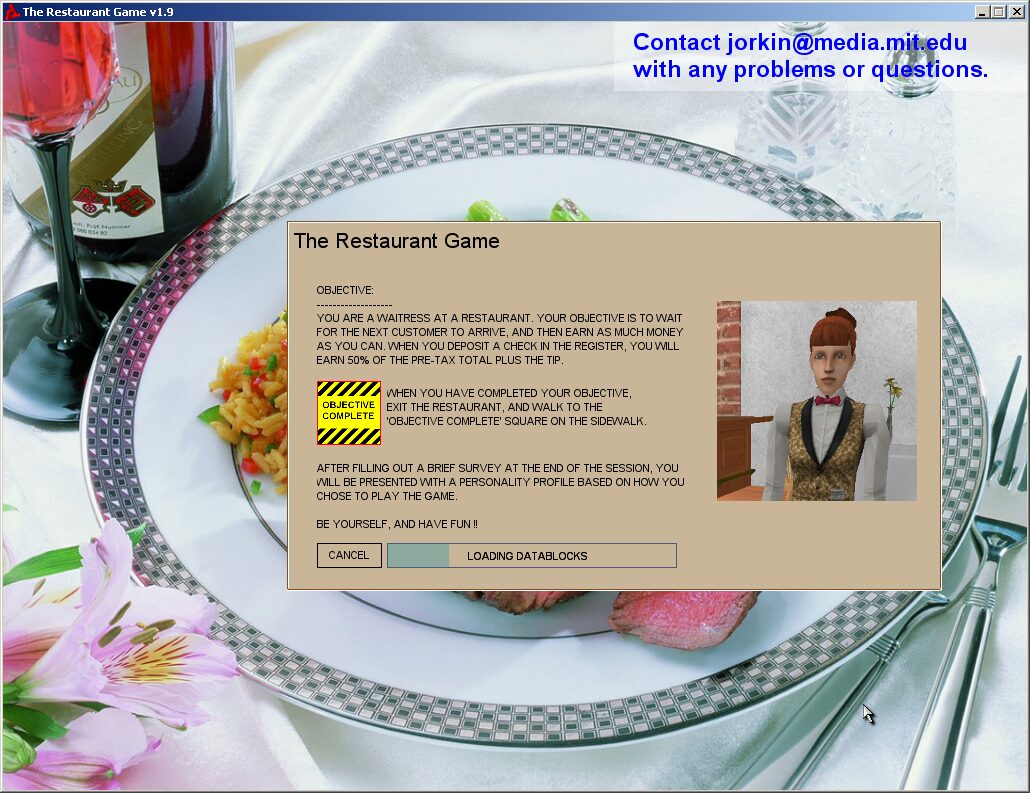
The Restaurant Game places you in the heart of a bustling eatery where real players assume the roles of servers or diners in a fully realized virtual restaurant. Servers bustle between tables, taking orders, adjusting furniture, and ensuring that customers have a seamless dining experience. Diners, on the other hand, can peruse the menu, order dishes, quaff drinks, and even contribute tips at the end of the meal. This live-player setup creates a dynamic simulation far beyond scripted encounters.
(HEY YOU!! We hope you enjoy! We try not to run ads. So basically, this is a very expensive hobby running this site. Please consider joining us for updates, forums, and more. Network w/ us to make some cash or friends while retro gaming, and you can win some free retro games for posting. Okay, carry on 👍)
At its core, the game’s mechanics are straightforward: mix and serve beverages, prepare and deliver meals, handle the bill, and engage in casual conversation. Yet simplicity is deceptive here. Each interaction gathers invaluable data on human social behavior. These real-time exchanges will feed future single-player titles, where a more natural, human-like social AI can react to your choices with genuine nuance and spontaneity.
One surprising delight is the freedom to rearrange furniture. Chairs and tables can be shuffled to accommodate a party or to create a cozy corner for conversation. This small detail adds an unexpected layer of interactivity, encouraging players to think like real restaurateurs. While the core loop may seem mundane compared to action or fantasy games, this faithful portrayal of everyday life is at the very soul of role-playing.
Every session can vary dramatically depending on the cast of players. A calm afternoon tea can give way to a chaotic dinner rush, complete with spilled drinks, impatient customers, and comedic misunderstandings. It’s this unpredictability—this sense of genuine human drama—that elevates The Restaurant Game from a simple simulator into a living, breathing social experiment.
Graphics
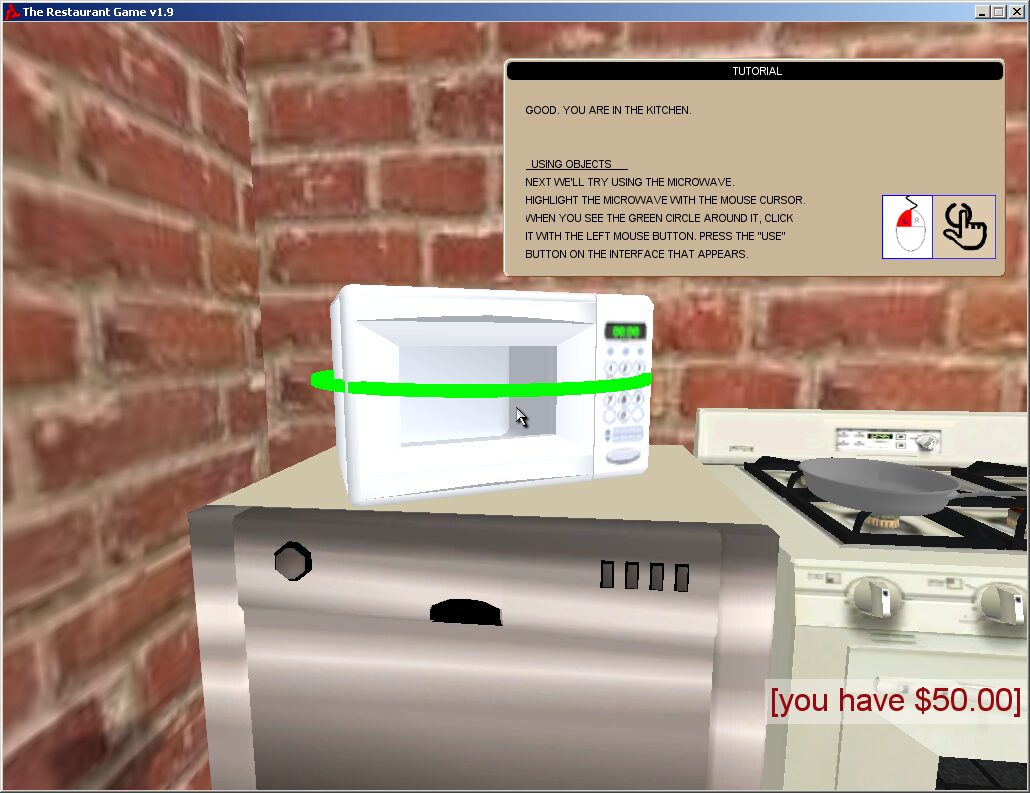
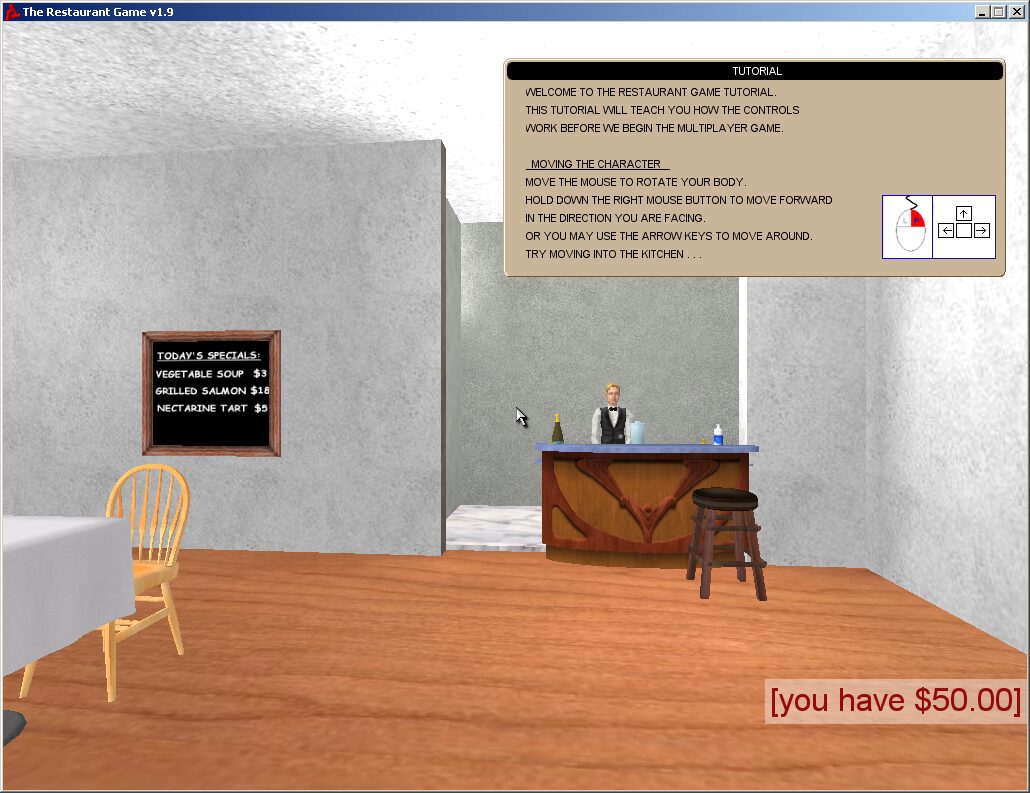
Visually, The Restaurant Game adopts a stylized, semi-realistic aesthetic that balances clarity with charm. Tables gleam under soft lighting, utensils reflect the ambient glow, and character models are expressive enough to convey gestures without falling into the uncanny valley. The design prioritizes readability—menus are easy to scan, and food items look appetizing without overwhelming the screen.
Environments are rich with detail: framed art decorates the walls, potted plants line the windowsills, and subtle particle effects hint at steam rising from a freshly plated dish. Even the background chatter and clinking cutlery add to the immersive atmosphere. While it’s not striving for photorealism, the game achieves a pleasant visual style that supports long sessions without causing fatigue.
The user interface is clean and intuitive. Order tickets pop up next to a server’s cursor, tipping prompts appear discreetly at the end of a meal, and chat bubbles feel integrated rather than obtrusive. Animations are smooth, from the swift pour of a cocktail to the slow, satisfied nod of a well-served patron. In a game that prizes social interaction, these visual cues are essential for nonverbal communication.
Performance-wise, the game runs fluidly on a range of hardware. Even during peak hours with dozens of players in one restaurant, frame rates remain stable. Load times are brief, and entering or leaving the restaurant lobby feels almost instantaneous. For a title that thrives on real-time exchanges, this reliability is a major plus.
Story
Unlike traditional single-player titles, The Restaurant Game doesn’t follow a scripted narrative. Instead, it offers emergent storytelling driven by player interactions. Think of it as an improv stage: there’s no predefined plot, but with the right ensemble of diners and staff, you might witness moments that rival a Pinter or Beckett play in subtlety and emotional resonance.
Your personal story unfolds in every exchange—whether deftly handling a stressed customer, discovering a secret menu item, or bonding over shared laughter at a spilled soup. There’s a genuine sense of cause and effect: a careless service mistake can sour a relationship, while a thoughtful gesture may earn a generous tip or a new friendship. In that sense, each shift feels like a chapter in a continuing saga of culinary service and human connection.
The lack of a linear plot may unsettle players expecting epic quests or grand conspiracies, but this title is its own narrative experiment. By removing a rigid storyline, The Restaurant Game invites you to co-author the experience alongside fellow players. Every night you log on, you’re stepping into a fresh story shaped by real human motivations and reactions.
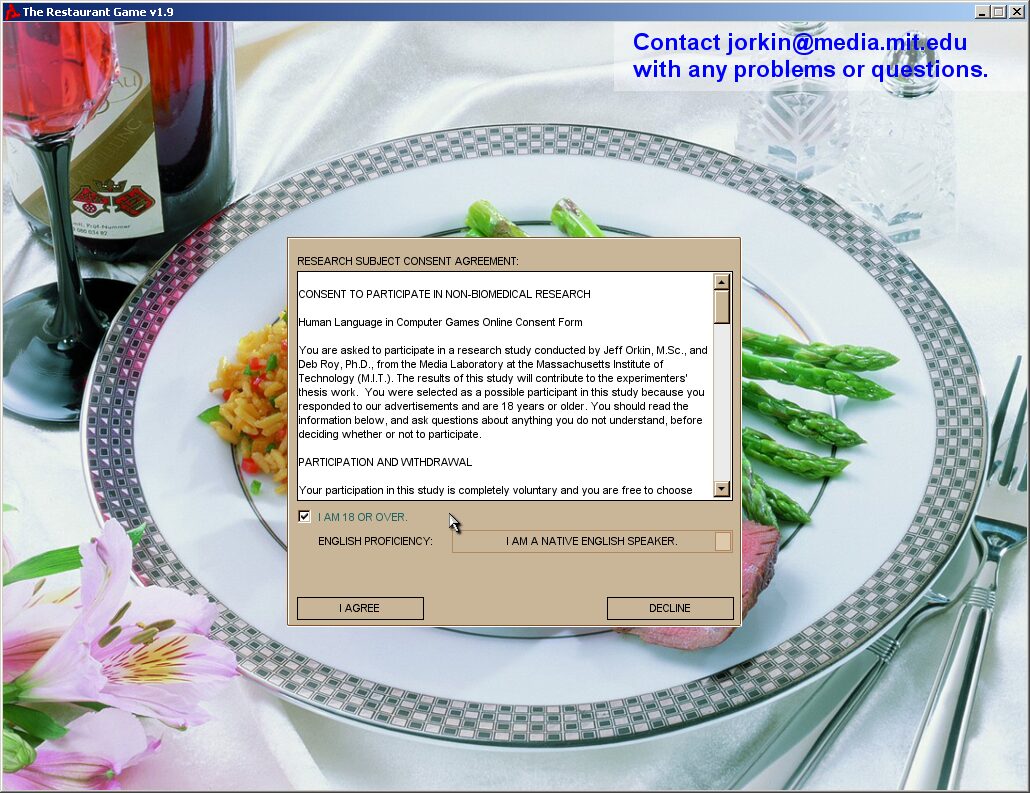
Moreover, the game’s commitment to data collection for future AI development adds an intriguing meta-narrative. You’re not just playing—you’re contributing to the evolution of social interaction in video games. It’s rare to feel like part of a living laboratory, and that sense of participation deepens the emotional investment in every conversation.
Overall Experience
The Restaurant Game is a bold departure from the usual escapism of video games. By simulating the everyday rhythms of dining service, it invites players to engage in genuine human drama. This isn’t about slaying dragons or building empires—it’s about the satisfying cadence of taking orders, making small talk, and watching customers leave with a smile (and a tip).
Its greatest strength lies in the collaborative, unscripted interactions. One evening you might witness a heartfelt apology after a food allergy near-miss; another night, a group of friends could turn the restaurant into a makeshift dance floor. These unpredictable moments create memories far more personal than any cutscene or boss battle.
While the game’s faithful portrayal of mundane tasks may not appeal to everyone, those who appreciate slow-burning, character-driven experiences will find plenty to love. The promise of feeding this data into future AI-driven single-player games also gives a forward-looking incentive: your time here truly matters, shaping the next generation of interactive drama.
Ultimately, The Restaurant Game is an experiment in social simulation and emergent storytelling. Its focus on authentic human interaction, reliable performance, and charming visuals make it a compelling choice for players seeking something different. If you’re curious about role-playing in its purest form—practically interactive theater—then taking a seat at this virtual restaurant might be one of the most rewarding meals you’ve ever experienced.



Reviews
There are no reviews yet.