 Retro Replay Retro Replay gaming reviews, news, emulation, geek stuff and more!


Retro Replay Review
Gameplay
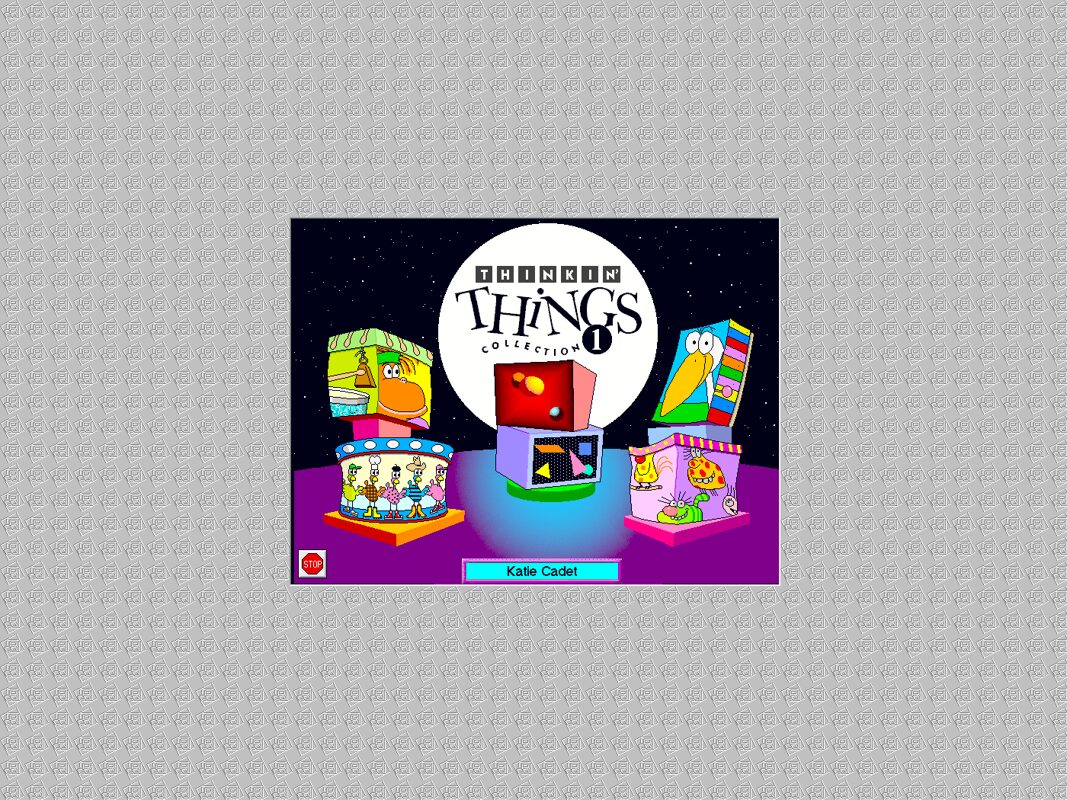
Thinkin’ Things Collection 1 offers a rich assortment of six distinct activities tailored for children ages 5–10, each designed to develop core thinking skills such as memory, critical thinking, problem solving, and creativity. The program splits its content into Create mode and Question & Answer mode, enabling learners to choose between open-ended exploration and structured challenge. In Create mode, students are free to experiment with sounds, shapes, and patterns, building confidence in their own ideas. Question & Answer mode, by contrast, prompts children with specific tasks, guiding them through progressive steps and rewarding correct responses with playful animations.
(HEY YOU!! We hope you enjoy! We try not to run ads. So basically, this is a very expensive hobby running this site. Please consider joining us for updates, forums, and more. Network w/ us to make some cash or friends while retro gaming, and you can win some free retro games for posting. Okay, carry on 👍)
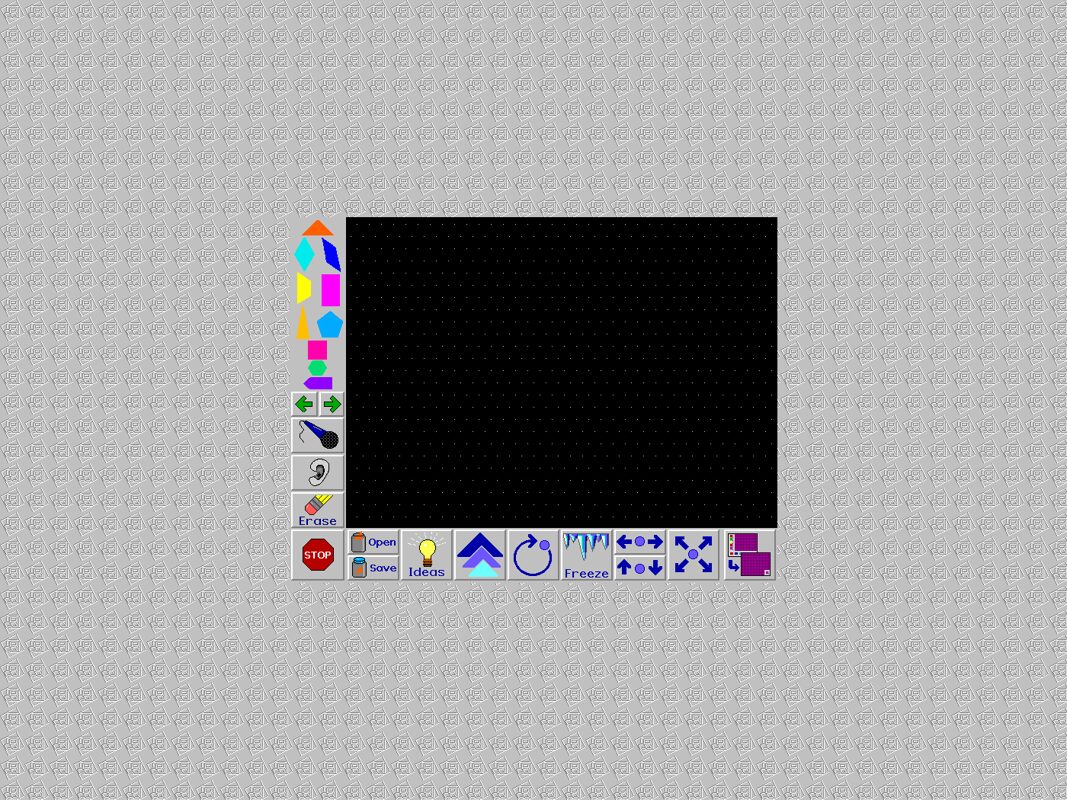
Oranga Banga immerses players in a musical call-and-response game: a lively character plays a sequence of instrument sounds that children must accurately replicate. This activity builds auditory memory and pattern recognition skills while maintaining a lighthearted rhythm that keeps young users engaged. Meanwhile, BLOX – Flying Shapes introduces spatial awareness by challenging players to manipulate geometric shapes in motion. The combination of movement and visual cues strengthens a child’s understanding of shape properties and relationships between objects.
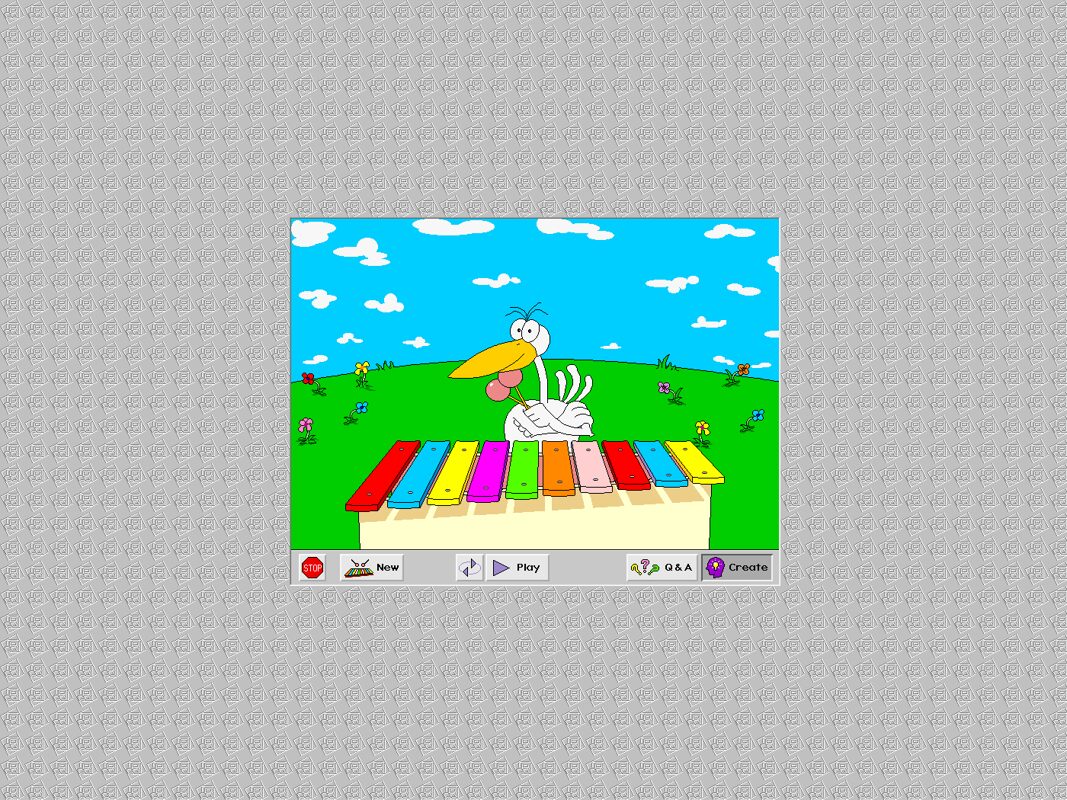
Feathered Friends focuses on visual discrimination by asking students to match, compare, and combine attributes to form complete bird images. This activity promotes hypothesis testing and pattern completion, as players predict which attribute changes will produce the correct result. Toony Loon takes creativity to a new level, encouraging children to improvise melodies on unique xylophones. By mixing and matching notes, students develop an intuitive sense of rhythm and melody without rigid instructions.
Finally, the Fripple Shop exercise offers a dynamic test of observational skills. Children receive orders via sound cues, faxes, or phone rings and must select Fripples—quirky creatures with varying attributes—to fulfill customer requests. This activity not only evaluates pattern recognition but also provides teachers and parents with insight into individual learning styles by tracking response accuracy and preferred input modes.
Graphics
Graphically, Thinkin’ Things Collection 1 employs bright colors and friendly characters that immediately appeal to young learners. Each activity features distinct visual themes—from the zebra-striped backdrop of Oranga Banga to the softly shaded platforms in BLOX – Flying Shapes—ensuring that children can easily distinguish one game environment from another. The user interface remains uncluttered, with large buttons and clear icons that even the youngest players can navigate independently.
Animations are smooth and engaging, offering immediate visual feedback for both correct and incorrect actions. When a child successfully replicates a musical sequence in Oranga Banga, a small character dances or plays a celebratory tune; if a mistake occurs, gentle prompts encourage retry without discouragement. In Feathered Friends, assembling a bird piece by piece reveals the final image through a satisfying animation, reinforcing the learning moment.
The art style balances whimsy with clarity, ensuring that shapes, colors, and patterns are both visually stimulating and easily identifiable. The backgrounds remain relatively simple to avoid distraction, placing the focus squarely on the task at hand. Sound effects and musical cues complement the visuals, creating a multisensory experience that enhances engagement and retention.
Story
While Thinkin’ Things Collection 1 is not narrative-driven in the traditional sense, it weaves a thematic through-line by casting the learner as an active participant in each activity’s “world.” From the musical realm of Oranga Banga to the bustling Fripple Shop, children assume the role of problem solvers and creators. This loose story framework provides context and motivation, transforming abstract skill-building exercises into mini-adventures.
Characters like the friendly Fripple customers and the animated hosts in each module serve as guides, offering encouragement and setting challenges. Though there is no overarching plot or dialogue-heavy cutscenes, the consistent presence of these personas fosters a sense of continuity. Young players feel they are returning to a familiar place each time they launch the CD-ROM, with recognizable hosts who celebrate their successes and guide them through stumbling blocks.
The progression from simple tasks—such as repeating a two-note pattern in Oranga Banga—to more complex challenges like identifying Fripples with specific attributes mirrors a journey of skill development. Each activity builds on the previous one, offering an implicit storyline of growth and discovery. This subtle narrative structure keeps learners invested, encouraging them to complete all six activities to “unlock” a comprehensive set of thinking experiences.
Overall Experience
Thinkin’ Things Collection 1 delivers a balanced mix of educational content and playful interactivity, making it an ideal choice for parents and teachers seeking to reinforce thinking skills in young children. The six varied activities ensure that learners remain engaged, switching between auditory, visual, and kinesthetic challenges. The dual modes—Create and Question & Answer—cater to different learning preferences, offering both free-form exploration and guided practice.
The software’s age-appropriate design, both in interface and content, allows children to work independently, fostering a sense of accomplishment with every completed activity. Real-time feedback and gentle encouragement keep frustration levels low, promoting a positive association with learning. Teachers and parents can observe progress through activity reports in Fripple Shop, gaining insights into each child’s strengths and areas for growth.
Replay value is high thanks to the adaptive difficulty built into each module. As children master one level, more complex patterns and shapes emerge, keeping the challenge fresh. The combination of attractive graphics, engaging sounds, and varied tasks ensures that Thinkin’ Things Collection 1 remains a go-to resource for developing critical cognitive skills in a fun, interactive setting.
Overall, Thinkin’ Things Collection 1 strikes a commendable balance between educational rigor and playful discovery. Its thoughtfully designed activities, cheerful presentation, and flexible learning modes make it a standout choice for young learners and educators alike, providing an enriching experience that goes beyond rote memorization to foster genuine problem-solving and creative thinking.

Reviews
There are no reviews yet.