 Retro Replay Retro Replay gaming reviews, news, emulation, geek stuff and more!
Retro Replay Review
Gameplay
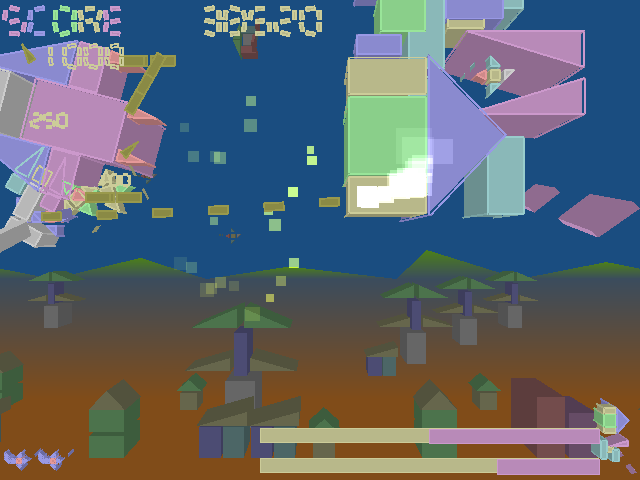
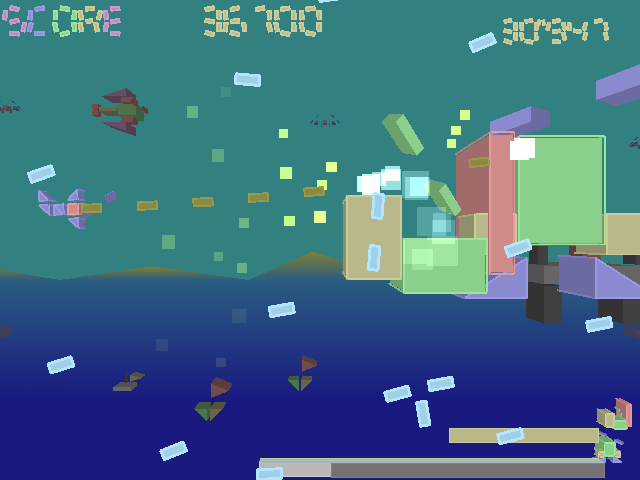
TUMIKI Fighters delivers a deceptively simple premise that blooms into a surprisingly deep and strategic bullet-hell experience. You pilot a fragile toy-plane armed with a single main weapon, facing relentless waves of enemy toy ships that emerge from the right side of the screen. While your basic attack is limited, the true heart of the gameplay lies in salvaging parts from destroyed foes. These parts fall through the playfield, and by retrieving them you not only reinforce your hull but also gain the exact weapons your enemies used against you, turning their firepower on them.
(HEY YOU!! We hope you enjoy! We try not to run ads. So basically, this is a very expensive hobby running this site. Please consider joining us for updates, forums, and more. Network w/ us to make some cash or friends while retro gaming, and you can win some free retro games for posting. Okay, carry on 👍)
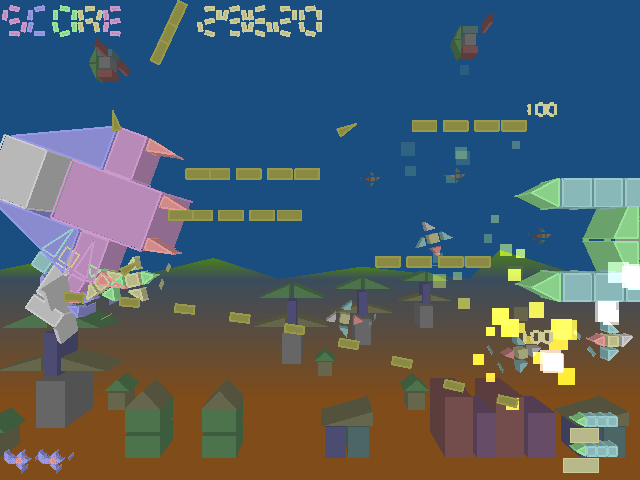
The tug-of-war between risk and reward defines the core loop: should you dash forward to collect a powerful cannon, knowing you might collide with heavy fire, or pull parts in from a safe distance by pressing the secondary key? The more bits you gather, the larger and more unwieldy your craft becomes, turning into a clustered mosaic of blocks that serve as both shield and armament. Yet the enemy AI adapts: as your ship grows, foes unleash denser, more complex bullet patterns, forcing you to decide when to bail on accumulated parts to dodge a hailstorm of projectiles.
Each level culminates in a boss encounter that tests your mastery of salvaging, positioning, and timing. Boss ships often sport multiple weapons and attack phases, meaning you’ll need to balance offense and defense in real time. The absence of collision detection with enemy hulls emphasizes dodging bullet patterns and smart part management. This elegant design choice keeps the action fast-paced and focused on pattern recognition and quick reflexes, making every run feel fresh and rewarding.
Graphics
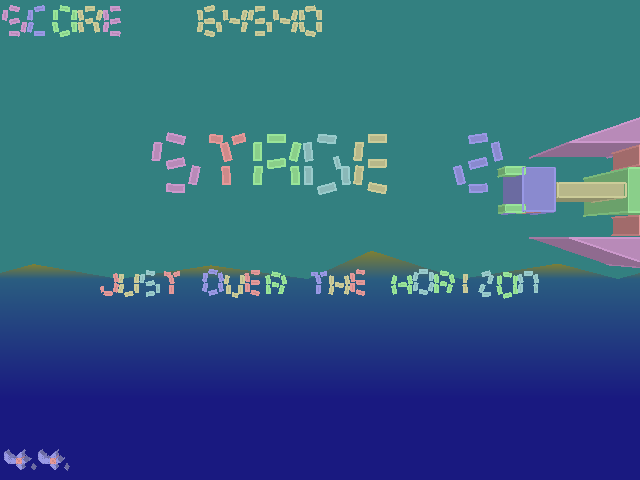
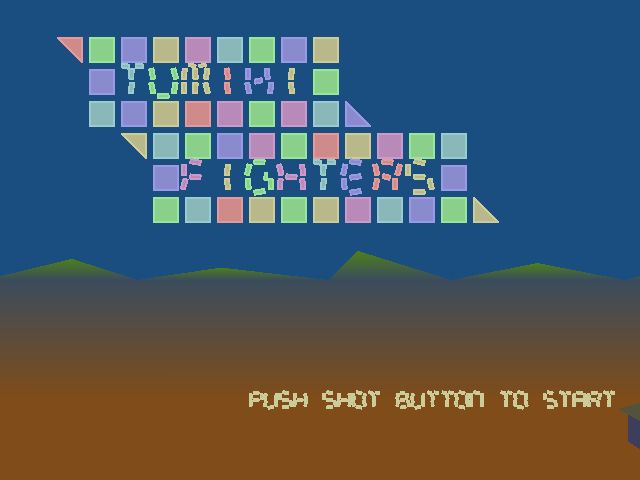
TUMIKI Fighters employs minimalistic 3D graphics rendered in soft pastel hues, giving the game a unique, toy-like charm. Enemies are composed of simple geometric shapes—cubes, prisms, cylinders—stacked and configured in imaginative ways that invoke building blocks and childhood models. This visual style not only sets TUMIKI Fighters apart from the crowded shooter genre but also keeps the action crystal clear, even when your screen is filled with salvaged parts and incoming bullets.
The game’s uncluttered aesthetic ensures that you can always track your ship, the falling salvage, and the bullet patterns without confusion. Shadows and lighting are kept to a minimum, which may feel austere to some, but this restraint enhances performance on even modest hardware. Frame rates remain rock-solid as you grow your ship into a sprawling behemoth, preserving the split-second responsiveness essential to dodging and weaving through dense fire.
Beyond its own merits, TUMIKI Fighters’ visual design laid the groundwork for later titles, most notably inspiring Nintendo’s Wii game Blast Works: Build, Trade, Destroy. That game even includes a playable version of the original freeware, a testament to TUMIKI Fighters’ lasting influence and distinctive aesthetic vision.
Story
While TUMIKI Fighters doesn’t deliver a traditional narrative with cutscenes or dialogue, it weaves an evocative story through its toy-themed presentation and escalating combat scenarios. You assume the role of a lone toy-plane defending an imaginary playroom world from an onslaught of invading toy fleets. The lack of explicit plot invites players to project their own childhood memories and fantasies onto the action, transforming each mission into a personal drama of survival.
Each level feels like a new chapter in an unfolding saga: from simple patrols across a wooden floor to high-stakes battles on a grid of pastel platforms. Boss fights serve as climactic showdowns that punctuate the unspoken narrative, casting you as the brave underdog toy mounting a last stand against ever-larger mechanical foes. This emergent storytelling approach proves surprisingly effective, letting gameplay events themselves tell a story rather than relying on text or voiceover.
The world-building also extends to the salvaged parts you collect. As your craft metamorphoses into a motley assemblage of enemy weaponry, you witness firsthand how each conquest reshapes your “character.” Your ship’s evolution becomes a visual metaphor for growth and adaptation, underscoring a playful tale of resourcefulness and ingenuity in the battlefield of toys.
Overall Experience
TUMIKI Fighters stands out as a clever and imaginative offering in the freeware shooter landscape. Its blend of minimalist visuals, emergent strategy, and high-octane action creates a compelling package that belies the game’s small download size and simple premise. Each run is a balancing act, asking you to decide when to risk everything for more firepower and when to pull back and preserve your hard-earned scraps.
The learning curve is gentle at first but quickly ramps up as you discover the nuanced interplay between ship size, enemy adaptation, and boss mechanics. Casual players will find plenty of satisfaction in mastering basic dodging and part collection, while hardcore enthusiasts will relish pushing for perfect runs, speed clears, and inventive part combinations. The absence of microtransactions or intrusive menus reinforces the pure gameplay focus, making every session about honing your skills and chasing better performance.
Ultimately, TUMIKI Fighters delivers an addictive, joyful experience that rewards creativity and quick thinking. Whether you’re drawn in by the charming pastel graphics, the inventive salvage system, or the relentless bullet-hell thrills, this freeware gem offers hours of engaging play. It’s a must-try for fans of shoot ’em ups and anyone looking for a unique twist on the side-scrolling formula.


Reviews
There are no reviews yet.