 Retro Replay Retro Replay gaming reviews, news, emulation, geek stuff and more!
Retro Replay Review
Gameplay
Beepertron captures the essence of the classic “Simon Says” challenge by presenting players with short musical phrases played on an on-screen piano. Each round begins with the system playing a sequence of up to ten notes, and the player’s task is to faithfully reproduce that melody using the computer keyboard. This simple loop of listen-and-repeat forms the core of the experience, demanding both concentration and nimble fingers as the sequences grow more elaborate.
(HEY YOU!! We hope you enjoy! We try not to run ads. So basically, this is a very expensive hobby running this site. Please consider joining us for updates, forums, and more. Network w/ us to make some cash or friends while retro gaming, and you can win some free retro games for posting. Okay, carry on 👍)
The game’s difficulty curve is razor-sharp yet fair. Early melodies are slow and predictable, giving newcomers a chance to get comfortable with the mapping between keyboard keys and piano tones. As you progress, sequences lengthen and occasionally introduce rapid-fire note changes that test both your memory and dexterity. A single missed note doesn’t end the session, but after seven mistakes the game is over, creating a perfect balance between challenge and forgiveness.
Replayability is built in through its “one-bit” sound approach and the randomness of the melody generator. No two runs feel identical, and the looming threat of seven errors incentivizes repeated attempts to beat your personal best. Whether you’re a hardcore musician seeking a mental workout or a casual player looking for quick, bite-sized challenges, Beepertron’s straightforward design hooks you immediately and keeps you coming back for “just one more try.”
Graphics
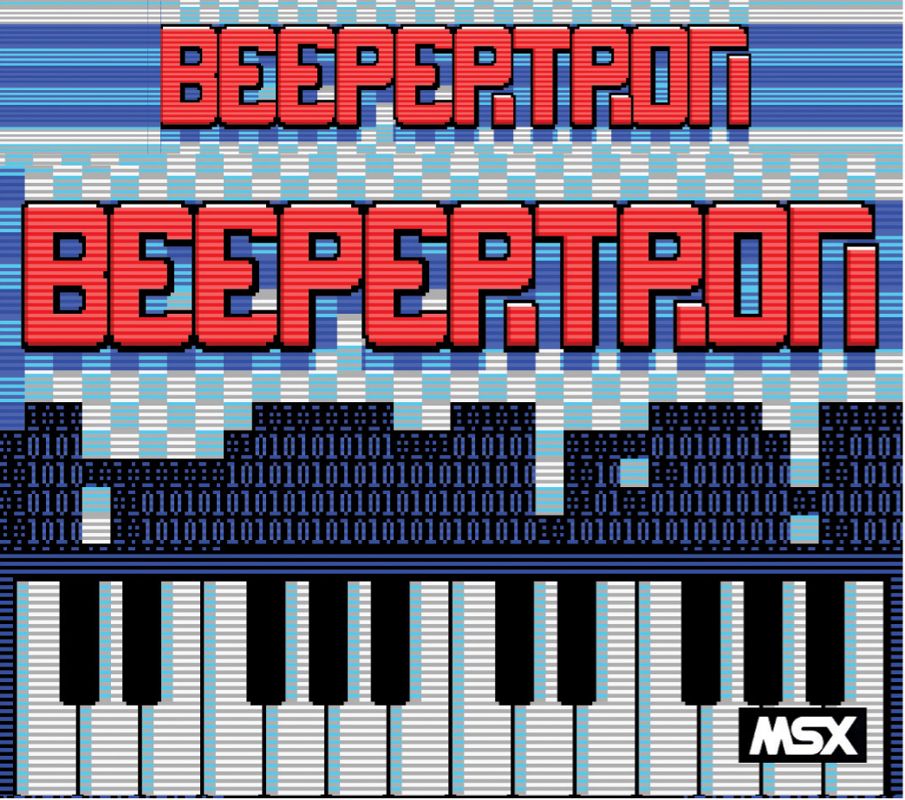
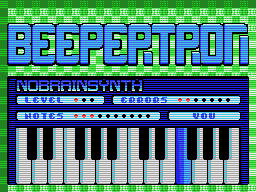
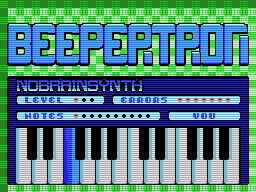
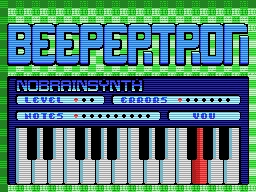
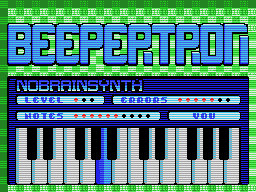
Beepertron’s visuals are a deliberate throwback to the golden age of 8-bit computing. The on-screen piano is rendered in clean, blocky pixels, each key distinguished by a simple shade difference that ensures clarity even on low-resolution displays. This minimalistic approach isn’t just nostalgic—it’s highly functional, making it easy to see which key corresponds to which note at a glance.
Although there are no flashy animations or particle effects, subtle visual cues—such as key highlights and smooth transitions between rounds—add polish to the experience. The screen layout is uncluttered: the piano occupies the lower half, while a basic score and error counter sit unobtrusively at the top. By avoiding unnecessary visual noise, the game keeps your attention squarely on the music.
The choice to bypass the MSX’s standard sound chip in favor of a “keyclick circuit” tone generator influences the overall aesthetic. Visually, this translates into a lean, retro interface that complements the tinny, arcade-style audio. Fans of vintage hardware will appreciate how the graphics and sound coalesce into an authentic throwback package, preserving the feel of an old-school electronic toy.
Story
Beepertron doesn’t weave a traditional narrative—there are no characters to meet or plot twists to uncover. Instead, its “story” unfolds in the player’s head, driven by the escalating musical challenges and the drive for self-improvement. Each new melody you conquer feels like a small victory, a chapter in your personal journey of auditory mastery.
While there is no explicit backstory, the subtitle “1 bit music game” and the distinctive sound design evoke a bygone era of handheld electronic amusements. In that sense, the game’s meta-narrative is one of nostalgia: it invites players to revisit the delight of pressing colored buttons and chasing simple yet satisfying feedback loops.
This minimalist storytelling approach has its own charm. By eschewing cutscenes and exposition, Beepertron leaves room for players to project their own memories—whether that’s recalling childhood evenings with a plastic toy or simply enjoying the zen state of mind that comes from rhythmic repetition. The absence of a conventional plot becomes a feature, not a flaw, fostering a personal connection to the melodies you master.
Overall Experience
Beepertron delivers an addictive experience that can be picked up and played in just a few seconds yet offers surprisingly deep engagement for those chasing higher scores. Its intuitive controls and clear visual design make it accessible to beginners, while the escalating complexity of longer note sequences provides a satisfying test for more seasoned players.
The choice to generate all tones through a rudimentary keyclick circuit lends the game a novel auditory identity. It’s equal parts charming and challenging—your ears must adapt to the slightly abrasive timbre even as your brain deciphers ever-longer melodies. This one-bit sound signature sets Beepertron apart from contemporary rhythm or music puzzle games that aim for stereo fidelity rather than raw, retro authenticity.
Ultimately, Beepertron excels as a focused, retro-inspired pastime. It may not boast hours of branching narrative or cutting-edge visuals, but it succeeds brilliantly at what it sets out to do: test your musical memory and reflexes in short, punchy bursts. If you’re a fan of vintage electronics, memory puzzles, or simply want a quick, challenging diversion, Beepertron is a delightful, low-friction game well worth exploring.


Reviews
There are no reviews yet.