 Retro Replay Retro Replay gaming reviews, news, emulation, geek stuff and more!


Retro Replay Review
Gameplay
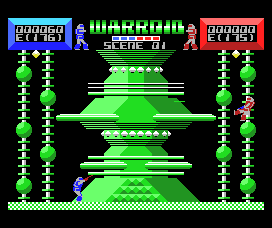
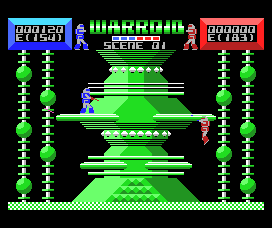
Exoa II: Warroid delivers a fast-paced, head-to-head combat experience where two robotic gladiators clash across a variety of platform arenas. Each warroid automatically tracks its opponent with its weapon system, freeing players from complex aiming mechanics. This intuitive auto-targeting lets newcomers jump right into the action and keeps the focus on strategic positioning, timing dashes, and well-timed jumps to dodge incoming fire.
(HEY YOU!! We hope you enjoy! We try not to run ads. So basically, this is a very expensive hobby running this site. Please consider joining us for updates, forums, and more. Network w/ us to make some cash or friends while retro gaming, and you can win some free retro games for posting. Okay, carry on 👍)
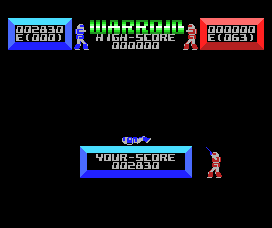
The core objective is simple but tense: deplete your opponent’s energy bar by peppering them with laser blasts. Each successful hit turns one of your opponent’s six energy nodes dark, while destroying their warroid entirely scores you a point. Battles continue until one player has all six points lit in their color, making every round a tight back-and-forth that can pivot in an instant. Early rounds are often feel-out phases, but once both players have learned escape routes and corner-trapping tactics, matches can erupt into frenzied exchanges of fire and agile evasions.
Customization options accessed via the in-game menu further diversify the gameplay. You can set handicaps to balance the playing field, tweak your warroid’s color schemes for both style and clarity, and choose from several stage layouts featuring rising platforms, disappearing floors, and gravity-shifting zones. Coupled with an adjustable AI opponent that scales in difficulty, these options ensure that Exoa II: Warroid remains engaging whether you’re honing skills in single-player mode or challenging a friend locally.
Graphics
Visually, Exoa II: Warroid embraces a sleek, futuristic aesthetic. The warroids themselves are rendered with crisp polygonal edges and metallic textures that gleam under dynamic lighting. Their design strikes a balance between industrial toughness and streamlined agility, making each model feel like a character in its own right. Subtle particle effects—sparks on impact, smoke trails, and ricochets—elevate the sense of high-velocity warfare without cluttering the screen.
The arenas are equally well-crafted, featuring multi-tiered platforms that hover over abstract digital backdrops. Color palettes shift between cold blues, fiery reds, and neon greens, providing visual variety while also signaling changes in environmental hazards. Animated elements like rotating gears, laser grids, and reactive floor panels give each stage its own tactical identity. Lighting transitions—such as flickering overhead lamps or charging conduits—contribute to the atmosphere, making every match feel dramatic.
On modern hardware, the frame rate remains rock-steady, even when projectiles and explosion effects fill the screen. Load times between rounds are minimal, keeping momentum high. While the game doesn’t push for photorealism, its stylized approach and responsive animations create a cohesive visual package that complements the arcade-style gameplay perfectly.
Story
Though Exoa II: Warroid is primarily an arena fighter and doesn’t hinge on a deep narrative, it still offers a loose backstory that frames the action. Set in a dystopian future where corporate-sponsored robot jousts serve as the world’s premier entertainment, players assume the role of bespoke warroid pilots vying for fame and fortune. The minimalist lore—unfolded through brief text screens and selectable pilot profiles—provides enough context to justify the competitive carnage.
Between matches, players can glimpse snippets of the league standings, sponsor endorsements, and rival bios that hint at a broader tournament arc. While there’s no fully voiced campaign or branching storyline, these small touches give weight to each victory and defeat. It’s a light narrative scaffolding that doesn’t detract from the core duel mechanics but offers an incentive to rise through the ranks and unlock hidden warroid skins or special taunt animations.
In essence, the story elements in Warroid function more like a thematic skin over the gameplay rather than a driving force of the experience. Players looking for epic cutscenes or intricate plot twists may find it sparse, but for those who appreciate a straightforward competitive setup, the lore provides just enough flavor to keep each match feeling meaningful.
Overall Experience
Exoa II: Warroid excels as a pick-up-and-play arena shooter with surprisingly deep strategic layers. The ease of control—the warroid’s auto-aim, simple jump mechanics, and single-button firing—belies the richness of positioning battles, edge-guarding tactics, and environmental interactions. It’s equally satisfying in quick skirmishes with friends or in extended sessions against a progressively challenging AI.
The game’s replay value is bolstered by its robust customization and local multiplayer focus. While there’s no online matchmaking at launch, the hot-seat mode and split-screen options make it an ideal party title. Watching two players duke it out on the same screen adds a social element that many modern arena fighters overlook. Custom handicaps also let newcomers square off against seasoned vets without feeling overwhelmed.
In conclusion, Exoa II: Warroid strikes an appealing balance between accessibility and depth. Its streamlined controls and dynamic, modular arenas deliver immediate fun, while the tactical nuances of damage management and map awareness keep seasoned players coming back. Whether you’re seeking a competitive head-to-head or a casual showdown with a friend, Warroid offers a polished, adrenaline-charged package that stands out in the robot-battle genre.


Reviews
There are no reviews yet.