 Retro Replay Retro Replay gaming reviews, news, emulation, geek stuff and more!
Retro Replay Review
Gameplay
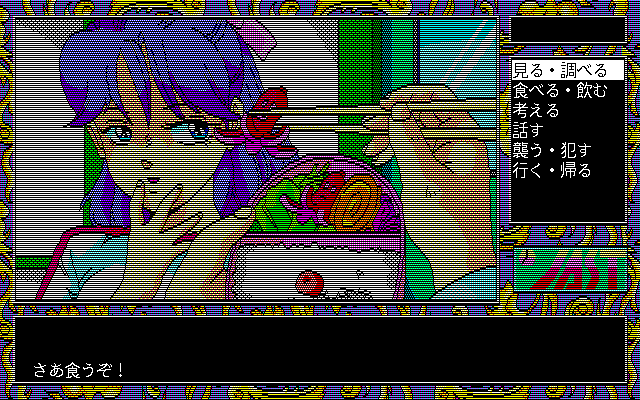
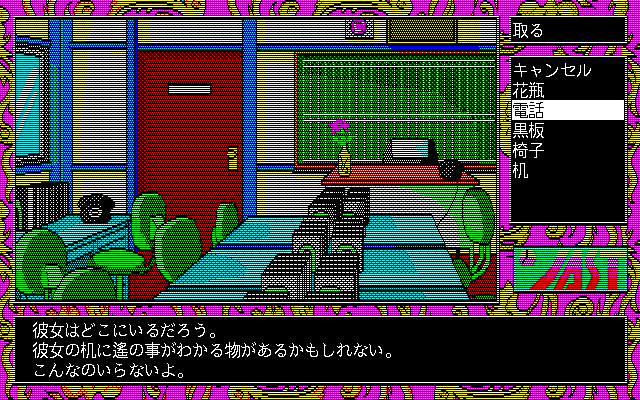
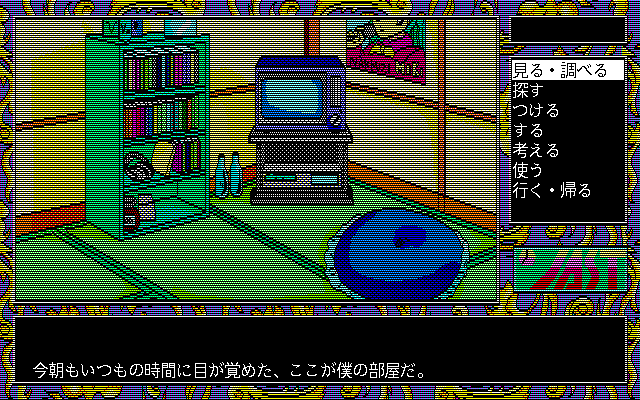
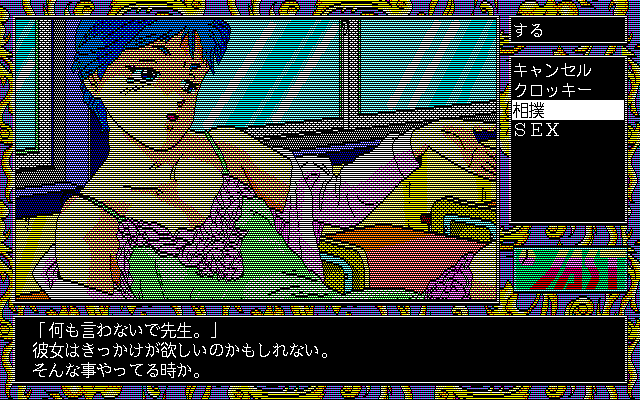
Tenshitachi no Gogo III: Ribbon presents a streamlined, Japanese-style adventure experience that forgoes traditional puzzles in favor of narrative exploration. Players navigate the high school environment through a verb-command interface, selecting actions such as “Look,” “Ask,” and “Search” to interact with students, teachers, and key objects. This design keeps the focus squarely on uncovering character secrets and advancing the storyline rather than solving intricate puzzles.
(HEY YOU!! We hope you enjoy! We try not to run ads. So basically, this is a very expensive hobby running this site. Please consider joining us for updates, forums, and more. Network w/ us to make some cash or friends while retro gaming, and you can win some free retro games for posting. Okay, carry on 👍)
As you progress, each choice leads to sub-menus populated with relevant options, making the interface intuitive for both genre veterans and newcomers. While most of the storyline unfolds in a largely linear fashion, critical decision points inject tension into the narrative. Missteps or ill-timed queries can prematurely end the game, encouraging players to carefully consider each interaction if they wish to see the story through to its conclusion.
The absence of traditional puzzle mechanics might feel unconventional for some adventure fans, but Tenshitachi no Gogo III makes up for this by offering a robust set of branching dialogue paths. As you learn more about Haru Okamoto—and the hidden lives of those around her—the game rewards diligent exploration with new revelations, making repeated playthroughs both engaging and enlightening.
Graphics
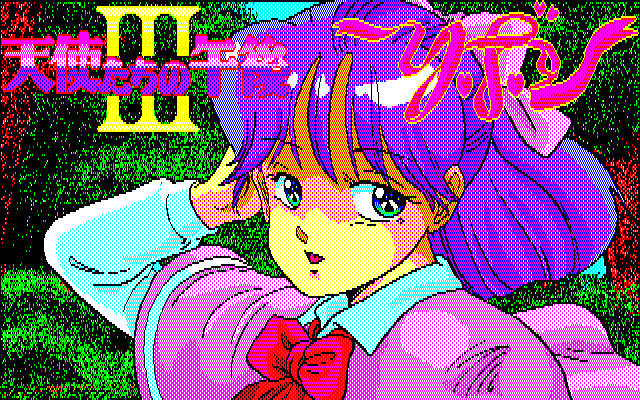
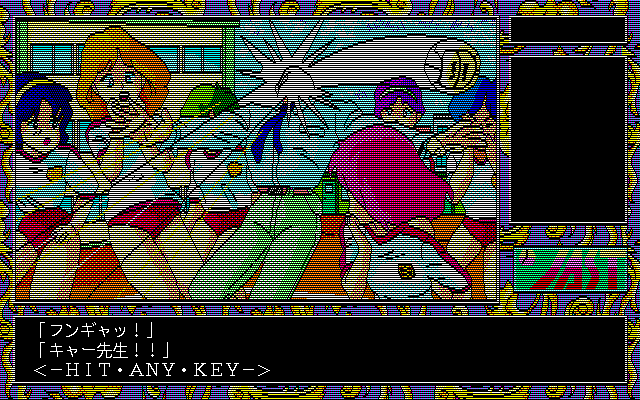
Visually, Ribbon embraces the signature anime aesthetic of early ’90s Japanese adventure games. Character portraits are drawn with expressive detail, capturing subtle shifts in emotion as the teacher and his female classmates navigate moments of tension and tenderness. These still images serve as the primary visual cue for the story’s emotional beats, lending a sense of intimacy to key conversations.
The backgrounds, though static, are richly colored and intricately designed to evoke a classic Japanese high school setting: sunlight filters through corridor windows, classrooms hum with silent anticipation, and the teacher’s office offers a cozy, book-lined retreat. The art style may look dated by modern standards, but its nostalgic charm remains compelling for players who appreciate retro anime visuals.
While animation is limited—mostly restricted to occasional blinking or simple gesture loops—the game compensates through strong character design and mood-setting visual details. Small flourishes, like the twitch of an eyebrow or the gentle sway of hair in the breeze, enhance the storytelling without detracting from the gameplay’s text-driven core.
Story
In Ribbon, the narrative centers on a male teacher whose only romantic aspiration is to win the heart of Haru Okamoto, affectionately dubbed “his angel.” Unlike its predecessors in the Tenshitachi no Gogo franchise, this installment stands alone, allowing new players to jump in without prior context. The plot unfolds as you learn more about Haru’s daily life, personality quirks, and hidden struggles.
Beyond the central romance, Ribbon weaves in subplots involving other attractive students and teachers, each harboring their own secrets. Through carefully chosen questions and observations, you uncover motivations ranging from simple day-to-day worries to deeper emotional conflicts. These layers add depth to the high school setting, transforming it from mere backdrop to a breathing, dynamic world.
The branching narrative structure offers multiple possible endings, reflecting the consequences of your choices. Some paths culminate in heartfelt confession scenes, while others may leave the teacher—and Haru—wondering what might have been. This blend of romance-driven storytelling and choice-based consequences ensures that each playthrough feels personal and rewarding.
Overall Experience
Tenshitachi no Gogo III: Ribbon is a niche gem for fans of character-driven, dialogue-heavy adventures. Its puzzle-less design may surprise players expecting traditional problem-solving mechanics, but the strength of its writing and the emotional resonance of its characters quickly draw you in. Every conversation feels purposeful, with small details often unlocking the next chapter of the story.
The game’s retro presentation adds a layer of nostalgia that enhances the overall experience. While modern adventure titles boast flashy animations and 3D environments, Ribbon’s static artwork and focused interface remind players of the power of strong narrative and well-crafted dialogue. For those willing to embrace a slower, more contemplative pace, the game delivers memorable moments that linger long after the credits roll.
Ultimately, Ribbon stands out as a heartfelt exploration of young love, hidden truths, and the challenges of communication in a confined social setting. Its branching paths and multiple endings provide solid replay value, encouraging players to revisit the halls of this high school and discover every secret it holds. For anyone seeking an atmospheric, story-centric adventure with a classic anime vibe, Tenshitachi no Gogo III: Ribbon is a must-try title.


Reviews
There are no reviews yet.