 Retro Replay Retro Replay gaming reviews, news, emulation, geek stuff and more!
Retro Replay Review
Gameplay
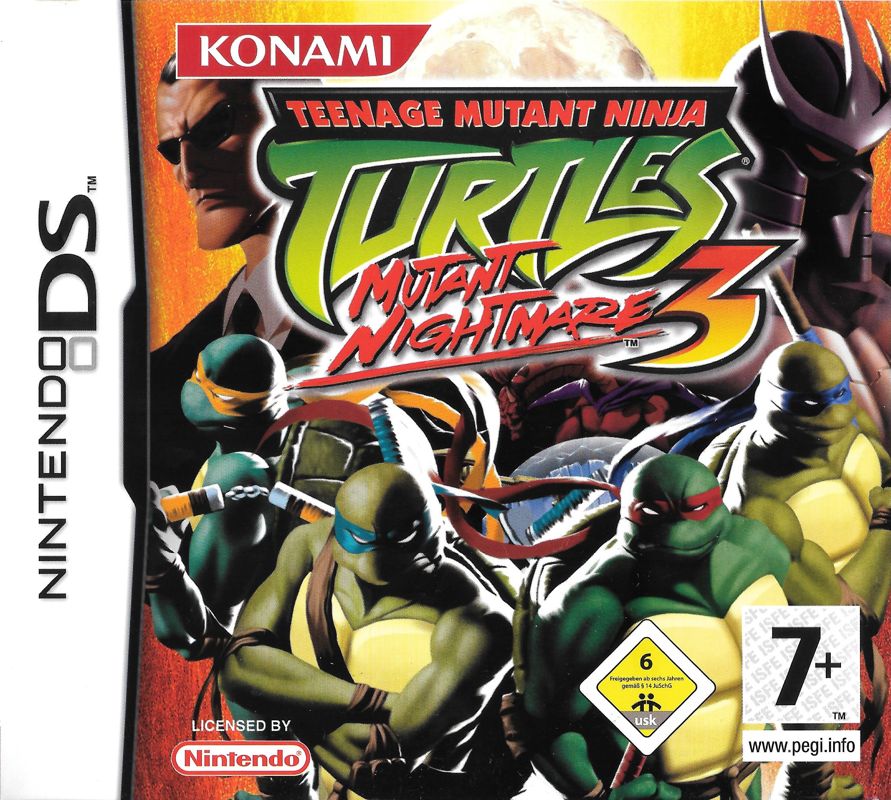
Teenage Mutant Ninja Turtles 3: Mutant Nightmare on the Nintendo DS succeeds in capturing the frenetic energy of classic side-scrolling beat ’em ups while introducing fresh mechanics tailored to the handheld’s unique hardware. Players will guide Leonardo, Michelangelo, Donatello, and Raphael through 50 distinct stages that blend intense combat with light puzzle-solving segments. The familiar “beat the bad guys” formula is elevated by each turtle’s individual skill set—Leonardo’s swift sword strikes, Raphael’s brute force, Donatello’s ranged bo staff tactics, and Michelangelo’s nimble nunchaku moves.
(HEY YOU!! We hope you enjoy! We try not to run ads. So basically, this is a very expensive hobby running this site. Please consider joining us for updates, forums, and more. Network w/ us to make some cash or friends while retro gaming, and you can win some free retro games for posting. Okay, carry on 👍)
Beyond button-mashing combos, Mutant Nightmare makes clever use of the DS’s dual screens and stylus. During certain levels, you’ll tap incoming hazards, rotate platforms, or trace paths to unlock secret areas. These touchscreen interactions feel intuitive and nonintrusive, seamlessly woven into the action rather than shoehorned in. They break up the flow just enough to keep gameplay varied and maintain engagement across all five chapters.
For fans of cooperative gaming, the inclusion of up to four-player Wi-Fi multiplayer is a standout feature. Whether teaming up to tackle the main campaign or taking on time-attack challenges, coordinating special moves and protecting each other from environmental traps creates a social dynamic rarely seen in handheld titles of this era. The result is a fast-paced, cooperative romp that rewards communication and strategy as much as reflexes.
Graphics
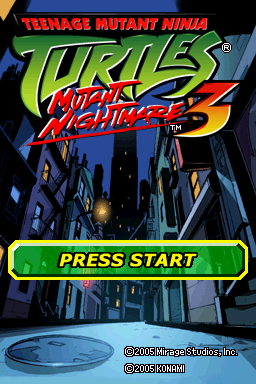
Visually, Mutant Nightmare leans into the DS’s modest capabilities, delivering a crisp, colorful presentation reminiscent of arcade and NES classics. Character sprites are well-detailed and fluidly animated, bringing each Turtle’s personality to life through expressive motions and reaction frames. The vibrant color palette and cartoon-inspired backgrounds echo the show’s aesthetic, making every stage feel faithful to the Teenage Mutant Ninja Turtles universe.
The dual-screen setup is put to good use, with the top display handling the main action and the bottom screen offering contextual information, minimaps, or stylus-based mini-puzzles. Transitions between these screens are smooth, and there’s little to none of the flicker or slowdown some DS titles suffer from. Even when the screen fills up with enemies or environmental hazards—be it a collapsing bridge or a wave of Foot Soldiers—the frame rate remains remarkably stable.
Special effects, such as Donatello’s bo staff spinning or Raphael’s ground-shaking uppercut, pop convincingly on the small screens. Particle effects and screen shakes enhance each powerful blow, giving hits proper weight without overwhelming the hardware. Overall, the graphics strike a solid balance between nostalgia and technical polish, ensuring that both longtime fans and newcomers will appreciate the clarity and style of the visuals.
Story
Mutant Nightmare follows the same overarching narrative as its console counterparts, weaving a tale of interdimensional mayhem that brings together heroes from every corner of the Turtle multiverse. Players will face familiar foes—from the Foot Clan to the ruthless Shredder—while uncovering a plot that spans alternate realities. Although the DS version’s storytelling is delivered mostly through brief cutscenes and on-screen text, it does a commendable job of preserving the excitement and stakes of the console releases.
The writing captures the Turtles’ trademark humor, with quips and banter popping up between missions. These lighter moments provide welcome relief before thrusting players into boss battles against towering enemies such as the Technodrome’s mechanized minions or mutated beasts. Each chapter feels self-contained, yet they all contribute to a cohesive arc that encourages progression through every one of the 50 stages.
While the narrative depth is necessarily limited by cartridge space and handheld constraints, it never feels hollow. Important plot beats—including dimension-hopping twists or reunions with beloved characters like April O’Neil and Casey Jones—land effectively, thanks to well-timed dialogue and carefully sequenced boss encounters. Fans of the series will recognize many of the story’s highlights, and newcomers will still grasp the stakes without prior knowledge of the TMNT lore.
Overall Experience
Teenage Mutant Ninja Turtles 3: Mutant Nightmare on DS delivers a satisfying blend of old-school side-scrolling action and innovative touchscreen puzzles. Its 50-stage campaign provides hours of content, and the addition of Wi-Fi co-op elevates replay value significantly. Whether you’re slicing through Foot Soldiers solo or coordinating with three friends online, the game strikes a terrific balance between simplicity and depth.
The thoughtful use of the dual screen and stylus ensures that the DS version feels like more than just a downscaled port of the console game. The result is an experience that stands on its own—one that honors the arcade and NES roots while embracing the strengths of Nintendo’s portable powerhouse. It’s a solid pick for Turtle fans craving handheld action, as well as beat ’em up enthusiasts looking for a fresh twist on a familiar formula.
In short, Mutant Nightmare manages to be both a nostalgic trip and a modern handheld adventure. Its tight gameplay, colorful graphics, engaging story snippets, and robust multiplayer options make it a worthy addition to any DS library. Whether you’re an old-school gamer longing for side-scrolling combat or a casual player seeking accessible co-op fun, this title has something to offer—and plenty of shuriken-powered excitement to boot.



Reviews
There are no reviews yet.