 Retro Replay Retro Replay gaming reviews, news, emulation, geek stuff and more!


Retro Replay Review
Gameplay
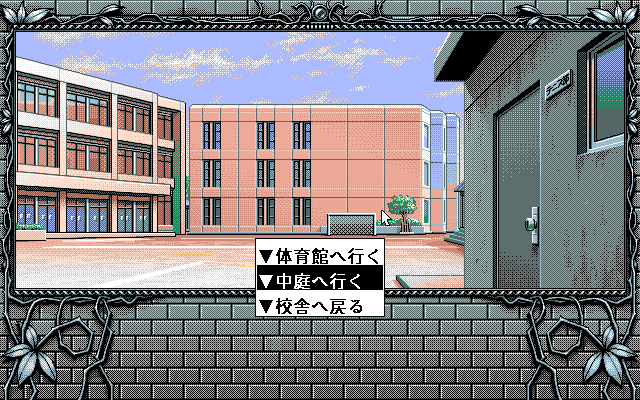
Figure: Ubawareta Hōkago unfolds as a visual novel, relying heavily on text descriptions and character dialogues to immerse the player in its narrative. The game advances automatically through lines of story, pausing at key moments to offer choices that branch the plot in different directions. These prompts may ask you to pick a location on campus, select dialogue options when interacting with students, or decide on an action that can alter Mishima’s relationships.
(HEY YOU!! We hope you enjoy! We try not to run ads. So basically, this is a very expensive hobby running this site. Please consider joining us for updates, forums, and more. Network w/ us to make some cash or friends while retro gaming, and you can win some free retro games for posting. Okay, carry on 👍)
The decision-making mechanics are straightforward but impactful. Each choice you make—whether to encourage a troubled student, to visit the school’s rooftop garden, or to attend a special event—can unlock unique scenes and steer the storyline toward one of several distinct endings. This branching structure adds a layer of replayability, encouraging you to explore alternative paths and character routes.
Despite its simplicity, the pacing of these choices feels organic. Early in the game, you’re introduced to the rigid policies of Hanatsuki High and quickly face choices that highlight Mishima’s internal conflict: does he conform to the school’s elitist expectations or push back against them? These moments of moral dilemma give the gameplay a sense of agency, even though the core interaction is reading and selecting options.
Navigation through the text and images is fluid, thanks to a minimalistic interface that keeps menus and buttons unobtrusive. The auto-advance feature can be turned off if you prefer to take your time reading every line, and you can save at any decision point, making it easy to backtrack and test different outcomes. The result is a gameplay experience that feels both relaxed and thoughtful.
Graphics
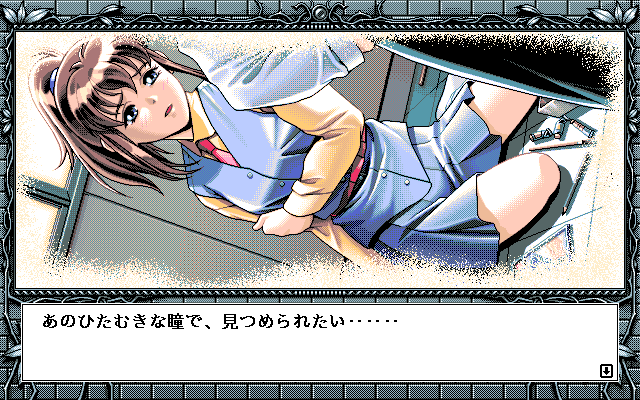
Visually, Figure: Ubawareta Hōkago opts for high-quality character sprites and background illustrations rather than animated sequences. Each student at Hanatsuki High is rendered with meticulous attention to facial expressions and attire, reflecting their personalities and social standing. Mishima himself is depicted in a simple, approachable style that contrasts with the more ornate uniforms of the wealthy heiresses he teaches.
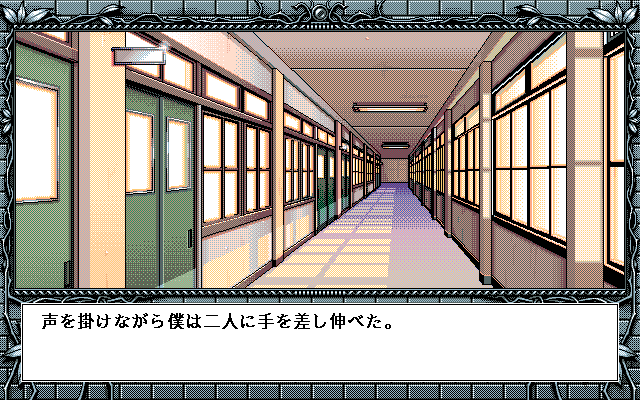
The backgrounds transport you to various corners of the luxurious campus designed by Takanashi. From marble-lined hallways and manicured gardens to the opulent lecture halls, each setting is painted with soft lighting and subtle detail. These environments serve as static backdrops for the dialogues but are evocative enough to draw you into the school’s exclusive atmosphere.
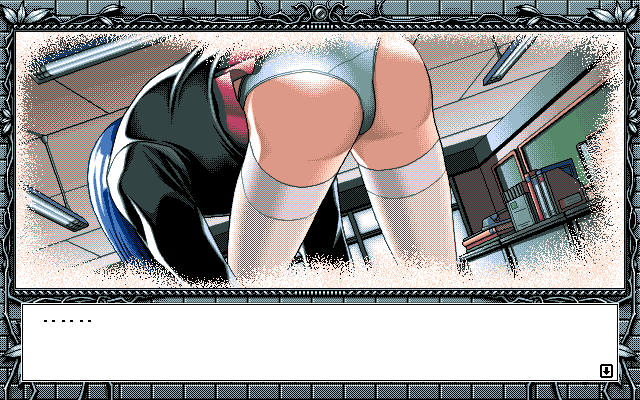
Character portraits frequently update to mirror emotional shifts, whether it’s a student blushing in embarrassment or Mishima furrowing his brow in concern. Though there are no full-motion cutscenes, occasional CG panels highlight pivotal moments—such as a heartfelt confession under cherry blossoms—adding visual impact when it matters most.
The user interface is clean and intuitive: text boxes are semi-transparent, allowing the artwork to shine through, while the dialogue font is crisp and easy to read. Simple sound effects accompany menu selections, and the interface’s unobtrusive design ensures that you remain focused on the story and characters.
Story
At its core, Figure: Ubawareta Hōkago tells the story of Mishima, a recent high school graduate struggling to make ends meet. When his former classmate Isao offers him a part-time teaching position at Hanatsuki High—a prestigious girls’ school funded by the enigmatic oligarch Takanashi—Mishima reluctantly agrees. His motivations are twofold: he urgently needs money, and the idea of interacting with the daughters of Japan’s elite holds a certain allure.
As Mishima navigates the school’s strict policies and rigid social hierarchy, he forms bonds with several pupils, each representing different facets of privilege, insecurity, and ambition. Whether he’s mentoring a perfectionist student who feels chained by parental expectations or guiding a shy girl toward self-confidence, the narrative delves into the emotional struggles behind each immaculate uniform.
The branching storyline allows for multiple character routes and endings, ranging from heartwarming friendships to more romantic or dramatic conclusions. Some paths address deeper themes—such as the cost of wealth, familial pressure, and personal identity—while others offer lighter, comedic interludes that showcase the everyday antics of teenage life at an elite institution.
Pacing is well-managed, with tension building toward critical crossroads where your choices carry significant weight. Dialogue is naturalistic, and occasional monologues grant insight into Mishima’s evolving worldview. The story balances slow-burning character development with moments of genuine surprise, making each playthrough feel fresh.
Overall Experience
Figure: Ubawareta Hōkago delivers a polished visual novel experience that excels in character-driven storytelling. Its simple but effective choice system, combined with branching narratives, ensures high replay value. Whether you’re drawn to dramatic revelations or heartfelt slice-of-life moments, the game offers enough variety to keep you engaged across multiple runs.
While the lack of animated sequences or voice acting may disappoint fans of more multimedia-rich titles, the strength of the writing and artwork compensates admirably. The game’s focus on dialogue and decision-making creates an intimate connection with the characters, allowing their personalities to shine without distraction.
Potential buyers should note the game’s reliance on reading and static visuals; if you prefer action-oriented gameplay or cinematic cutscenes, this may not be the title for you. However, fans of visual novels and narrative-driven experiences will find plenty to appreciate in its emotional depth and moral quandaries.
Ultimately, Figure: Ubawareta Hōkago stands out as a thoughtful, replayable story set within an elite academic environment. Its mix of character exploration, branching outcomes, and elegant presentation makes it a compelling choice for anyone seeking a reflective, text-based adventure.


Reviews
There are no reviews yet.