 Retro Replay Retro Replay gaming reviews, news, emulation, geek stuff and more!


Retro Replay Review
Gameplay
File presents a classic Japanese-style adventure interface, inviting players to navigate conversations and environments through a set of verb commands such as “Look,” “Talk,” and “Think.” This command-driven structure feels familiar to veterans of the genre, yet File spices things up with situationally specific actions that appear when key evidence or dialogue options arise. Progression hinges on careful use of these verbs, so players must pay close attention to both environmental clues and NPC reactions to unlock the next stage of each interrogation.
(HEY YOU!! We hope you enjoy! We try not to run ads. So basically, this is a very expensive hobby running this site. Please consider joining us for updates, forums, and more. Network w/ us to make some cash or friends while retro gaming, and you can win some free retro games for posting. Okay, carry on 👍)
One of File’s most notable design choices is its non-linear approach to the core narrative. Upon starting the game, Pat is presented with dossiers on four women linked to Project IBIS and may choose the order in which to interrogate them. This freedom encourages multiple playthroughs and strategic planning: certain revelations uncovered in earlier sessions can cast later interrogations in a new light, prompting players to rethink assumptions and adapt their line of questioning.
However, the interrogation mechanics can sometimes feel repetitive. Each encounter relies heavily on protracted dialogue trees and repeated command usage, which may slow the pace for players seeking more varied gameplay. That said, those who appreciate deep narrative puzzles and psychological tension will find satisfaction in teasing out the truth from each suspect.
Graphics
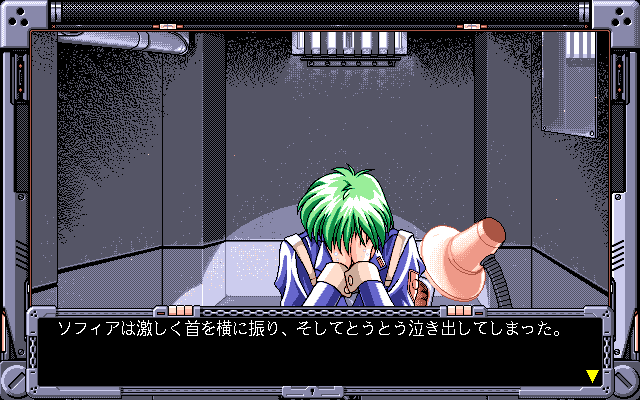
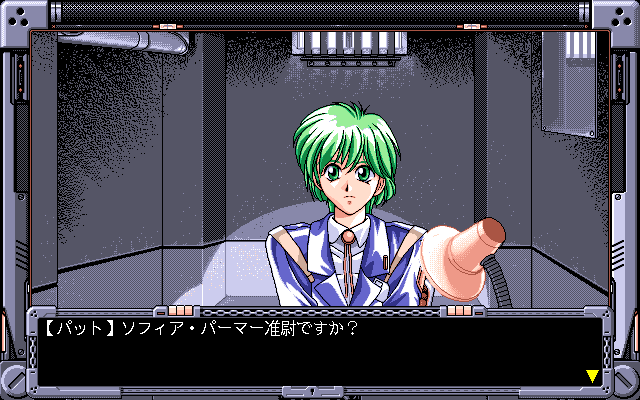
Visually, File leans into a minimalist yet atmospheric style. Character portraits are rendered with sharp linework and muted color palettes, reflecting the game’s somber tone. Close-up frames during interrogation heighten emotional intensity, with subtle facial animations conveying doubt, fear, or defiance. While the art stops short of hyper-realism, it captures a gritty, clandestine aesthetic that complements the story’s espionage theme.
The backgrounds are often static, trading dynamic motion for carefully composed still images that set the scene—whether it’s a harshly lit interrogation room or the sterile hallways of a state security facility. These sparse environments reinforce the sense of confinement and surveillance, though some players may wish for more interactive or richly detailed locales.
Transitions between scenes employ tasteful visual effects—fade-ins, overlays of text, and occasional cinematic camera cuts—adding a layer of polish without distracting from the dialogue. Overall, the graphical presentation supports the game’s mood, even if it doesn’t push the boundaries of contemporary visual design.
Story
At its core, File unfolds as a tense thriller. You play Pat, a junior operative assigned to probe into Project IBIS, a covert counter-terrorism initiative with opaque objectives. Four young women are in custody under bewildering circumstances—an accident‐induced amnesia, suspicious proximity to a weapons lab, and other murky details. Under orders from the enigmatic Agent Cropp, Pat must interrogate each detainee, determine their guilt or innocence, and reveal the motives behind IBIS.
The branching narrative structure allows each interrogation to reveal different facets of the overarching conspiracy. Some revelations feel like genuine breakthroughs, forcing you to reconsider the game’s moral stakes, while others hinge on partial or unreliable testimonies. This sense of uncertainty keeps players on edge, as it becomes increasingly difficult to discern who, if anyone, truly poses a threat.
It’s important to note that the story frequently ventures into mature territory. Each interrogation culminates in explicit sexual situations—some of which are portrayed as consensual, others decidedly not. These scenes are graphic in nature and integral to the plot, yet they may prove deeply uncomfortable for many players. File does not shy away from depicting the darker side of power dynamics, and as such, it is geared toward a very adult audience.
Overall Experience
File delivers a provocative blend of psychological intrigue and mature themes, making it a standout for players who appreciate narrative‐driven adventures with morally complex scenarios. The freedom to tackle interrogations in any order and the puzzle-like structure of dialogue choices provide replay value, while the somber art style and focused direction maintain a strong sense of atmosphere throughout.
That said, File is not for the faint of heart. Its explicit sexual content—particularly the non-consensual scenes—runs throughout the entire experience, serving as both a narrative device and a source of discomfort. Prospective players should enter with eyes wide open, understanding that the game confronts issues of consent and abuse head-on.
Ultimately, File succeeds as a dark, uncompromising spy drama that challenges players to navigate a morally ambiguous world. Those drawn to heavy storytelling, branching interrogation mechanics, and mature subject matter will find much to analyze and discuss. Others may be put off by the game’s provocative content. If you’re prepared for intense scenes and ethical quandaries, File offers a memorable—and unsettling—journey into the shadows of state security.



Reviews
There are no reviews yet.