 Retro Replay Retro Replay gaming reviews, news, emulation, geek stuff and more!
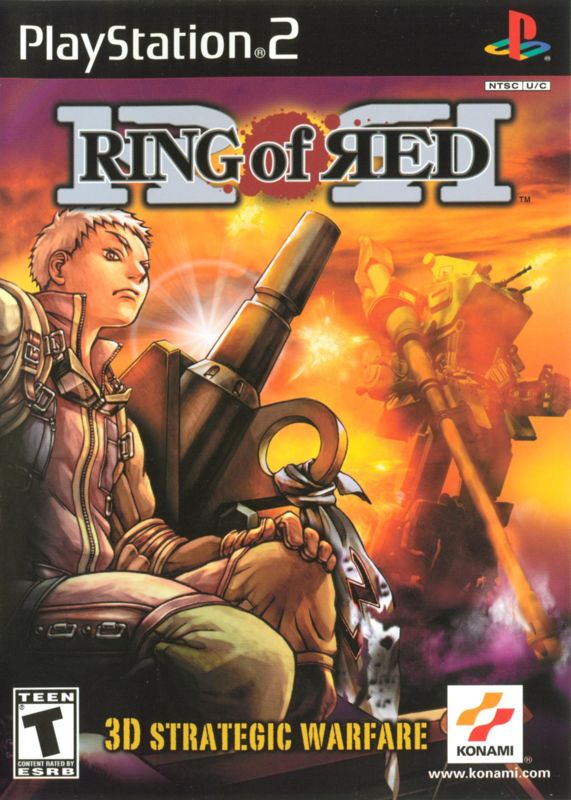
Retro Replay Review
Gameplay
Ring of Red delivers a deeply strategic experience by blending traditional turn-based mechanics with real-time skirmishes. On the campaign map, you’ll maneuver Armored Fighting Walkers (AFWs) and their support units across hexagonal grids, carefully positioning each team to capture objectives or ambush enemy forces. The alternating day and night cycle, coupled with shifting weather conditions, forces you to adapt your plans—fog or rain can hamper railgun accuracy, while nighttime operations favor stealthier approaches.
(HEY YOU!! We hope you enjoy! We try not to run ads. So basically, this is a very expensive hobby running this site. Please consider joining us for updates, forums, and more. Network w/ us to make some cash or friends while retro gaming, and you can win some free retro games for posting. Okay, carry on 👍)
Once two AFWs clash on the grid, the game transitions into an intense real-time duel. You pilot your mech from a third-person perspective, charging its steam-powered cannon before firing at either enemy machines or support crews. Accuracy builds over time in targeting mode, adding a satisfying risk-reward element: do you fire early to catch the enemy off guard, or wait for a near-perfect shot at the risk of running low on pressurized steam?
Beyond the mechs themselves, Ring of Red emphasizes the importance of combined arms with its support unit system. Each AFW carries a crew member and is flanked by two ground units—Infantry, Shooters, Medics, Mechanics and more—each with unique abilities. As these units charge their special skills, they can lay mines, heal the wounded, repair damaged walkers or call in devastating barrages, adding a layer of tactical depth that rewards careful planning and battlefield awareness.
Graphics
Graphically, Ring of Red embraces a mid-2000s aesthetic that still holds up well today. The 3D AFW models are impressively detailed, showcasing rivets, steam vents and mechanical joints that move with weighty realism. Despite the era’s hardware limitations, animations during real-time combat feel fluid—mechs pivot, recoil and stomp with satisfying heft.
The game’s strategic map features clean hex grids and clear unit icons, ensuring you always know which AFW is in range or which support unit is low on supplies. Transitions between the map and real-time battles are seamless, accompanied by brief yet effective cinematic camera shifts that heighten the drama of each encounter. Weather effects—rain, fog, dust storms—are not mere eye candy but visually communicate changing battlefield conditions.
Cutscenes and character portraits employ a hand-drawn art style that brings the story’s political intrigue to life. While voiceovers are sparse, the expressive artwork conveys tension, resolve and betrayal, enhancing immersion without becoming overly cinematic. Overall, the visual presentation strikes a balance between functional clarity and stylized flair, making each strategic choice and mech duel feel equally engaging.
Story
Set in an alternate 1964, Ring of Red paints a Japan fractured by ideology and war. Two decades after WWII ended with both Axis and Allies wielding giant walking tanks, the nation is split between a communist North and a democratic South. This uneasy peace shatters when North Japanese agents steal a prototype AFW, prompting South Japan pilot Masami von Weizegger and his squad to intervene.
As Masami’s team pursues the missing mech, they uncover a larger conspiracy that threatens to plunge the entire archipelago back into full-scale war. Political backstabbing, shadowy intelligence plots and personal vendettas intertwine, creating a narrative that goes beyond simple soldier-versus-soldier encounters. Each chapter reveals new layers of intrigue, testing loyalties and forcing you to weigh the human cost of every mission.
Character development is solid, with Masami’s military professionalism clashing against his growing doubts about the conflict’s true purpose. Supporting pilots and officers each have distinct personalities and special abilities, ensuring that unit losses carry emotional weight. While the writing occasionally leans into familiar mecha tropes, the alternate-history backdrop and slow-burning revelations keep the story fresh and compelling.
Overall Experience
Ring of Red stands out as a unique fusion of strategy and action, offering a memorable campaign that lasts around 20–25 missions. The learning curve is moderate—initial battles ease you into grid movement and real-time duels, but later stages demand precise coordination of weather, terrain and unit abilities. Victory often boils down to clever use of support squads as much as raw firepower.
The game’s pacing strikes a solid balance between buildup and crescendo. Early missions focus on reconnaissance and small-scale skirmishes, while mid-campaign operations escalate into multi-front battles requiring careful resource management. Side objectives and optional engagements give you room to experiment with different AFW types—from nimble light walkers to hulking four-legged heavies.
For strategy fans and mech enthusiasts alike, Ring of Red offers a richly detailed world, challenging tactical gameplay and a story that rewards patient exploration. Its blend of turn-based planning and real-time combat is still rare in the genre, making it a worthwhile purchase for anyone seeking a deep, alternate-history war game with mechanical flair. Whether you’re drawn to strategic depth or the thrill of piloting giant walking tanks, Ring of Red delivers an experience that feels both familiar and refreshingly original.



Reviews
There are no reviews yet.