 Retro Replay Retro Replay gaming reviews, news, emulation, geek stuff and more!



Retro Replay Review
Gameplay
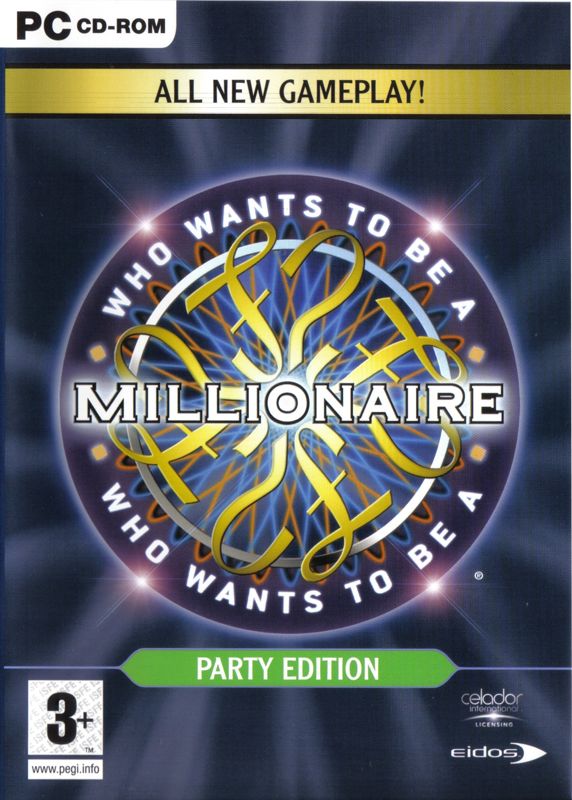
Who Wants to Be a Millionaire: Party Edition faithfully adapts the classic 15-question quiz format while injecting fresh multiplayer twists that keep the experience lively. In single-player mode, you still progress through increasingly difficult trivia, with each correct answer boosting your virtual bank balance and each wrong pick costing you a chunk—albeit with two safety nets that guarantee you’ll never walk away empty-handed. The familiar trio of lifelines remains intact, from the “50:50” elimination to “Ask the Audience” and “Phone a Friend,” though the last is dutifully rendered as prerecorded banter rather than a live hotline.
(HEY YOU!! We hope you enjoy! We try not to run ads. So basically, this is a very expensive hobby running this site. Please consider joining us for updates, forums, and more. Network w/ us to make some cash or friends while retro gaming, and you can win some free retro games for posting. Okay, carry on 👍)
The developers have also layered in three difficulty settings—Easy, Normal, and Hard—to suit varying tastes. Easy mode grants you three extra lives, cushioning missteps and keeping newcomers engaged. Normal mirrors the traditional show rules, while Hard strips away all jokers, demanding razor-sharp recall and nerve under pressure. A Quick Fire Challenge further spices things up by timing how many questions you can nail in rapid succession, rewarding speed and accuracy in equal measure.
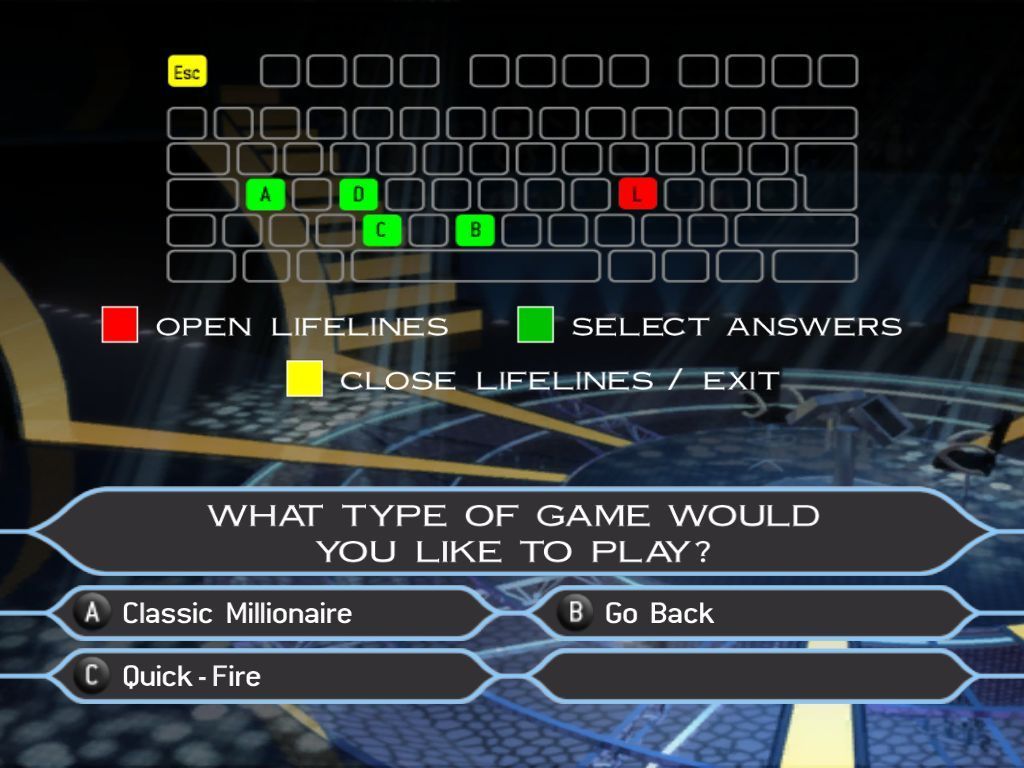
Where Party Edition truly shines is in its multiplayer suite. Up to four contestants can buzz in and snatch questions in real time, turning every round into a scramble for the buzzer. If you buzz too slowly or hesitate, another contender can swoop in—complete with the power to force someone else to answer, only to reap rewards (and penalties) based on the outcome. This mode offers four unique spins: Quick Fire, Play-or-Pass, Millionaire Remix and Multimillionaire teams, each delivering fresh strategies and rivalries for living room showdowns.
Graphics
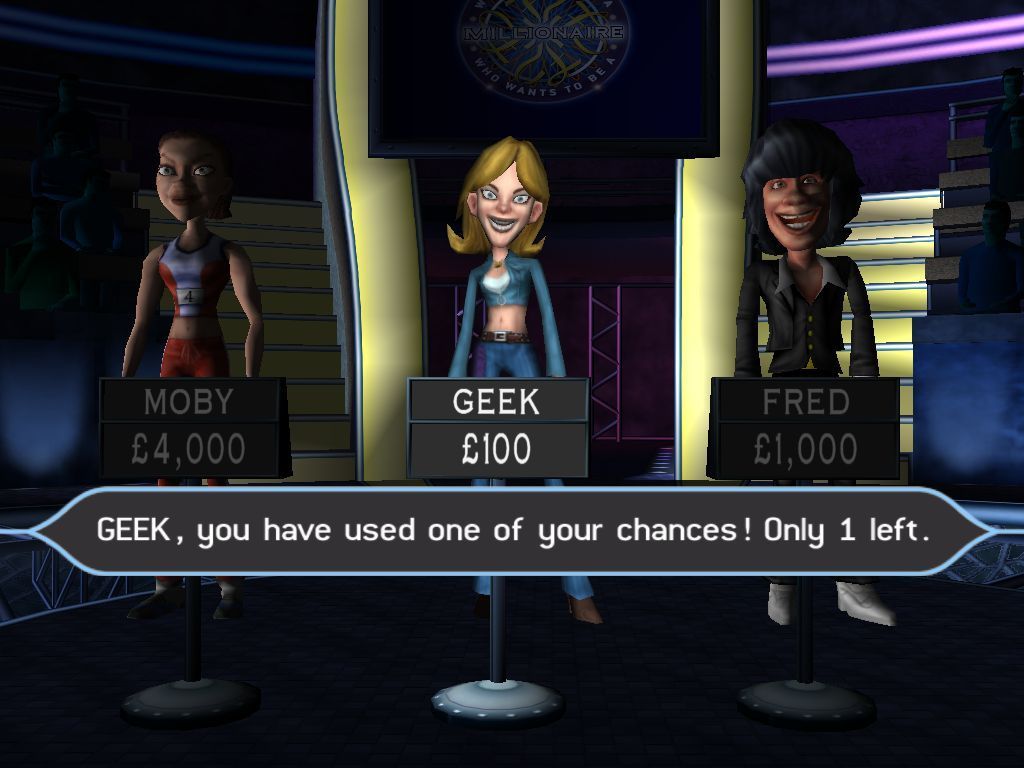
Visually, Party Edition leans into a lighthearted, almost caricatured style that injects personality in place of photorealism. The game’s host and in-lobby avatars sport exaggerated expressions and witty sound bites, giving each contestant a chance to shine through custom looks and humorous interjections. While this comedic approach may stray from the sleek lighting of the TV set, it perfectly complements the party atmosphere and keeps the mood buoyant.
The stage environment remains instantly recognizable, complete with the iconic hot-seat chair, concentric lighting rings, and dramatic camera cuts. Transitions between questions feature slick animations, and correct or incorrect answers trigger colorful effects that reward or chastise you in a visually gratifying way. Character models are slightly cartoony but well-animated, and the menus are crisp, colorful, and easy to navigate—even when your living room crowd is clamoring for the controller.
Performance-wise, the game runs smoothly across all modes, with minimal load times between rounds. Background crowd noise, applause, and tension-building sound cues all tie into the visual presentation, creating a cohesive audiovisual package. Whether you’re playing solo or with friends, the graphical flair enhances immersion, making you feel every bit the trivia contestant under studio lights.
Story
Strictly speaking, Millionaire: Party Edition doesn’t weave a narrative in the traditional sense—it’s all about the immediate thrill of trivia and the competitive heat of the moment. However, the game does cultivate a meta-story through its progression system. Each question you face is a milestone, and the guarantee points at question 5 and question 10 act like chapters in your climb toward virtual millionaire status.
The character-driven banter and humorous voiceovers fill in the gaps, offering a light storyline that you’re part of an eccentric game show. Players often find themselves invested in the persona they choose—whether that’s the snarky comedian, the nervous rookie, or the confident quizmaster. As you rack up correct answers, the confetti and celebratory animations tell a mini-arc of triumph and, sometimes, heartbreak when you miss a crucial question at the eleventh hour.
Multiplayer variants bring their own narrative twists, too. In “Play-or-Pass,” for instance, every decision to pass a question becomes a moment of drama, with teammates and rivals hanging on your choice. “Multimillionaire” mode weaves a cooperative thread among team members, forging bonds as you share lives and strategy. While there’s no overarching tale with plot twists, the emergent stories you create with friends are by far the most compelling.
Overall Experience
Who Wants to Be a Millionaire: Party Edition nails the balance between faithful adaptation and inventive variation, making it a must-have for quiz show enthusiasts and party game aficionados alike. Solo players will appreciate the layered difficulties and the addictive risk-reward tension of the standard format, while groups of friends will revel in the buzzer battles and multiplayer permutations.
The variety of modes ensures that replay value remains high—casual quiz rounds, all-out buzzer wars, team-based cooperation, and quick-fire challenges each bring different pacing and strategy. Combined with the game’s snappy pacing, minimal load times, and accessible interface, you can jump in for a quick round or marathon game night with equal ease.
Although the game doesn’t offer a deep storyline, it more than compensates with showmanship, humor, and genuine suspense. The graphical presentation may lean cartoony, but it suits the festive tone, and the audio-visual cues effectively ratchet up the excitement. In sum, Party Edition delivers an engaging, user-friendly package that keeps the spirit of the beloved TV franchise alive while inviting new layers of competition and camaraderie.


Reviews
There are no reviews yet.