 Retro Replay Retro Replay gaming reviews, news, emulation, geek stuff and more!

Retro Replay Review
Gameplay
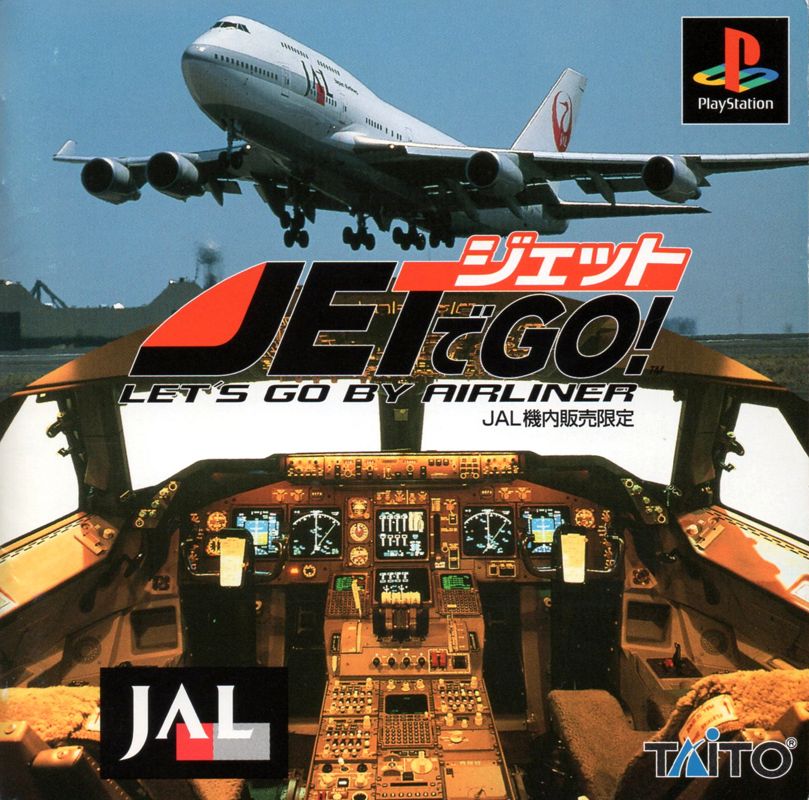
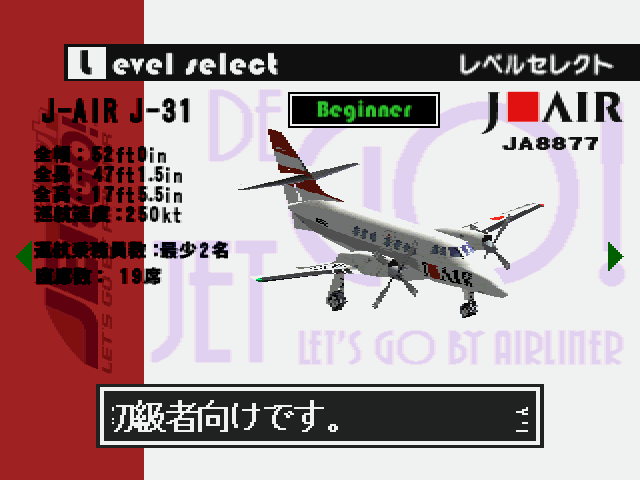
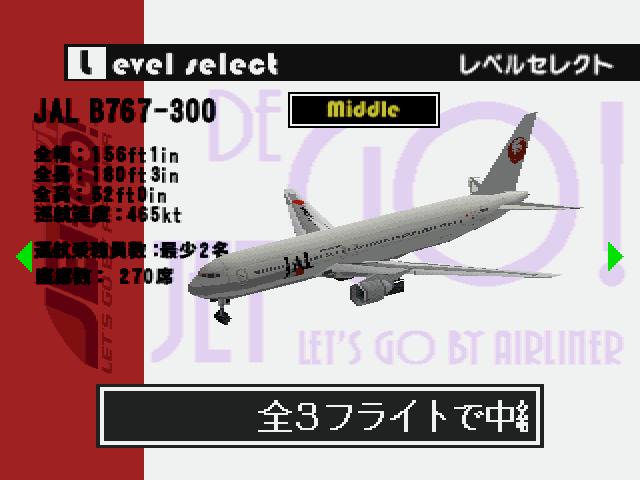
Jet de GO! shifts the familiar precision of the Densha de GO! train simulator into the skies, offering a surprisingly accessible but rewarding flight experience. Players choose between three commercial jets—a nimble J-31 business jet, the reliable mid-range Boeing 767, or the long-haul Boeing 747—and tackle every phase of flight from engine start to taxiing. Controls are intuitive enough for newcomers yet provide enough depth to keep seasoned sim fans engaged, with separate Flight, Cruise, and Lesson modes tailoring the challenge to your skill level.
(HEY YOU!! We hope you enjoy! We try not to run ads. So basically, this is a very expensive hobby running this site. Please consider joining us for updates, forums, and more. Network w/ us to make some cash or friends while retro gaming, and you can win some free retro games for posting. Okay, carry on 👍)
Lesson mode serves as an excellent tutorial, breaking down complex procedures like flap settings, throttle management, and approach checklists into bite-sized tasks. You’ll find yourself progressively mastering pre-flight inspections before moving on to crosswind landings or instrument approaches. Each lesson highlights real-world cockpit practices, so you’ll not only learn the game’s mechanics but also gain a basic understanding of commercial flight operations.
In Flight mode, the focus is on taking off and landing at a variety of international airports under different weather conditions. This mode tests your ability to handle emergency procedures and unplanned events, such as sudden gusts or engine malfunctions. Cruise mode, on the other hand, simplifies the mid-air portion of the journey. Autopilot engagement, altitude holds, and navigation checks become the stars of the show, giving you a chance to appreciate the view outside your cockpit windows.
While there is no multiplayer component, Jet de GO! makes up for it with a progression system that unlocks new airports and flight plans as you complete lessons and flights. The variety of aircraft characteristics encourages you to adapt your piloting style: the J-31 demands precision and quick reflexes, the 767 offers a balanced handling profile, and the 747’s sheer size makes for a satisfying challenge on tight runways. Overall, the gameplay strikes a solid balance between simulation authenticity and pick-up-and-play accessibility.
Graphics
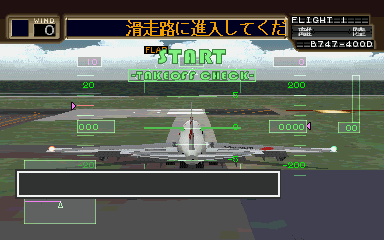
Graphically, Jet de GO! retains the clean, functional aesthetic of its train-based predecessor while expanding its visual scope to sprawling runways and endless skies. Cockpit interiors are rendered with a commendable level of detail: individual gauges light up during start-up sequences, and the glare on polished instruments gives an extra touch of realism. Visibility settings allow you to adjust cloud layers and time of day, letting you experience dawn departures or night landings with moody lighting effects.
Outside the cockpit, aircraft models are well-proportioned and instantly recognizable, though textures can feel a bit dated by modern standards. Runway markings, taxiway signs, and terminal buildings display clear visual cues that guide you during ground operations, minimizing confusion when navigating complex airport layouts. Occasional pop-in of distant terrain is noticeable, but it rarely disrupts the sense of immersion during critical takeoff or landing sequences.
Performance is generally smooth on mid-range hardware, thanks to efficient optimization of rendering routines. You’ll rarely experience frame dips, even in crowded airport environments. Weather effects such as rain streaks on the windshield or shifting cloud shadows add dynamic variety to each flight, reinforcing the simulation’s educational goals by illustrating how atmospheric conditions influence visibility and handling.
One minor gripe is the lack of ultra-high-resolution scenery packs or detailed airport expansions, features often found in more hardcore simulators. However, Jet de GO!’s graphical presentation remains consistent and clean, ensuring that vital information—altitude, airspeed, glide slope indicators—remains legible at all times. The result is a cockpit view that feels both functional and engaging.
Story
Unlike narrative-driven flight games, Jet de GO! doesn’t weave a traditional storyline. Instead, it frames your experience as a pilot-in-training working your way through increasingly complex flight assignments. This structure provides a sense of progression and accomplishment reminiscent of the Densha de GO! series without relying on scripted cutscenes or character arcs.
Each Lesson mode module introduces a new “chapter” in your pilot career—from basic ground checks to full ILS landings in adverse weather. Completing these lessons unlocks Flight mode challenges at airports around the world, effectively creating a journey that mirrors the professional development of a commercial aviator. While there’s no cast of characters or branching plotlines, the implied narrative of mastering equipment and procedures lends a subtle, satisfying story beat to every successful touchdown.
Flight scenarios act as stand-ins for plot points: a routine business-jet hop across a small regional airport, a transcontinental leg aboard a 767, or a marathon haul on a fully loaded 747. Each mission’s briefing provides enough context—scheduled departure times, passenger count, cargo weight—to simulate real airline operations, reinforcing the sense of a living world beyond the cockpit.
For players seeking drama or character-driven arcs, Jet de GO! might feel sparse. However, the slice-of-life storytelling through operational scenarios and escalating challenge levels delivers its own brand of engagement, particularly for simulation enthusiasts who find the day-to-day realities of piloting to be their own form of drama.
Overall Experience
Jet de GO! succeeds at translating the methodical charm of Densha de GO! into an aviation context, offering a focused experience that emphasizes procedural accuracy and steady progression. The learning curve is thoughtfully designed: initial tutorials build confidence, while later flight and cruise modes test your ability to manage complex systems under pressure.
Though it lacks multiplayer or sprawling open-world exploration, the game’s structural simplicity is a virtue for players who want to concentrate on essential piloting skills without the distraction of side quests or combat. The three available jets cater to different preferences, encouraging repeated playthroughs to master each aircraft’s unique behavior.
Graphically, Jet de GO! may not rival today’s top-tier flight simulators, but its clean visuals, stable performance, and readable cockpit instrumentation make for a reliably immersive experience. The absence of a conventional narrative is offset by a strong sense of progression through lessons and flight plans, providing motivation to tackle tougher challenges and unlock new airports.
For simulation newcomers, aviation hobbyists, or fans of the Densha de GO! franchise, Jet de GO! offers a compelling package. It delivers exactly what it promises: a trimmed-down, training-focused flight sim that’s easy to pick up but hard to master. If you’re looking to take the controls of a business jet or a jumbo airliner without wading through superfluous mechanics, this title is a worthy addition to your library.


Reviews
There are no reviews yet.