 Retro Replay Retro Replay gaming reviews, news, emulation, geek stuff and more!


Retro Replay Review
Gameplay
Tail of the Sun delivers a refreshingly open-ended survival experience that places you directly in the paws of a prehistoric caveman. From the very first moments, you’re tasked with hunting, gathering, and exploring a vast island, all while keeping an eye on basic needs like hunger and rest. This survival loop feels organic, as every hunt or foraging trip directly contributes to your character’s growth and survival odds.
(HEY YOU!! We hope you enjoy! We try not to run ads. So basically, this is a very expensive hobby running this site. Please consider joining us for updates, forums, and more. Network w/ us to make some cash or friends while retro gaming, and you can win some free retro games for posting. Okay, carry on 👍)
As you roam the land, you’ll gradually improve your stats—strength, stamina, and various crafting abilities—through repeated actions. This progression system encourages experimentation: the more mammoths you track or the more berries you pick, the better you become at that task. Yet, unlike many modern survival games, Tail of the Sun keeps its mechanics streamlined; there’s no excessive micromanagement of dozens of resources, but rather a focus on intrinsic gameplay loops.
One of the game’s most intriguing mechanics is its acceptance of death as an integral part of progression. When hunger, age, or the wilderness finally catch up with you, the torch passes to a new tribe member. You retain many of your accrued tusks and knowledge, making each “death” feel like a fresh chapter rather than a frustrating reset. It’s a bold design choice that turns mortality from punishment into a key narrative and mechanical driver.
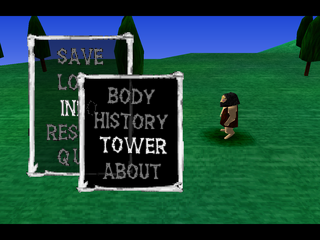
Ultimately, the driving goal remains clear yet ambitious: gather enough mammoth tusks to build a tower that reaches the sun’s tail. This long-term objective gives purpose to every hunt and every exploration, underscoring the game’s unique blend of short-term survival and epic aspiration. It’s a rare case where you truly feel the weight of your tribe’s legacy piling up with each fallen ancestor.
Graphics
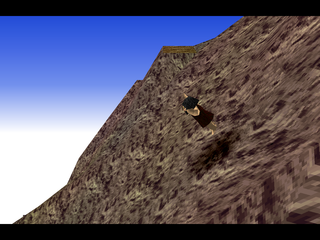
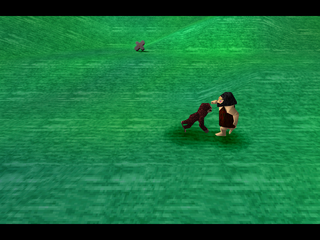
Tail of the Sun’s visual style embraces a low-polygon aesthetic that, while rudimentary by today’s technical standards, exudes a certain charm and clarity. Environments are composed of simple shapes and flat color palettes, evoking the raw, untamed quality of prehistoric landscapes. Far from feeling dated, this art direction grants the game an almost abstract, storybook feel.
The character models, too, sport minimal detail, but their animations—chasing mammoths, cracking open skulls, or simply strolling through grasslands—are surprisingly expressive. These basic motions communicate the sheer effort of survival without getting bogged down in hyper-realism. It’s a reminder that compelling gameplay doesn’t always require cutting-edge graphics.
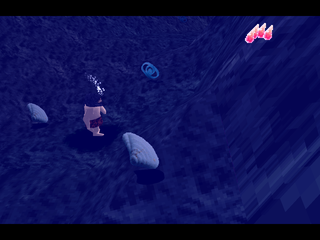
Lighting and weather effects play out in broad strokes: dawn breaks with a flat gradient, storms roll in with simple overlays, and stars pepper the night sky. While you won’t find dynamic shadows or complex particle systems, the consistency of the style makes every time of day and weather pattern feel cohesive and atmospheric.
Overall, Tail of the Sun’s graphics serve the game’s core ethos rather than overshadowing it. The simplicity invites your imagination to fill in the blanks, while the bright, warm hues reinforce the elemental struggle of life, death, and rebirth at the heart of the experience.
Story
Tail of the Sun opts for emergent storytelling over a scripted narrative. There’s no elaborate plot to follow, no NPCs doling out quests—just you, your tribe, and the vast wilderness. This approach places the onus on players to craft their own tales of triumph and tragedy as they hunt mammoths or witness a fellow tribesman fall to age.
Despite the lack of traditional story beats, the game weaves a quiet narrative through its cyclical death mechanic. Every new caveman you guide carries the weight of past failures and achievements, fostering a sense of lineage and continuity. Over time, you build a mental archive of your tribe’s collective saga: the first mammoth kill, the unexpected drowning, the times the weather turned fatal.
The titular objective—constructing a tower to reach the sun’s tail—functions as both a mechanical goal and a symbolic narrative thread. It’s a testament to humankind’s irrepressible drive to reach beyond mortal limits, to dream bigger with each passing generation. In this way, the game’s minimalist premise resonates on a surprisingly poetic level.
For players who crave a tightly woven storyline or dynamic characters, Tail of the Sun may feel sparse. Yet, for those who appreciate puzzles of survival, emergent drama, and the satisfaction of forging personal myths, the game’s understated narrative framework becomes its greatest strength.
Overall Experience
Tail of the Sun offers a punishing yet profoundly meditative journey. Its deceptively simple systems intertwine survival, exploration, and procedural progression into an experience that rewards patience and creativity. Early deaths don’t halt your momentum; instead, they mark another step toward your grand mammoth-tower ambition.
While the lack of explicit guidance can be daunting at first, it ultimately cultivates a genuine sense of discovery. Every new cave, river, or herd of mammoths encountered feels like a personal revelation. If you relish the idea of charting your own course and embracing risk as a teacher, this game will resonate deeply.
However, those accustomed to streamlined tutorials and narrative hand-holding may find the learning curve steep. The game doesn’t hold your hand, and its minimalist presentation can feel alien to players expecting modern conventions. Still, for open-minded adventurers seeking an unorthodox blend of survival and existential pursuit, Tail of the Sun stands as a singular delight.
In the end, Tail of the Sun is less about reaching the literal sun’s tail and more about the journey of generations, the thrill of the hunt, and the meditative rhythm of life and death. It’s an experience that embraces simplicity to carve out a uniquely philosophical kind of fun—one that lingers in memory long after your tribe has built its final tower.


Reviews
There are no reviews yet.