 Retro Replay Retro Replay gaming reviews, news, emulation, geek stuff and more!


Retro Replay Review
Gameplay
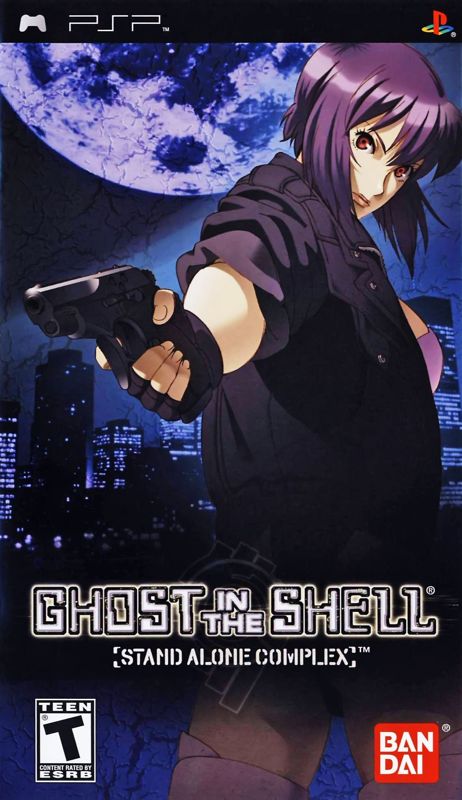
Ghost in the Shell: Stand Alone Complex reinvents the series as a first-person shooter, offering a blend of agile cybernetic combat and strategic gadget use. You can choose from four Section 9 operatives—Major Motoko Kusanagi, Batou, Togusa and Saito—each with distinct attributes. The Major moves swiftly with balanced firepower, Batou wields heavy weaponry at a slower pace, Togusa excels with precision sidearms, and Saito rules the battlefield from afar with high-powered sniper rifles. This variety encourages multiple playthroughs and adapts nicely to different playstyles.
(HEY YOU!! We hope you enjoy! We try not to run ads. So basically, this is a very expensive hobby running this site. Please consider joining us for updates, forums, and more. Network w/ us to make some cash or friends while retro gaming, and you can win some free retro games for posting. Okay, carry on 👍)
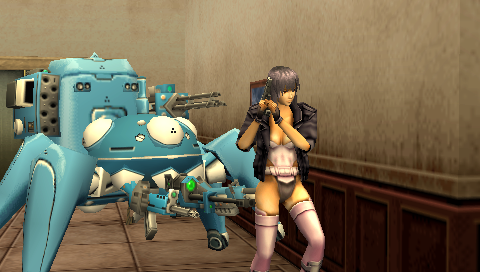
Alongside your chosen operative, you can deploy one of four Tachikoma mini-tanks, each boasting unique statistics in speed, armor and firepower. Their quirky personalities shine through pre-battle banter and in-mission commentary, adding charm to tactical coordination. You can command them to provide covering fire, draw enemy fire or scout ahead, making them more than just extra firepower—they become an essential partner in navigating complex objectives.
The single-player campaign spans a series of mission types, from stealthy infiltration and surveillance to high-intensity rescue ops. Objectives range from data extraction and bomb defusal to high-speed rooftop chases, ensuring the pace rarely stagnates. Supplies are limited, so planning your loadout and using improvised hacking tools—such as optical camouflage or explosive drones—becomes vital to success. Enemy AI reacts dynamically, flanking you when you linger in the open and calling in reinforcements if you trigger alarms.
Multiplayer is served via ad-hoc wireless connectivity, supporting up to six players in three distinct modes. You can opt for Free-For-All or Team Deathmatch, choosing exclusively between the human operatives or the Tachikomas. This separation prevents balancing issues but means you can’t mix characters and mechs in a single match. While the small lobby size limits large-scale battles, the frantic skirmishes and tight maps keep each confrontation tense and rewarding.
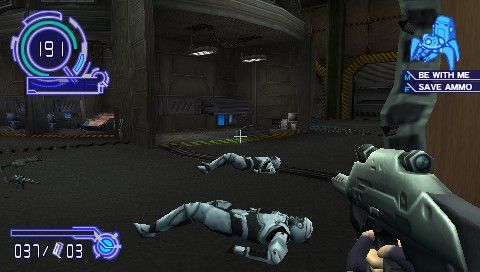
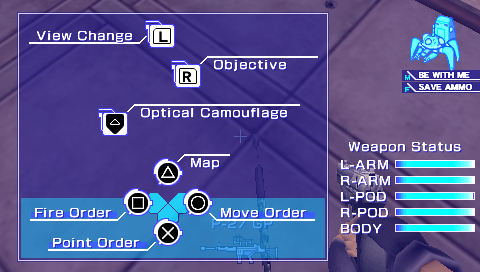
Controls are intuitive once you adjust to the game’s slightly weighty handling—aiming and recoil feel grounded, and the lock-on system for longer-range weapons works reliably. Tachikoma commands are mapped to quick-access buttons, allowing you to switch tactics on the fly. A few moments of input lag can occur in hectic firefights, but they’re rare enough not to derail the experience.
Graphics
Visually, Ghost in the Shell: Stand Alone Complex captures the neon-drenched cyberpunk aesthetic of the anime with impressive fidelity. Cityscapes glow with reflective wet streets and towering holographic billboards, while interior environments—from high-tech labs to dilapidated warehouses—showcase a broad palette of textures. The attention to lighting, especially in night missions, creates a moody atmosphere that heightens tension during stealth segments.
Character models are faithfully rendered, with each operative sporting recognizable facial features and signature gear. Major Kusanagi’s sleek cyber-body contours, Batou’s bulky augmentations and the Tachikomas’ round, almost friendly silhouettes all translate well into the game engine. Subtle animations—like the whirring of cybernetic joints or the Tachikoma’s playful rolling—add personality and immersion.
Cutscenes employ a mix of in-engine cinematics and pre-rendered sequences. The former integrate seamlessly with gameplay, using dynamic camera angles to emphasize critical story moments, while the latter deliver polished dialogue exchanges that feel lifted directly from the show. Voice acting by the original Japanese and English casts lends further authenticity.
Performance generally hovers around a smooth 30 frames per second on dedicated hardware, even in explosion-heavy set pieces. Occasional frame dips may occur when multiple Tachikomas unleash their mini-cannons simultaneously, but these hitches are brief and infrequent. Texture pop-in is minimal, and draw distance maintains environmental detail during high-speed chases.
Story
The single-player mode unfolds a brand-new chapter in the Stand Alone Complex saga, weaving an original narrative that complements the established lore. A shadowy terrorist group has purloined sensitive documents chronicling an historic uprising in the Far North, and Section 9 is tasked with recovering these files while uncovering the motive behind the heist. The mystery-driven plot cleverly explores themes of information control and the ethics of cyber-warfare.
Story pacing is refined, balancing exposition with action. Briefing sequences and field transmissions offer context before each mission, then fade smoothly into gameplay without breaking immersion. Character interactions—whether Major Kusanagi’s calm directives, Batou’s dry wit or the Tachikomas’ comedic banter—provide levity and depth, preventing the narrative from becoming overly procedural.
Dialogues are succinct but meaningful, and the mission structure often ties directly to unfolding intelligence revelations. You’ll interrogate suspects, hack database networks and trek across frozen tundras, all while the plot threads gradually tighten toward a climactic showdown. Side objectives occasionally branch the story with optional intel, rewarding thorough exploration and fostering replay value for completionists.
Though the overarching storyline remains accessible to newcomers, fans of the anime will appreciate the faithful character portrayals and world-building nods. Easter eggs—such as mention of the Laughing Man incident or subtle references to previous Stand Alone Complex episodes—delight series veterans without alienating first-timers.
Overall Experience
Ghost in the Shell: Stand Alone Complex succeeds in translating the franchise’s cybernetic intrigue into an engaging FPS experience. The combination of four distinct operatives, four quirky Tachikomas and a mission roster that alternates between stealth and all-out assault keeps gameplay fresh. While some levels lean on familiar objectives, the unique mixture of tools and character abilities prevents monotony.
The graphics and sound design firmly place you in a futuristic Japan, with evocative lighting, atmospheric rain effects and a pulsing electronic soundtrack that drives the tempo. Both the in-engine and pre-rendered cutscenes feel cinematic, and the voice work reinforces the connection to the beloved anime series. Technical hiccups are scarce and do little to mar the overall polish.
Multiplayer, though limited by its six-player ad-hoc format and the inability to mix character types, offers fast-paced skirmishes that reward map knowledge and teamwork. It’s a solid addition for those with friends on the same network, but won’t replace more robust online shooters if you crave large-scale competitive play.
Ultimately, Ghost in the Shell: Stand Alone Complex delivers a satisfying fusion of narrative and action for fans and FPS enthusiasts alike. Its faithful adaptation of the source material, coupled with varied gameplay mechanics, makes it a worthwhile addition to any cyberpunk or shooter library. Whether you’re piloting a nimble Tachikoma into the fray or sneaking through corporate strongholds as the Major, the game offers enough depth and style to keep you engaged until the final data recovery mission is complete.

Reviews
There are no reviews yet.