 Retro Replay Retro Replay gaming reviews, news, emulation, geek stuff and more!

Retro Replay Review
Gameplay
Ghost Rider delivers a relentless hack-and-slash experience reminiscent of classic action titles like God of War. You control Johnny Blaze as he wields his flaming hellfire chains with devastating flair, stringing together combos that feel satisfying and impactful. The combat system encourages variety, rewarding players who mix light, heavy, and aerial attacks to keep foes off-balance and racks up soul orbs for later upgrades.
(HEY YOU!! We hope you enjoy! We try not to run ads. So basically, this is a very expensive hobby running this site. Please consider joining us for updates, forums, and more. Network w/ us to make some cash or friends while retro gaming, and you can win some free retro games for posting. Okay, carry on 👍)
Central to the gameplay loop are two resource meters: the Vengeance Bar and the Spirit Gauge. As you land consecutive hits without taking damage, your Vengeance Bar fills, allowing you to shatter armored enemies and claim more souls with each kill. Souls are the in-game currency, used to unlock powerful new moves, enhance existing abilities, or purchase bonus characters. Meanwhile, the Spirit Gauge charges as you attack, enabling you to unleash special weapons like Ghost Rider’s shotgun when meter thresholds are reached.
In addition to on-foot brawls, Ghost Rider features Hellcycle segments that break up the melee action. Riding at high speed through fiery wastelands, you dodge hazards, fire hellshots at pursuing demons, and slice enemies with your chains. These sections are fast-paced and tense, offering a change of pace from the densely packed combat arenas. For players seeking more challenge, a dedicated Challenge Mode remixes these bike levels into elimination and survival variations, ensuring there’s always another test of skill.
Graphics
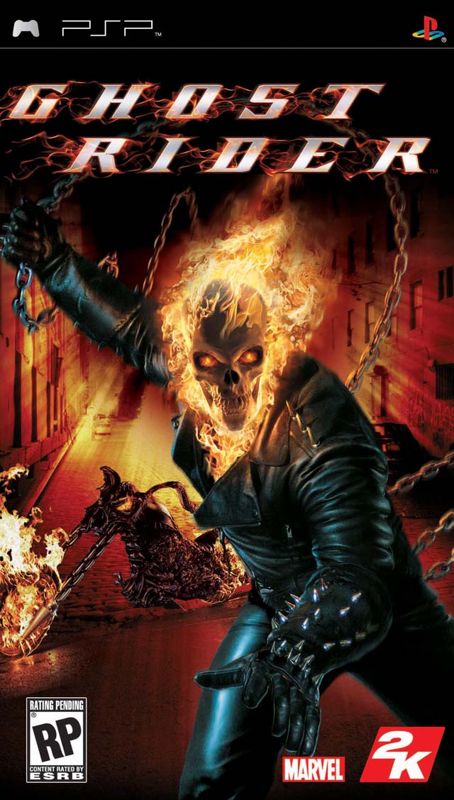
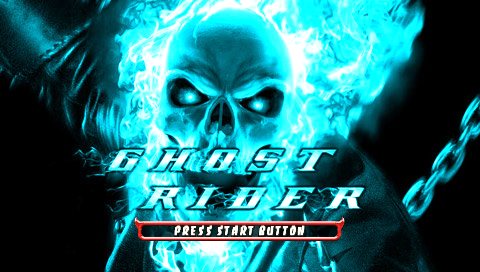
Visually, Ghost Rider leans into its fiery theme with dramatic lighting and particle effects. Flames dance off Johnny Blaze’s skull and his blazing chains leave streaks of embers in the air, creating a striking silhouette against the hellscape backdrops. Enemy designs range from horned imps to towering brutes, each rendered with enough detail to distinguish attack telegraphs and weak points clearly.
Environments span from the charred remains of city streets to the molten caverns of the underworld, and while some textures can appear dated on older hardware, the overall art direction keeps the world cohesive and atmospheric. Dynamic camera angles during key combo finishers amplify the intensity of combat, though occasional clipping and camera collisions in tight arenas may disrupt the flow momentarily.
The Hellcycle segments showcase motion blur and particle systems in full effect, making high-speed chases through lava rivers and skeletal remains look both chaotic and cinematic. Cutscenes that advance the narrative are fully voiced and often employ pre-rendered animation. While not quite blockbuster movie quality, they reinforce the comic-book aesthetic and keep you invested in Johnny’s quest.
Story
Picking up after the movie’s events, Ghost Rider‘s narrative thrust sees Johnny Blaze serving Mephisto’s bidding to recapture rogue demons before they unleash chaos on both Earth and Hell. The premise of saving Blaze’s girlfriend from eternal damnation raises the stakes and gives weight to your demon-slaying crusade. Each mission is framed as a job from Mephisto, providing clear objectives and a darkly humorous rapport between master and servant.
The writing leans on comic-book tropes—intense monologues, moral dilemmas, and grand declarations of vengeance—without taking itself too seriously. Boss encounters are punctuated by dialogue exchanges that reveal more about the demon hierarchy and Johnny’s internal conflict about his demonic powers. While the story is predictable at times, it stays true to the spirit of the source material, and fans of the character will appreciate the faithful portrayal of Blaze’s struggle.
Side characters and enemy types are introduced with brief codex entries that flesh out the demon world, though the game never bogs down in exposition. Instead, it keeps the pace brisk, delivering story beats between action-heavy missions. By the time you confront the final boss, you’ll have a clear understanding of Mephisto’s motivations—and you’ll be invested enough to feel the payoff when the narrative reaches its climax.
Overall Experience
Ghost Rider offers an accessible yet deep action experience for fans of hack-and-slash gameplay and comic-book adaptations. Its core combat mechanics are easy to grasp but offer strategic layers through resource management and enemy vulnerabilities. The balance between melee, ranged special attacks, and vehicular Hellcycle segments ensures variety throughout the campaign’s dozen or so hours.
While some graphical elements show their age and occasional camera issues can interrupt combat, the game’s strengths lie in its visceral feel and faithful adaptation of Johnny Blaze’s powers. The upgrade system adds replay value, encouraging multiple playthroughs to fully explore the move set and unlock all extras. The Challenge Mode adds another avenue for those looking to test their mastery of the Hellcycle races.
For players seeking a straightforward, action-packed adventure driven by a dark superhero narrative, Ghost Rider is a compelling choice. Its blend of fiery aesthetics, satisfying combos, and comic-infused storyline make it a standout among early-2000s licensed titles. Whether you’re a longtime admirer of Marvel’s supernatural hero or simply in search of high-octane demon-slaying fun, Ghost Rider delivers an engaging ride from start to finish.


Reviews
There are no reviews yet.