 Retro Replay Retro Replay gaming reviews, news, emulation, geek stuff and more!
Retro Replay Review
Gameplay
Pilot Academy on the PSP delivers an impressively deep flight simulation that spans over a century of aviation history. In the initial lessons, you learn the fundamentals of powered flight for both civilian and military operations. The game makes full use of the PSP’s controls: the analog nub acts as your joystick, while the face buttons and shoulder triggers manage throttle, flaps, air brakes, landing gear, and even the tail rudder. This hands-on approach gives each flight a tactile feel that’s rare on a handheld device.
(HEY YOU!! We hope you enjoy! We try not to run ads. So basically, this is a very expensive hobby running this site. Please consider joining us for updates, forums, and more. Network w/ us to make some cash or friends while retro gaming, and you can win some free retro games for posting. Okay, carry on 👍)
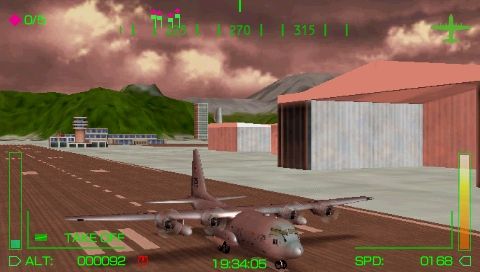
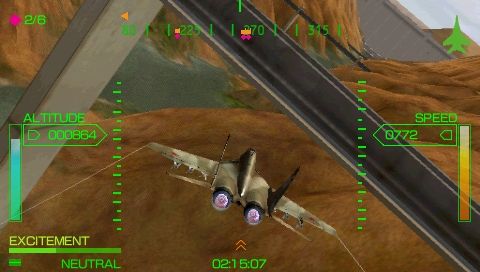
As you progress through the civilian and military tutorials, the complexity ramps up quickly. Military aircraft come equipped with air-to-air missiles, air-to-ground ordnance, a machine gun, and flares for missile defense. The absence of a fuel gauge might seem like an oversight, but since most missions are designed for short sorties, it streamlines the experience without sacrificing realism. Transitioning from tutorial to full missions, you’ll taxi, take off, engage targets, and complete objectives before returning to the airfield for a landing.
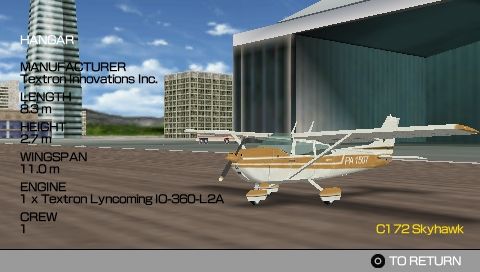
Once you’ve passed the lessons, a variety of challenging missions open up. Success in tasks—ranging from aerial reconnaissance to passenger transport—earns you distinctions based on time, aircraft integrity, objective completion, and passenger comfort. High marks unlock new planes for free-flight mode, where you can pilot everything from a WWI Fokker Triplane to a Boeing 747 on a detailed tropical map. With dynamic weather, varied terrain, and both solo and four-player multiplayer modes, Pilot Academy offers endless replayability for aspiring pilots.
Graphics
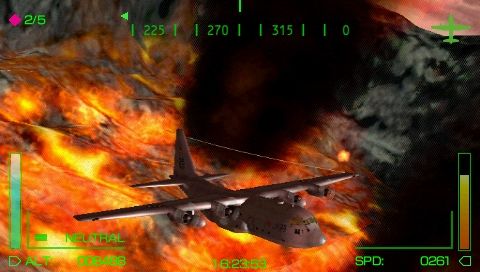
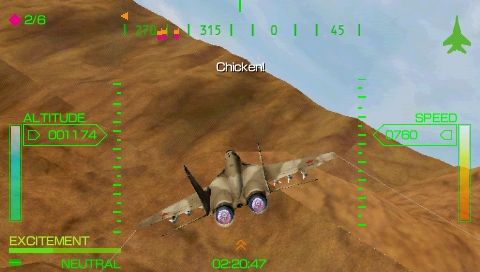
Pilot Academy pushes the PSP’s graphics hardware to its limits, delivering detailed aircraft models that are fully licensed and faithfully reproduce each era’s design. From the iconic tri-wing silhouette of the Red Baron’s Fokker to the sleek lines of an F-16 Falcon, each plane is rendered with convincing texturing and accurate cockpit layouts. The HUD elements are crisp and informative, blending seamlessly with the cockpit view without cluttering the screen.
The environments themselves are remarkably varied: tropical islands, desert canyons, snowy mountain passes, and open ocean create striking backdrops for your flights. Weather effects like rain, snow flurries, and storm clouds are more than cosmetic—they can obscure visibility, affect handling, and heighten the tension of a dogfight. Day-night transitions also add to the immersion, with realistic lighting shifts that challenge you to adapt your flying techniques.
Despite these strengths, the PSP’s screen resolution and processing power can’t entirely eliminate occasional frame rate dips and pop-in on distant objects. Performance remains largely stable in single-player, but multiplayer dogfights—especially cross-era battles featuring multiple high-poly models—can tax the system. Even so, the visual presentation remains one of the strongest offerings on the platform, making Pilot Academy a standout in handheld flight sims.
Story
Pilot Academy isn’t driven by a cinematic storyline, but rather by a structured training program that gradually broadens your piloting repertoire. Instead of a linear narrative, you’re presented with a series of flight lessons and missions that simulate real-world assignments: escorting bombers, delivering supplies, airshows, and search-and-rescue operations. Each mission comes with just enough context to keep things interesting without bogging you down in cutscenes.
The lack of a traditional plot can be a double-edged sword. On one hand, you’re free to focus entirely on the mechanics of flight and mission objectives, which will appeal to fans of pure simulation. On the other hand, players looking for dramatic twists, character interactions, or an overarching campaign may find the presentation a bit clinical. Thankfully, the variety of objectives and the progression through different aircraft classes provide an implicit sense of advancement and achievement.
Multiplayer encounters inject the most narrative flair by allowing you to stage epic dogfights across eras—imagine going head-to-head in a Spitfire against an F-14 Tomcat. These ad hoc stories, crafted by your own dogged skill (or misadventures), often leave a stronger impression than any scripted storyline. In this way, Pilot Academy lets you create your own legend of the skies.
Overall Experience
Pilot Academy is a robust, engrossing flight simulator that stands out on the PSP for its breadth, depth, and attention to detail. The learning curve can be steep—especially when juggling throttle, flaps, rudder, and weapon systems all at once—but the game’s thorough tutorials ease you into each new complexity. Veteran sim pilots will appreciate the realism, while newcomers will benefit from clear step-by-step instruction.
Graphically, it’s one of the most ambitious titles on Sony’s handheld, with accurate plane models, varied terrain, and weather systems that affect gameplay. Occasional performance hitches are a minor drawback compared to the overall spectacle of flying a WWI biplane one moment and a modern jet the next. The licensed aircraft roster and map diversity keep each flight feeling fresh and exciting.
With its combination of structured lessons, open-ended missions, and up-to-four-player multiplayer action, Pilot Academy offers excellent value for fans of aviation. Whether you’re dogfighting friends online, completing precision cargo drops, or simply enjoying a free-flight sunset over tropical isles, this PSP title delivers an engaging aerial experience that’s hard to find anywhere else in handheld gaming.


Reviews
There are no reviews yet.