 Retro Replay Retro Replay gaming reviews, news, emulation, geek stuff and more!


Retro Replay Review
Gameplay
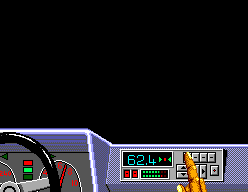
Battle Out Run delivers a high-octane chase experience that immediately places you behind the wheel of a sleek red sports car, tasked with apprehending eight criminal vehicles across famous American cities. Each stage is set in a different metropolis—Los Angeles, Chicago, Miami, New York, and others—offering unique road layouts, traffic patterns, and weather effects that continually test your reflexes. From the moment you hit the accelerator, the game demands precise steering, timely braking, and strategic use of nitro boosts to close in on your targets.
(HEY YOU!! We hope you enjoy! We try not to run ads. So basically, this is a very expensive hobby running this site. Please consider joining us for updates, forums, and more. Network w/ us to make some cash or friends while retro gaming, and you can win some free retro games for posting. Okay, carry on 👍)
The core mechanic revolves around bumping into fleeing cars to disable them, which is both thrilling and satisfying. However, it’s not as simple as ramming headlong; you must weave through streams of yellow traffic cars and dodge static obstacles like road barriers and construction zones. Mistimed maneuvers often send you spinning off course, eating up precious seconds and leaving your quarry one step ahead. The tension ramps up quickly as pursuit timers tick down, forcing you to balance aggression with caution.
Midway through your eight-stage pursuit, Battle Out Run introduces an upgrade shop where you can spend the money earned from successful takedowns. Here you can buy more powerful engines, better tires, or additional nitro charges, making the second half of the game feel distinctly more intense. Deciding which upgrades to prioritize adds a layer of strategy: do you go for raw speed or improved handling? This risk-reward loop keeps you invested, as better gear directly translates to easier chases and bigger cash rewards.
While Sega’s homage to Taito’s Chase H.Q. roots is clear, Battle Out Run carves out its own identity through tighter controls and more varied urban stages. Each level feels unique, and mastering the different city layouts becomes a satisfying challenge. The combination of arcade-style immediacy and an upgrade-driven progression keeps the chase compelling from start to finish.
Graphics
Visually, Battle Out Run strikes a balance between colorful arcade flair and a gritty, urban aesthetic. The red sports car you pilot stands out crisply against the backdrop of city streets, with bold pixel art that captures the sense of speed and danger. Roadside landmarks and skyline silhouettes lend each city a recognizable atmosphere, from the palm-lined boulevards of Miami to the skyscraper canyons of New York.
Environmental details like flickering streetlights, passing billboards, and animated pedestrian crossings enrich the immersion, even if some texture repetition is apparent on longer play sessions. Traffic vehicles—especially the hazardously placed yellow cars—are modeled with enough variety to keep you on your toes without overwhelming the main action. Occasional weather effects, such as rain reflections on the asphalt, add an extra layer of visual polish.
Frame rate remains impressively steady during high-speed chases, ensuring that your input timing never feels compromised. Camera shakes and screen flashes when you collide with obstacles deliver satisfying feedback without ever feeling disorienting. All told, the graphical presentation is a testament to Sega’s ability to squeeze exhilarating performance out of the hardware, offering a vivid arcade ride that still holds up today.
Story
Battle Out Run keeps its narrative lean, focusing squarely on the thrill of the pursuit rather than elaborate cutscenes or character backstories. You assume the role of an elite traffic enforcement officer whose mission is to clean up the streets by intercepting notorious criminals. While the plot doesn’t delve into personal motivations or twists, it’s more than adequate for an arcade racer—every level advancement feels like a successful mission debrief.
The changing city locales double as a form of storytelling, each environment hinting at the distinct criminal underworld operating there. In Los Angeles, you chase smugglers darting through freeway overpasses; in Chicago, getaway drivers weave between elevated train tracks. This geographical variety implicitly builds a sense of progression and stakes without ever pausing the action for cutscenes.
Although minimalistic, the story framework gives context to your upgrades and rewards. Earning money by disabling villains reinforces your status as a top-tier officer, and the promise of better gear motivates each pursuit. If you’re seeking deep character arcs or branching narratives, you might find Battle Out Run’s plot skeletal—but for an arcade-style chase game, it hits the right beats.
Overall Experience
Battle Out Run succeeds where many arcade racers falter: it keeps the adrenaline pumping from start to finish. The mixture of high-speed chases, traffic hazards, and mid-game upgrades delivers a satisfying escalation of challenge. Each successful takedown is its own reward, and the game’s steady difficulty curve ensures you’re always on the cusp of improvement.
Replay value remains strong thanks to the lure of faster stage completions and higher upgrade budgets. Whether you’re a completionist hunting perfect times on every city stage or a casual player simply craving fast-paced fun, Battle Out Run offers enough variety and challenge to keep you coming back. The lack of a deep story doesn’t detract from the experience—it streamlines the action and keeps you in the driver’s seat.
In summary, Battle Out Run stands as a polished, engaging tribute to the golden age of arcade racing. Its tight controls, vibrant visuals, and strategic upgrade system combine to form a cohesive package that holds up well today. If you’re in the market for a retro-inspired racing game with pulse-pounding pursuits and straightforward thrills, this Sega classic is worth every second on the clock.


Reviews
There are no reviews yet.