 Retro Replay Retro Replay gaming reviews, news, emulation, geek stuff and more!
Retro Replay Review
Gameplay
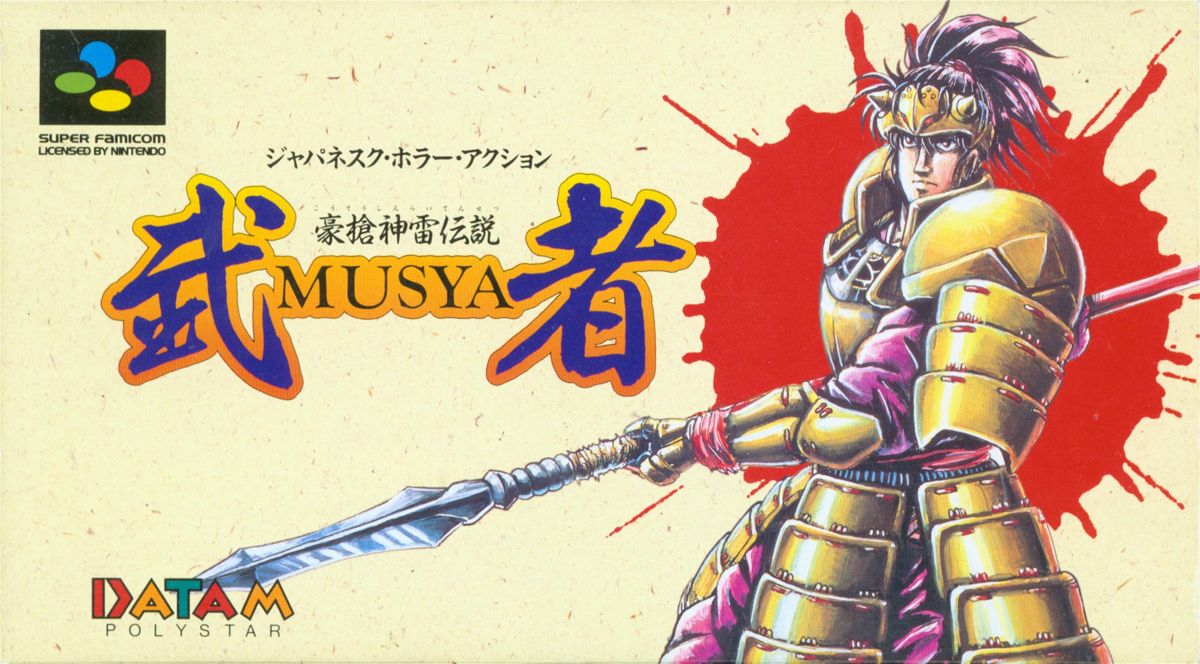
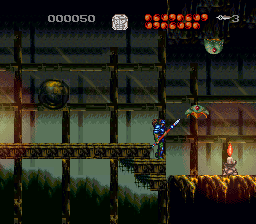
Musya places you in the sturdy boots of Imoto, a determined pikeman on a mission to rescue the maiden Shizuka and seal away the Evil One. The core combat revolves around Imoto’s spear, which offers two distinct styles of attack: a precise thrust for single, high-damage strikes and a circular spin that sweeps across a wide area, ideal for crowd control. This dual-attack system keeps encounters feeling fresh, as you’ll switch between methods to handle everything from nimble yokai to hulking stage bosses.
(HEY YOU!! We hope you enjoy! We try not to run ads. So basically, this is a very expensive hobby running this site. Please consider joining us for updates, forums, and more. Network w/ us to make some cash or friends while retro gaming, and you can win some free retro games for posting. Okay, carry on 👍)
Beyond melee combat, Musya introduces an intriguing magic system. Imoto can wield five elemental spells—Thunder, Flame, Water, Wind, and Earth—to clear the screen of lesser enemies in an instant. Each spell requires a scroll, and you can carry up to four of each type. This limited resource model encourages strategic use: do you burn through your strongest spells early to survive a tough gauntlet, or hoard them for the looming boss at the end of each stage?
The game’s seven stages—ranging from the ominous Tengumura Cavern to the haunting Watery Prison—are peppered with hidden rooms and item drops that replenish your magic scrolls. Enemies respawn in predictable patterns, allowing you to farm scrolls, but the risk of taking damage lurks at every corner. Boss encounters demand precise timing and savvy spell usage, striking a fine balance between challenge and reward. Hardcore players will appreciate the tight controls and the risk-reward loop of exploring each level thoroughly.
Graphics
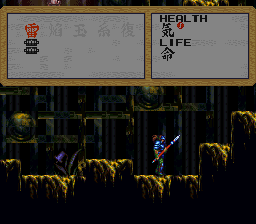
Musya’s graphical presentation is steeped in ‘90s Super Nintendo charm, leveraging a dark, muted palette to evoke the horrors of classical Japanese folklore. The detailed backgrounds—ancient shrines, twisting caverns, and crumbling palaces—immerse you in a world where every shadow could conceal a vengeful spirit. Tile sets are reused cleverly across stages, but subtle color shifts and unique foreground elements prevent the scenery from feeling monotonous.
Character sprites are bold and well-animated; Imoto’s spear thrusts and spins convey a satisfying sense of weight, while enemy sprites—ranging from skeletal warriors to grotesque oni—move with eerie fluidity. Special effects for magic spells stand out vividly against the darker backgrounds, with thunderbolts crackling across the screen and flames roaring to life in bright orange hues. These visual flourishes not only look spectacular but also serve a practical purpose, clearly signaling when area-of-effect spells are in play.
While the Super NES hardware does impose limits—sprite flicker can occur during intense firefights, and the color depth occasionally flattens distant backgrounds—the overall aesthetic successfully captures a foreboding atmosphere. The game’s use of parallax scrolling in select levels adds depth to the environments, making you feel as though you’re traversing a multi-layered realm of Japanese myth. For retro enthusiasts, Musya’s pixel art remains a standout example of how to convey terror and beauty on a 16-bit console.
Story
Musya’s narrative draws heavily from Japanese folklore, casting you as Imoto, a loyal pikeman entrusted with saving Shizuka, the village maiden. Shizuka carries a powerful talisman that imprisons the Evil One in the Abyss, but when a sinister guard kidnaps her, the world teeters on the brink of darkness. Your mission is simple in concept—rescue Shizuka and restore the seal—but the journey unfolds across a series of increasingly treacherous domains filled with demonic adversaries.
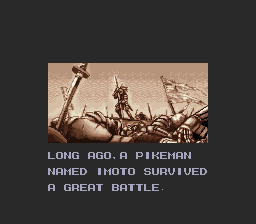
Each stage is framed by brief text interludes that advance the plot, offering just enough context to keep you invested without bogging down the action. The sense of urgency is palpable: with every step deeper into the Abyss, you feel the pull of an ancient evil threatening to break free. Though character development is minimal—typical of the era—the game’s commitment to its mythological roots gives the story a timeless, fairy-tale quality that resonates more effectively than many contemporaries.
The lack of voiced or animated cutscenes might feel sparse by modern standards, but it complements the game’s old-school sensibilities. The tale unfolds at your own pace as you conquer each stage, discovering scrolls and items that both aid your quest and reinforce the stakes. If you’re a fan of folklore-driven tales where atmosphere and action share equal billing, Musya’s story will keep you motivated from the Tegumura Cavern all the way to the final showdown in the Watery Prison.
Overall Experience
Playing Musya: The Classic Japanese Tale of Horror is like embarking on a nostalgic pilgrimage through Japan’s ghost stories, rendered in crisp pixel art and backed by tight, responsive controls. The blend of melee combat and limited-use magic spells creates a compelling risk-versus-reward loop that keeps you engaged level after level. While it doesn’t reinvent the run-and-gun formula, it refines it with strategic depth and a palpable sense of dread.
Difficulty can spike unexpectedly—especially in later stages—so newcomers to retro action games should be prepared for trial-and-error progression. That said, the checkpoint system is generous enough to prevent frustration, and the ability to farm scrolls softens the learning curve. Each boss encounter feels like an accomplishment, and the exhilaration of sealing away the Evil One never gets old.
For fans of atmospheric platformers, Musya stands out as a hidden gem. Its cohesive package of haunting visuals, folklore-infused storytelling, and versatile combat mechanics offers a satisfying journey from start to finish. Whether you’re a seasoned retro gamer or a newcomer curious about classic Japanese horror, Musya provides a thoroughly engaging experience that remains relevant decades after its original release.


Reviews
There are no reviews yet.