 Retro Replay Retro Replay gaming reviews, news, emulation, geek stuff and more!




Retro Replay Review
Gameplay
The core of Amazônia’s gameplay revolves around survival in a vast and unforgiving forest. You begin with your airplane’s engine cut out mid-flight, forcing an emergency landing deep in the Amazon. From that moment, every command you type—be it “beber” (to drink) or “acender” (to light)—carries the weight of life and death. The game’s emphasis on basic needs like thirst, hunger, and shelter transforms every decision into a tense gamble.
(HEY YOU!! We hope you enjoy! We try not to run ads. So basically, this is a very expensive hobby running this site. Please consider joining us for updates, forums, and more. Network w/ us to make some cash or friends while retro gaming, and you can win some free retro games for posting. Okay, carry on 👍)
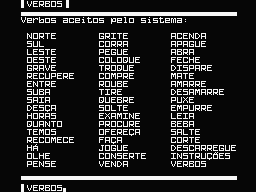
One of Amazônia’s most distinctive traits is its parser: a compact, 40-verb vocabulary inspired by Infocom classics. Though you won’t be stringing together long, chained commands, the system does recognize pronouns and demands precise Portuguese accentuation. This quirky requirement not only reinforces authenticity but also adds a layer of challenge, as mistyping “água” without the accent will lead to a confused parser rather than a refreshing drink.
Random encounters with jaguars, piranhas, and venomous snakes keep you on edge throughout your trek. A sudden roar or a frenzied splash in the nearby river can promptly end your journey if you hesitate. Combating these threats often comes down to quick thinking and resource management—finding stones or sticks becomes crucial when fending off a predator, and improvising tools is part of the daily struggle.
Puzzle design in Amazônia leans heavily on environmental logic. To cross a raging stream, you might fashion a raft from fallen logs. To signal for help, you’ll need to piece together a makeshift flare or distress flag. While some puzzles can feel obtuse—thanks to the limited verb set—overcoming these hurdles delivers a genuine sense of accomplishment, much like surviving another night in the jungle.
Graphics
As a text-adventure released in early 1980s Brazil, Amazônia forgoes traditional graphics entirely, relying on richly detailed prose to paint its world. Instead of pixel art or 3D renderings, each location is described through evocative text that conjures the sounds of buzzing insects, the sights of towering kapok trees, and the damp, earthy smell of the forest floor.
The lack of visual assets invites players to engage their imagination, turning each corridor of text into a personalized storyboard. When you step onto a mossy clearing or peer down a vine-shrouded ravine, the mental images you create fill in every visual detail. This technique not only stretches the game’s limited hardware but also deepens immersion by making you an active participant in world-building.
Amazônia’s interface is deceptively minimalist: a simple text window, a prompt for input, and occasionally a line drawing or special character denoting items found on the ground. Even these sparse symbols gain significance when lifelines like water vials or hunting tools appear in your inventory list. The game further aids accessibility by providing special keyboard shortcuts for Portuguese accents—an elegant solution that ensures consistent display across varied systems.
While modern gamers accustomed to high-definition environments may initially balk at a screen full of text, those willing to embrace the format will find the descriptive language more than compensates for the absence of sprites. Every gust of wind, every distant animal cry is rendered with a writer’s precision, making the Amazon come alive in your mind’s eye.
Story
The narrative hook of Amazônia is simple yet compelling: your plane’s engine gives out over the Amazon, stranding you in one of the planet’s most biodiverse—and dangerous—ecosystems. Stripped of high-tech equipment and cut off from radio contact, your only goal is to reach civilization on foot. This premise sets the stage for a relentless test of resourcefulness and stamina.
Progression through the story is entirely player-driven. There is no explicit plot beyond survival and escape, but every river crossed and every swamp navigated brings you closer to safety. Along the way, subtle clues hint at past explorers, indigenous settlements, and the hidden secrets of the forest. Though the game does not feature dialogue trees or character arcs, its fragmented diary entries and scattered notes build an undercurrent of mystery.
Because the text is written in Portuguese, Amazônia also carries cultural flavor. Local terminology—names of plants, animals, and river currents—immerses you in the Brazilian wilderness. The requirement for proper accentuation further reinforces the authenticity of the setting, making the narrative feel rooted in its national origins rather than a generic jungle adventure.
The tension constantly escalates as your supplies dwindle and natural hazards mount. Nights by the campfire are fraught with unseen predators, and every daybreak raises the question: will you find clean water or a hidden pitfall? This episodic structure of short triumphs and setbacks maintains suspense from the first word to the last.
Overall Experience
Amazônia stands out as a pioneering effort in Brazil’s early gaming history, offering a gritty survival experience through the lens of text adventure. Modern players may need to adjust to its minimalistic interface and strict parser, but those who do will discover a richly woven challenge that emphasizes strategy, patience, and linguistic precision.
The game’s unique requirement for Portuguese accents and its compact verb list may initially seem like barriers, yet they ultimately become part of its charm. These limitations force you to think carefully about each command and heighten your attention to detail. Supplemented by the clever inclusion of accent shortcuts, Amazônia manages to strike a balance between authenticity and playability.
Replayability stems from random animal encounters and alternate routes through the jungle. While the main objective remains the same—reach civilization—each playthrough offers subtle variations in obstacle placement and resource availability. Veteran players can aim for faster escape times or a complete traverse without incurring injuries, giving the title lasting appeal despite its straightforward premise.
For fans of retro gaming, text adventures, or survival stories, Amazônia delivers a memorable journey through one of the world’s most formidable landscapes. Its blend of atmospheric writing, cultural specificity, and challenging mechanics makes it a worthwhile addition to any collection—and a fascinating glimpse into the early days of commercial gaming in Brazil.


Reviews
There are no reviews yet.