 Retro Replay Retro Replay gaming reviews, news, emulation, geek stuff and more!
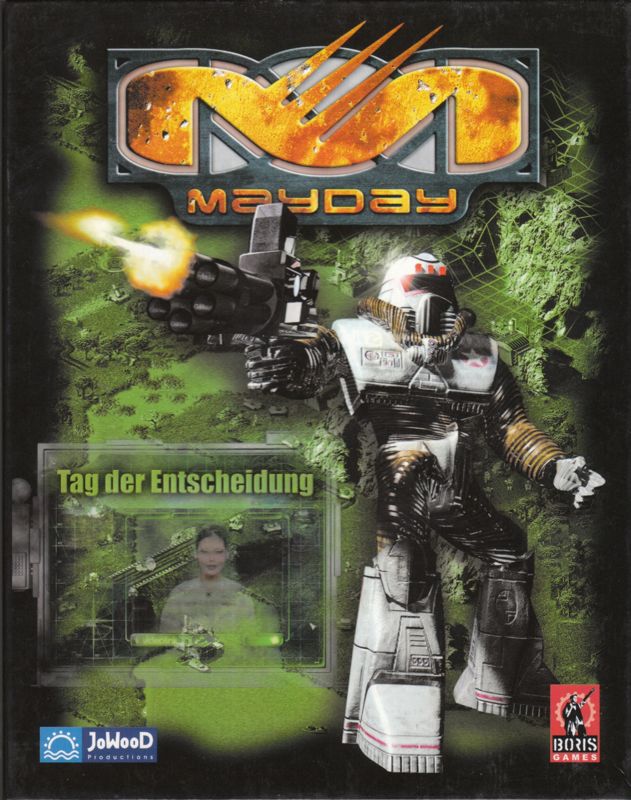
Retro Replay Review
Gameplay
Mayday: Conflict Earth throws players into high-stakes, mechanized warfare where every decision counts. Instead of traditional resource gathering, the game awards currency steadily as you complete missions, encouraging a focus on tactical precision rather than micromanaging harvesters. This streamlined approach keeps the action moving and challenges you to optimize each credit you earn on units that can tip the balance of battle.
(HEY YOU!! We hope you enjoy! We try not to run ads. So basically, this is a very expensive hobby running this site. Please consider joining us for updates, forums, and more. Network w/ us to make some cash or friends while retro gaming, and you can win some free retro games for posting. Okay, carry on 👍)
Each mission begins with a fixed roster of mechanized forces—automatized tanks, cyborg infantry, aerial drones, and more—forcing you to think carefully about positioning and unit synergy. You can’t build new structures from scratch, but you can choose where to place prebuilt bases, anti-air batteries, and forward garrisons on the map. This “pre-fab” construction system rewards careful map control and foresight, as well as the ability to adapt when an enemy thrust cuts off your supply lines.
The interface is clean and responsive, offering hotkeys for unit groups, context-sensitive commands, and a strategic overview map that lets you track multiple fronts at once. Pathfinding is solid, although tight choke points can sometimes lead to minor traffic jams if you funnel too many units through a single route. Enemy AI stays aggressive but fair, mounting coordinated attacks that demand you defend on multiple fronts and counterattack decisively to reclaim lost ground.
Multiplayer skirmishes add another layer of depth, pitting your favorite faction against human opponents with unpredictable strategies. Whether you’re exploiting the UCA’s heavy firepower, the ASF’s advanced experimental units, or the SBL’s guerrilla tactics, the balance between factions feels well-tuned. Learning each side’s strengths and weaknesses makes each match feel fresh and keeps you coming back for “just one more” showdown.
Graphics
Set in the ravaged landscapes of 2051 Earth, Mayday delivers a striking visual palette that combines scorched deserts, flooded cities, and shattered mountain passes. The level of detail on mech units is impressive—from the glint of armor plating to the intricate servo joints of cybernetic infantry. Environmental effects like dust storms, acid rain, and crumbling skyscrapers add atmosphere and remind you of the planet’s dire state.
Battle animations are smooth and impactful. Tanks roll forward with realistic suspension, while explosions create dynamic shockwaves that shake nearby structures. Weapon effects—from plasma beams to railgun slugs—are rendered with vivid lighting and particle effects, ensuring every firefight looks and feels explosive. Even small details, such as tracer rounds zipping across the battlefield or sparks flying off damaged units, amplify the immersion.
The UI overlays are sleek and modern, using translucent panels to convey information without obscuring the action. Health bars, resource counters, and minimaps sit neatly at the screen edges, while unit portraits and command menus pop up only when you select squads or issue orders. The result is a HUD that feels futuristic yet unobtrusive, letting you stay focused on strategy rather than interface clutter.
Loading screens feature concept art and lore snippets, reinforcing the global conflict’s scale. Cutscenes use a mix of in-engine graphics and pre-rendered sequences to advance the story, and while they occasionally dip in frame rate during cityscape flyovers, they still manage to convey the desperation and high stakes of the war. Overall, the graphical presentation elevates the game’s sci-fi setting into a believable, lived-in future.
Story
By 2051, Earth’s relentless resource consumption has sparked natural disasters and triggered a full-scale war. Mayday: Conflict Earth centers on this fractured world, where three superpowers—the tech-dominant UCA, the scientifically driven ASF, and the covert SBL—battle for scarce remaining assets. Meanwhile, a wary Europe tries to stay neutral, torn between humanitarian relief and the temptation to pick a side.
The single-player campaign weaves interlocking narratives for each faction. Playing as the UCA, you’ll execute precision strikes with heavy armored divisions; with the ASF, you’ll test cutting-edge prototypes; and for the SBL, you’ll employ hit-and-run tactics that exploit enemy blind spots. Each perspective reveals new facets of the overall conflict, giving you a sense of how desperation and ideology drive every commander’s choices.
Cinematic briefings set the tone for each mission, offering character dialogue and moral quandaries that go beyond simple “destroy the base” objectives. Ethical decisions—such as rescuing a civilian convoy at the risk of losing reinforcements—inject emotional weight into the strategy. While the storyline occasionally leans on familiar tropes of corporate greed and militarized science, the three-faction structure and shifting alliances keep the plot engaging throughout.
Secondary side missions deepen the lore, introducing rebel cells, espionage operations, and world-building vignettes that flesh out the ravaged terrain. Discovering hidden data logs or intercepting enemy transmissions not only grants bonus credits but also reveals tidbits of political intrigue. This layered storytelling encourages replaying missions to uncover every angle of Earth’s last, desperate conflict.
Overall Experience
Mayday: Conflict Earth stands out among real-time strategy titles by eliminating resource harvesting and base-building micromanagement, allowing players to focus purely on tactics and battlefield control. The unique prebuilt infrastructure system, combined with faction-specific units and progressive credit rewards, creates a satisfying loop of challenge and reward with each mission.
The balance between accessibility and depth is finely tuned. Newcomers can jump in and appreciate the streamlined economy and clear objectives, while RTS veterans will enjoy mastering complex unit counters, terrain advantages, and high-level strategies in multiplayer. The three distinct factions offer varied playstyles that keep the meta lively and ensure no two battles play out the same way.
Graphically, the game does an admirable job of portraying a dystopian future with both polish and personality. From torn civic ruins to gleaming war machines, every visual element underscores the post-apocalyptic stakes. Meanwhile, the branching narrative and moral choices enrich the single-player campaign, giving it more resonance than a straightforward war sim.
Whether you’re drawn by the promise of large-scale mech warfare, the strategic purity of credit-based unit deployment, or the layered storytelling of a world on the brink, Mayday: Conflict Earth offers a compelling package. Its combination of crisp visuals, tight gameplay mechanics, and dynamic narrative ensures it will appeal to both casual strategy fans and hardened RTS commanders alike.
Reviews
There are no reviews yet.