 Retro Replay Retro Replay gaming reviews, news, emulation, geek stuff and more!
Retro Replay Review
Gameplay
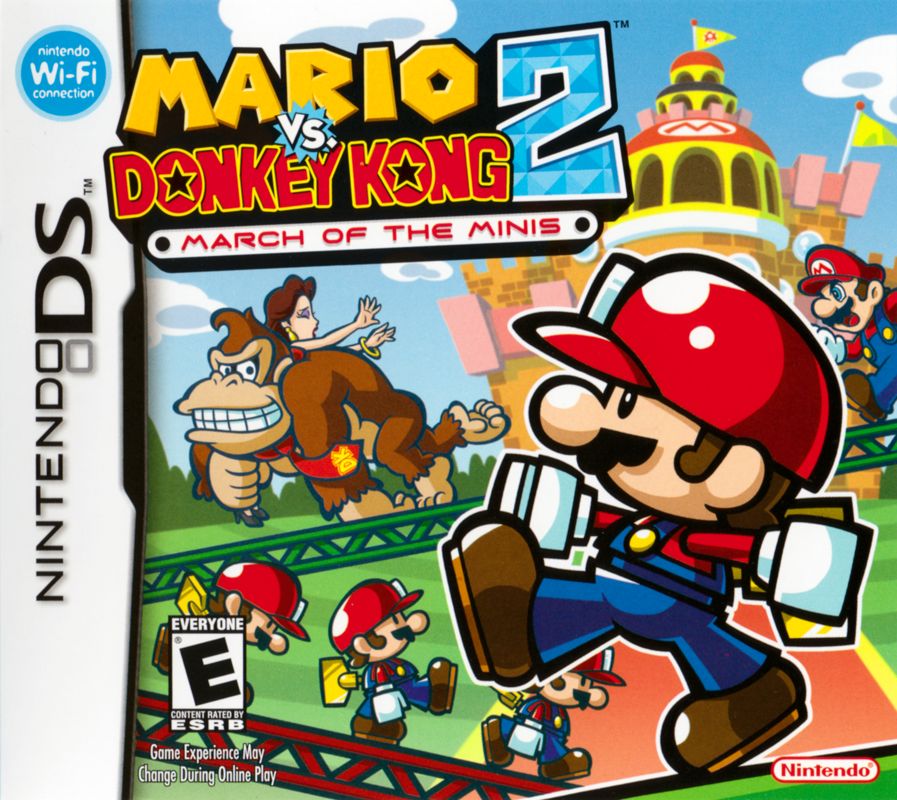
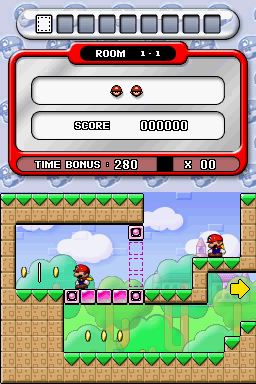
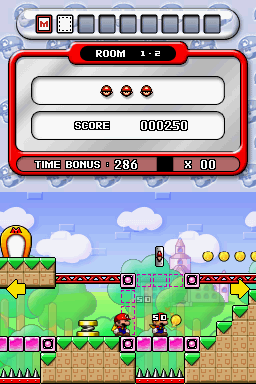
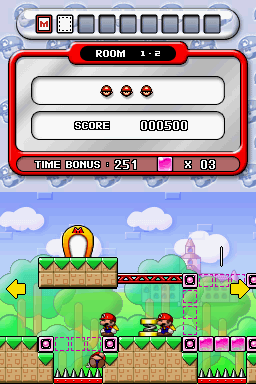
Mario vs. Donkey Kong 2: March of the Minis takes the classic tug-of-war between Mario and Donkey Kong and gives it a fresh puzzle twist. Each level tasks you with guiding multiple Mini-Marios from their starting points to a singular exit door. Your only tool is the stylus, and you’ll instantly appreciate the intuitive drag-and-drop controls: draw bridges, activate switches, and tilt platforms with fingertip precision. This purely touch-based approach is a natural fit for the Nintendo DS, making every movement feel tactile and responsive.
(HEY YOU!! We hope you enjoy! We try not to run ads. So basically, this is a very expensive hobby running this site. Please consider joining us for updates, forums, and more. Network w/ us to make some cash or friends while retro gaming, and you can win some free retro games for posting. Okay, carry on 👍)
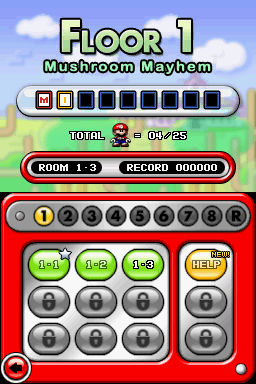
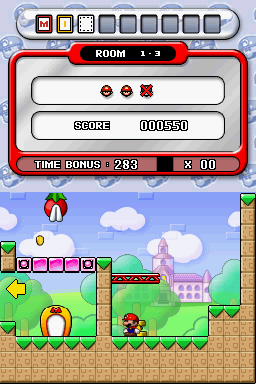
The game’s puzzles vary in complexity and size, ranging from compact one-screen challenges to larger 2×2 screen labyrinths. Early stages focus on basic obstacles—simple button presses and straightforward pathways—allowing you to get comfortable with the stylus mechanics. As you progress, however, the introduction of conveyor belts, lasers, springboards, and timed doors raises the stakes. You’ll often find yourself juggling multiple Mini-Marios, planning routes in advance to avoid traps and ensure none of them are left behind.
At the end of each world, a unique boss battle against Donkey Kong awaits. All the Mini-Marios you’ve successfully guided through the world become your “ammunition” in a simple yet satisfying slapstick showdown. Flinging dozens of tiny Marios at Donkey Kong’s barrel-throwing antics injects an extra layer of fun, while rewarding careful play throughout the puzzles. This cyclical structure—puzzle rooms leading to a boss—gives each world a sense of crescendo, balancing cerebral challenges with action-oriented payoffs.
Beyond the built-in levels, the robust level editor significantly extends the game’s longevity. You can design custom puzzles using all the same hazards and gadgets found in the main campaign, then test your own creations instantly. Local wireless sharing makes it easy to swap stages with friends, and for those with Wi-Fi Connection, uploading your levels to the global community dramatically broadens the pool of fresh content. This social layer transforms March of the Minis from a finite puzzle gauntlet into a living, player-driven experience.
Graphics
Visually, March of the Minis embraces a bright, cartoon-inspired aesthetic that perfectly suits the DS’s capabilities. The character sprites are crisp and expressive; the Mini-Marios’ tiny animations—running, tripping, and cheering—add delightful personality to otherwise static puzzles. Backgrounds are colorful and varied, ranging from rustic jungle themes to clockwork factories, each rendered with clean lines and a pleasing pastel palette.
Level elements such as platforms, switches, and hazards are easily distinguishable on the small screens, ensuring gameplay remains clear even in hectic moments. Transitions between screens are smooth, with subtle parallax scrolling conveying a sense of depth. Animations for elements like conveyor belts and spinning gears are fluid, making it simple to anticipate their patterns and plan accordingly.
Boss arenas continue the visual flair, featuring slightly more elaborate set pieces and playful animations. Donkey Kong’s over-the-top expressions when he’s hit by a volley of Mini-Marios are comical and reward your in-game efforts with eye-catching splashes of color. While the DS hardware limits environmental detail compared to home consoles, the art direction here turns those restrictions into a cohesive, charming style.
Additionally, the level editor interface maintains the same graphical clarity, with neatly designed icons and a straightforward palette picker. Building a stage feels as visually coherent as playing one, ensuring that your custom puzzles look and play as seamlessly as the developer-built ones. Even novice designers can appreciate the consistent aesthetic, making creativity feel accessible rather than daunting.
Story
Though March of the Minis is primarily puzzle-driven, it still weaves a lighthearted narrative into its levels. The premise is classic Mario fare: Donkey Kong has pilfered Mario’s Mini-Mario toys, and the plumber must send his tiny replicas through perilous gauntlets to retrieve them. This simple setup provides ample motivation for each puzzle without bogging down the pace with lengthy cutscenes or dialogue.
The world progression—from vibrant toy factories to shadowy clockwork levels—conveys a subtle sense of adventure. Each environment reflects Donkey Kong’s mischievous influence, whether it’s bursting through stacks of barrels or navigating an industrial playland. Brief interludes between worlds feature playful dialogue bubbles and expressive character portraits, adding just enough charm to remind you of the Mushroom Kingdom’s personality.
Boss battles punctuate the journey with a whimsical showdown that ties the story and gameplay neatly together. By turning rescued Mini-Marios into projectiles, the game humorously underscores its toy-centric theme. Donkey Kong’s reactions—ranging from surprised to exasperated—give narrative weight to each victory, making you feel like you’re truly disrupting his scheme rather than merely clearing another puzzle.
While the plot isn’t particularly deep, its simplicity is arguably a strength here. The focus remains firmly on the puzzles, and the story beats serve as light seasoning rather than an overbearing main course. For players seeking a rich narrative experience, March of the Minis won’t redefine video game storytelling, but for those who enjoy a playful backdrop to their brain teasers, the game’s narrative charm hits the mark.
Overall Experience
Mario vs. Donkey Kong 2: March of the Minis stands out as one of the most engaging puzzle experiences on the Nintendo DS. Its purely stylus-driven mechanics feel fresh and intuitive, offering satisfying problem-solving without the frustration of imprecise controls. The blend of compact brain-teasers with larger multi-screen challenges keeps the pacing brisk, ensuring you’re rarely stuck in one spot for too long.
The inclusion of boss battles adds a dose of action and humor, preventing the game from feeling like a one-note puzzle title. Flinging Mini-Marios at Donkey Kong provides a goofy payoff that complements the cerebral core of the experience. Meanwhile, the level editor and online sharing features inject near-infinite replay value, transforming the game into a quasi-platform for community creativity.
Whether you’re a seasoned puzzle enthusiast or a casual gamer looking for bite-sized challenges, March of the Minis offers accessible difficulty that scales gracefully. Early stages ease you in, while later worlds demand careful planning and quick stylus work. Optional time-attack and move-count objectives give completionists additional goals, keeping you engaged long after the main campaign wraps up.
In summary, Mario vs. Donkey Kong 2: March of the Minis is a triumph of design, marrying clever puzzles with charming visuals and playful presentation. Its innovative use of the DS touchscreen sets it apart from other puzzle games of its era, and the robust level-creation tools ensure that the fun never truly ends. For anyone seeking an entertaining, portable puzzle adventure, March of the Minis is an absolute must-have.


Reviews
There are no reviews yet.