 Retro Replay Retro Replay gaming reviews, news, emulation, geek stuff and more!

Retro Replay Review
Gameplay
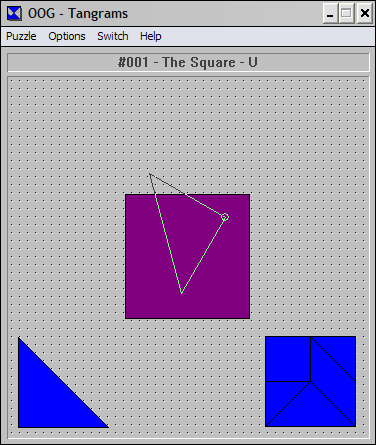
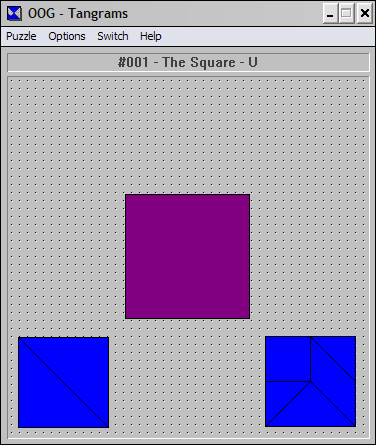
OOG: The Object Orientation Game takes the core appeal of the traditional Tangram puzzle and elevates it with an intuitive drag-and-drop interface. Players are given a set of geometric shapes—a square, a parallelogram, and five differently sized triangles—to replicate target silhouettes ranging from simple polygons to complex animal profiles. The controls are responsive: rotating, flipping, and snapping pieces into place feels natural, making even intricate configurations satisfying to assemble.
(HEY YOU!! We hope you enjoy! We try not to run ads. So basically, this is a very expensive hobby running this site. Please consider joining us for updates, forums, and more. Network w/ us to make some cash or friends while retro gaming, and you can win some free retro games for posting. Okay, carry on 👍)
What truly sets the gameplay apart is its depth and versatility. Beyond the dozen or so pre-made challenges, you can design and save your own goal shapes, turning OOG into a platform for limitless creativity. Whether you’re piecing together classic Tangram patterns or inventing abstract designs of your own, the freedom to customize difficulty and experiment with composition ensures that the game never grows stale.
For those who find themselves stuck on a particularly fiendish layout, the built-in hint system is a godsend. Simply select a piece and ask the program to place it correctly, then continue from there. This learning-friendly approach reduces frustration without diluting the sense of achievement when you finally complete a puzzle under your own steam.
Graphics
Graphically, OOG opts for a clean and minimalist aesthetic that keeps the focus firmly on the puzzle itself. Shapes are rendered crisply, with vibrant color palettes that make each piece stand out against the neutral background. The polygons slide smoothly across the board, and subtle shadowing provides visual depth, helping you gauge piece alignment at a glance.
The user interface is thoughtfully laid out: toolbars for selecting shapes, adjusting rotation, and invoking hints are logically positioned, reducing visual clutter. Translucent outlines appear when you hover over target areas, guiding placement without intruding on the challenge. Even on smaller screens, the design scales gracefully, ensuring no loss of fidelity in the graphics.
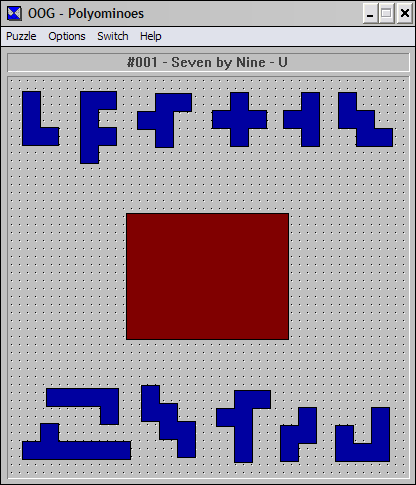
Beyond the standard Tangram set, the additional shape packs—pentominoes, polyominoes, and hexagons—are each given their own distinct look. This visual variety keeps the experience fresh as you progress from simple triangles to six-sided wonderlands. The result is a steady visual reward that complements the steadily increasing puzzle complexity.
Story
OOG may not boast a traditional narrative with characters and plot twists, but it tells a different kind of story—one of geometric discovery and cultural homage. By reimagining the centuries-old Chinese Tangram tradition, the game invites you to engage with a historical puzzle form in a modern digital context. Each completed shape feels like a page turned in a shared history book of geometry and art.
As you move through the various built-in challenges, a subtle progression emerges. Early levels introduce you to the foundational shapes and simple silhouettes, while later stages weave in more complex outlines that challenge your spatial reasoning. This quiet escalation of difficulty creates a sense of journey without the trappings of a standard video game plot.
For puzzle enthusiasts, the “story” is written in the lines and angles you trace, and in the incremental mastery you gain over time. The satisfaction of conquering a particularly troublesome design resonates far more personally than any scripted storyline might, forging a narrative of perseverance and ingenuity.
Overall Experience
OOG: The Object Orientation Game delivers an exceptionally polished puzzle experience that will appeal to novices and seasoned Tangram fans alike. Its blend of traditional shapes, creative freedom, and thoughtfully integrated hint mechanics strikes a near-perfect balance between challenge and accessibility. You’ll find yourself returning to the game not out of obligation, but because the puzzles are genuinely compelling.
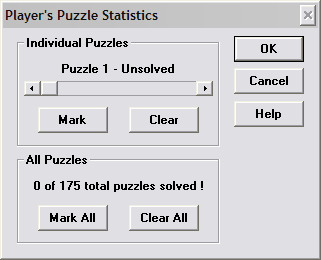
Moreover, the ability to track separate statistics for multiple players makes OOG an ideal addition to a family computer or shared workstation. Competitive spirits can compare completion times and hint usage, while casual solvers can focus on personal bests. This social dimension adds replay value and encourages collaborative problem-solving sessions.
Whether you’re seeking a mentally stimulating pastime, a respectful nod to an ancient puzzle craft, or simply a beautifully executed software implementation, OOG delivers on all fronts. Clean visuals, satisfying mechanics, and limitless customizability combine to create a puzzle game that stands the test of time—and one that you won’t want to set aside until you’ve conquered every challenging silhouette.

Reviews
There are no reviews yet.