 Retro Replay Retro Replay gaming reviews, news, emulation, geek stuff and more!
Retro Replay Review
Gameplay
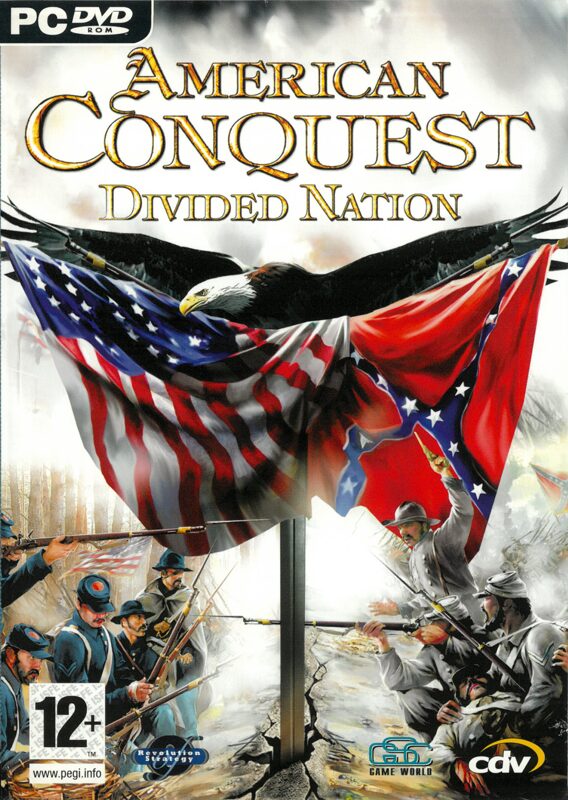
American Conquest: Divided Nation sticks closely to the classic real-time strategy formula, tasking you with gathering key resources—wood, grain, coal, and gold—to erect buildings, train units, and field an army. Most missions require you to mine, chop, and harvest your way to superiority while expanding your base and upgrading your barracks, stables, and foundries. The familiar loop of “collect, build, attack” will resonate with veteran RTS players, but the addition of specialized resource chains (for instance, turning coal into iron for advanced artillery) adds an extra layer of logistical planning.
(HEY YOU!! We hope you enjoy! We try not to run ads. So basically, this is a very expensive hobby running this site. Please consider joining us for updates, forums, and more. Network w/ us to make some cash or friends while retro gaming, and you can win some free retro games for posting. Okay, carry on 👍)
Where the game really shines is in its diverse campaign structure. Across nine historical campaigns, resource gathering and base-building sometimes give way to pure battlefield scenarios. In these encounters, you’re dropped onto the map with a fixed force and only a tent camp, canteen, and headquarters to anchor your defences. This design choice shifts the focus squarely onto tactical maneuvering—flanking enemy lines, timing cavalry charges, and massing cannon fire—rather than economic dominance.
Divided Nation offers four distinct playable factions—the Confederacy, the Union, Mexico, and the Republic of Texas—each with unique unit rosters and slightly different tech trees. While they all field infantry, cavalry, artillery, and maritime forces, special units like Confederate sharpshooters or Mexican lancers inject flavor into each side. These subtle asymmetries encourage multiple playthroughs as you adapt your strategy to each nation’s strengths and weaknesses.
Graphics
Visually, Divided Nation employs a classic isometric perspective, marrying hand-drawn 2D sprites with subtle 3D terrain effects. Unit animations—gold rushers swinging axes, cavalry galloping, and cannons firing black powder volleys—feel weighty and authentic, even if they lack the polish of modern high-poly models. The battlefield ground, dotted with trees, fences, and waterways, reacts dynamically to damage, lending a lived-in quality to each skirmish.
The color palette evokes the dusty, smoke-filled fields of the American Civil War, with muted browns, grays, and blues that distinguish uniforms and landscape features. Weather effects—rain, snow, and fog—occasionally sweep across maps, impacting visibility and adding dramatic tension. While these effects are fairly rudimentary by today’s standards, they still serve to break the monotony of endless summer plains.
The user interface is straightforward and responsive. Unit icons are clear, build menus are logically organized by category, and the minimap provides a crisp overview of frontline movements. Zooming and panning feel smooth, allowing you to scout wide areas for enemy ambushes or cluster troops for a decisive push. Although not flashy, the presentation prioritizes readability, ensuring that you stay focused on strategy rather than wrestling with menus.
Story
Divided Nation’s narrative unfolds across nine campaigns that span the length and breadth of the Civil War era, from early Confederate offensives to late Union sieges. Each campaign mission is prefaced with a historical vignette, setting the stage for pivotal clashes like the Siege of Vicksburg or the Atlanta Campaign. These introductions, complete with period artwork and concise text, ground your objectives in real events.
Brief in-engine cutscenes and scrolling text further immerse you in the conflict, conveying the dire stakes and human cost on both sides. While you won’t find Hollywood-style cinematics here, the dry, documentary-like delivery complements the game’s focus on strategy over spectacle. Occasionally, failing a mission will unlock “what-if” scenarios—alternative history branches that let you rewrite the past by achieving bold, non-canonical objectives.
Historical accuracy shines through in unit names, battlefield layouts, and the portrayal of 19th-century logistics. Lose conditions often simulate the consequences of supply shortages or command breakdowns, reminding you that wars are won as much by wagons and rail lines as by muskets and bayonets. For history enthusiasts, these details add weight to each decision and elevate the game beyond a simple skirmish simulator.
Overall Experience
American Conquest: Divided Nation remains a rewarding pick for devoted RTS fans and Civil War aficionados. Its blend of base-building, resource management, and pure tactics offers significant variety, and the nine campaigns provide dozens of hours of structured gameplay. Though the learning curve can be steep—especially when mastering resource chains and artillery micro—it’s ultimately satisfying to watch a well-prepared volley of cannon fire turn the tide of battle.
That said, some aspects feel dated. The AI can be predictable at times, relying on frontal assaults rather than cunning maneuvers, and certain late-game unit types blur together visually. Audio is serviceable, with period music and cannon effects, but it doesn’t quite match the immersive orchestral scores found in newer titles. Still, the core design is robust, and mod tools are available for players who want to tweak factions or add user-created maps.
In sum, if you’re looking for a historically grounded RTS that emphasizes strategic depth over flashy graphics, Divided Nation delivers. It may not win awards for innovation, but its faithful depiction of Civil War battles and the thoughtful balance between economy and tactics make it a standout title for strategy veterans and history buffs alike. Potential buyers should be prepared for a challenge, but those willing to dive in will find a richly detailed conflict to master.


Reviews
There are no reviews yet.