 Retro Replay Retro Replay gaming reviews, news, emulation, geek stuff and more!



Retro Replay Review
Gameplay
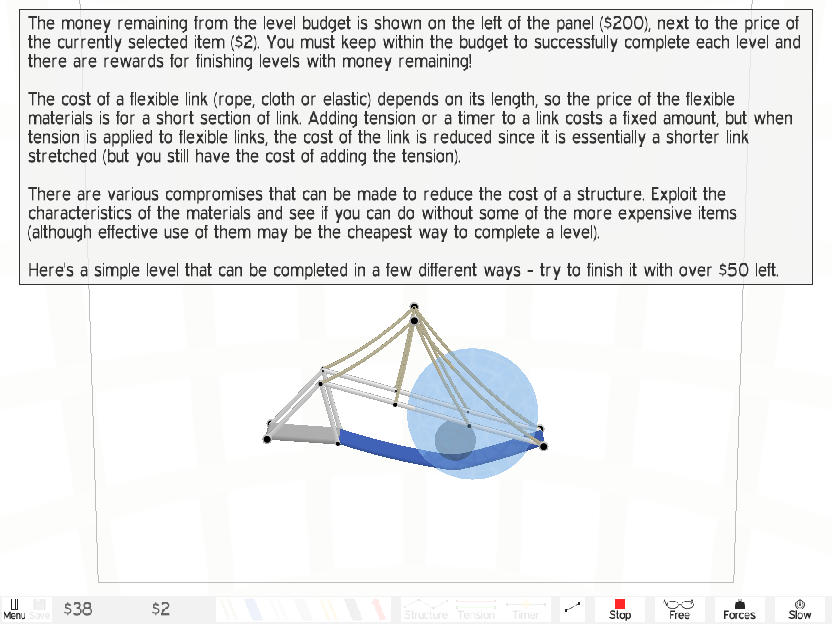
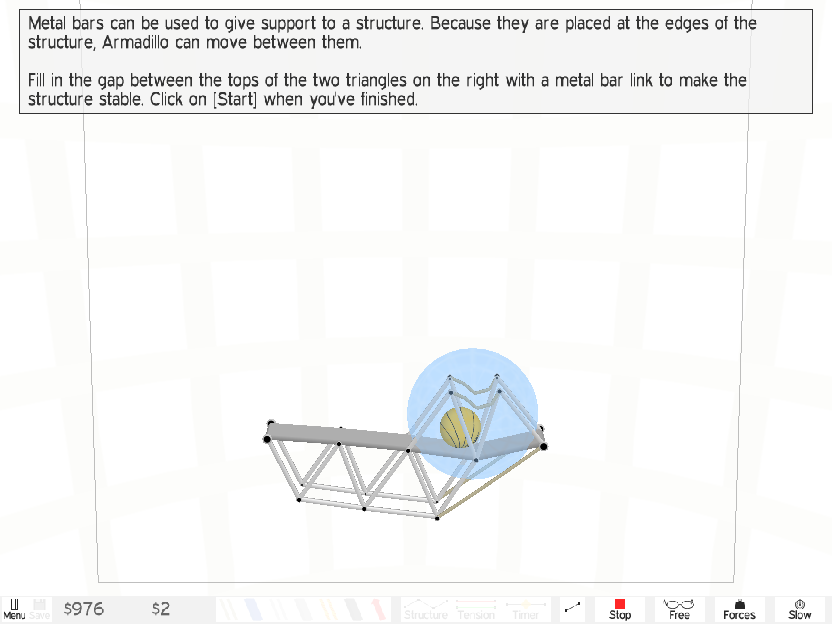
Armadillo Run delivers a deeply satisfying puzzle experience built around realistic physics and creative problem-solving. Players are tasked with guiding a simple spherical armadillo to a designated blue zone and holding it there for five seconds. Rather than moving the armadillo directly, you build structures using a finite budget of materials—rope, cloth, metal bars, metal sheets, elastic rope, rubber, and rockets—each with its own physical properties. This resource management element forces you to think strategically about weight, tensile strength, and flexibility before placing each piece.
(HEY YOU!! We hope you enjoy! We try not to run ads. So basically, this is a very expensive hobby running this site. Please consider joining us for updates, forums, and more. Network w/ us to make some cash or friends while retro gaming, and you can win some free retro games for posting. Okay, carry on 👍)
The level progression keeps the challenge fresh and engaging: you start with basic bridges and ramps, then gradually face increasingly complex obstacles such as pitfalls, rotating platforms, and moving hazards. Using the Structural mode, you design the skeleton of your contraption; Tension mode lets you pre-stress cables or struts; and Timer mode allows for self-destructing links that can propel your armadillo forward at just the right moment. Experimenting across these modes gives each puzzle multiple viable solutions, encouraging creativity and replayability.
Budget and scoring are tightly intertwined, rewarding elegant, minimalist designs. Each material has a cost, and finishing a level with leftover funds earns extra budget for future challenges. This system strikes a perfect balance: you won’t stall because of insufficient resources, but you’ll be tempted to refine and optimize to build lighter, more cost-effective structures. As you master the basics, the lure of shaving off extra pennies becomes an obsession.
For players who crave more content, Armadillo Run’s built-in level editor and thriving online community add substantial longevity. While the official game includes 50 carefully crafted levels, dozens of user-created challenges are available for free. You can download new puzzles, share your own designs, or even study complex builds to glean fresh engineering tricks. This community aspect keeps the gameplay loop alive long after you’ve mastered the core campaign.
Graphics
Visually, Armadillo Run opts for a clean, minimalist style that places function over form. Levels are rendered in simple wireframe and filled shapes, with each material highlighted in a distinctive color for quick identification. While it won’t win awards for realistic textures or high-fidelity lighting, the crisp lines and uncluttered interface ensure you always know what’s going on, which is essential for a game so reliant on precise construction.
The physics engine is the true star of the show, and the graphics serve primarily to illustrate mechanical properties. When a bridge collapses, you see individual struts buckle and cables snap in slow motion, giving a visceral sense of tension and force. This feedback loop of trial, error, and observation is incredibly satisfying—every failure teaches you something about weight distribution, load paths, or material limits.
Each level’s backdrop changes subtly to keep the visual environment from feeling stale; you might jump from a sandy desert setting to a lofty steel framework above clouds. Sound cues—metal groaning, cloth stretching, rockets firing—complement the simple visuals and enhance immersion. While the aesthetic won’t dazzle fans of photorealism, it perfectly supports the puzzle mechanics, keeping your focus on problem-solving.
Customization options in the editor extend to visual styling as well, allowing you to adjust colors or toggle grid overlays for more precise placement. This flexibility appeals to players who like to meticulously plan each joint and beam. Overall, the graphics do exactly what they need to: clarify the interactive physics environment and let your engineering creativity shine.
Story
Armadillo Run isn’t driven by narrative or characters, but it does give you a playful premise: you’re helping a brave little armadillo traverse perilous terrain to safety. The game’s charm lies in its simple concept—guiding an otherwise defenseless creature—rather than an elaborate plot. This lighthearted framing motivates you to build increasingly daring contraptions and root for your round protagonist every time it tips, tumbles, or rockets sky-high.
Each level functions as a self-contained vignette, with its own set of environmental hazards and thematic challenges. Though there’s no overarching storyline, progression feels meaningful: early puzzles teach fundamentals while later stages introduce tensioned springs, timed demolition, and high-precision balancing acts. The sense of accomplishment when you crack a difficult level is akin to completing a chapter in an episodic story—an emotional payoff that transcends the lack of dialogue or cutscenes.
Fans of experimental design will appreciate how the absence of a rigid narrative allows pure gameplay exploration. You’re free to approach each puzzle like an open sandbox rather than following a prescribed script. If you do seek a narrative reward, the game’s level editor and community-driven content sometimes include humorous or elaborate setups that hint at mini-stories, giving you chances to enjoy playful scenarios crafted by fellow players.
Overall, Armadillo Run’s “story” is minimal by design but emotionally effective: you care about that little rolling ball and cheer when your ingenious structure delivers it safely. This uncomplicated narrative focus on player creativity makes the game feel like a collaborative tale between developer, player, and physics engine.
Overall Experience
Armadillo Run stands out as one of the most inventive physics-based puzzle games of its era, combining rigorous engineering challenges with an accessible, cheerful presentation. The core gameplay loop—design, test, fail, and refine—is endlessly engaging, rewarding both methodical planning and wild experimentation. Whether you’re a casual puzzle fan or a hardcore Tetris-style builder, the balance of guidance and open-ended problem-solving will keep you hooked.
The learning curve is expertly calibrated: early levels feel approachable while later stages demand real precision and strategic material usage. The budget system adds a layer of resource management that elevates each solution from “works” to “elegant,” and community-created levels vastly expand the game’s lifespan. Between the official 50 puzzles and thousands of fan-made challenges, you’ll find fresh brain-teasers long after you’ve completed the main campaign.
While the game’s visuals and story are intentionally minimalist, they perfectly complement the mechanical focus. The uncluttered interface and clear color coding mean you spend less time hunting menus and more time building, testing, and iterating. The quirky premise of rescuing a ball-shaped armadillo gives the experience a dash of humor and heart without bogging down the action in unnecessary narrative complexity.
In sum, Armadillo Run is a triumph of design simplicity and creative depth. It proves that with a robust physics engine, a clever level progression, and a supportive community, a puzzle game can offer months of captivating play. For anyone who enjoys engineering challenges, incremental mastery, and rewarding “Eureka!” moments, this title is a must-try.



Reviews
There are no reviews yet.