 Retro Replay Retro Replay gaming reviews, news, emulation, geek stuff and more!

Retro Replay Review
Gameplay
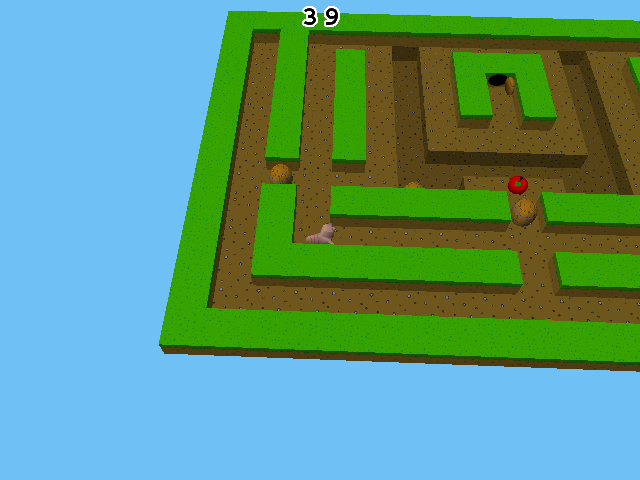
Bait offers a classic puzzle experience reminiscent of Soko-Ban, but with its own unique twists. You take control of a tiny worm who must navigate 30 intricately designed levels, each one challenging you to think several moves ahead. The core mechanic involves pushing barrels to fill holes, create bridges, or block obstacles, which forces you to plan your route carefully. Simple on the surface, these puzzles can quickly grow fiendish when multiple barrels and holes are arranged in tight spaces.
(HEY YOU!! We hope you enjoy! We try not to run ads. So basically, this is a very expensive hobby running this site. Please consider joining us for updates, forums, and more. Network w/ us to make some cash or friends while retro gaming, and you can win some free retro games for posting. Okay, carry on 👍)
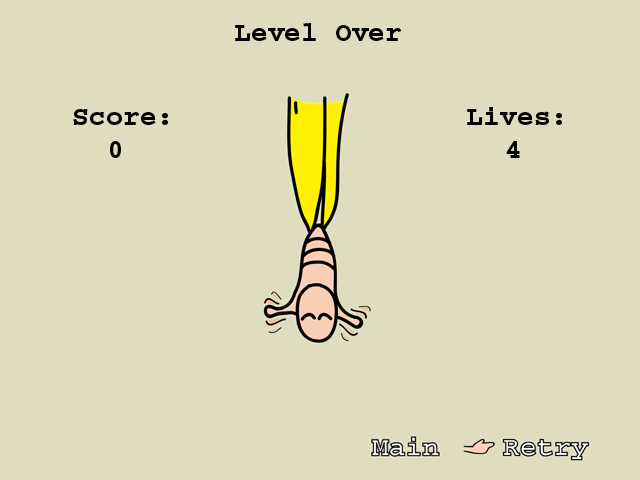
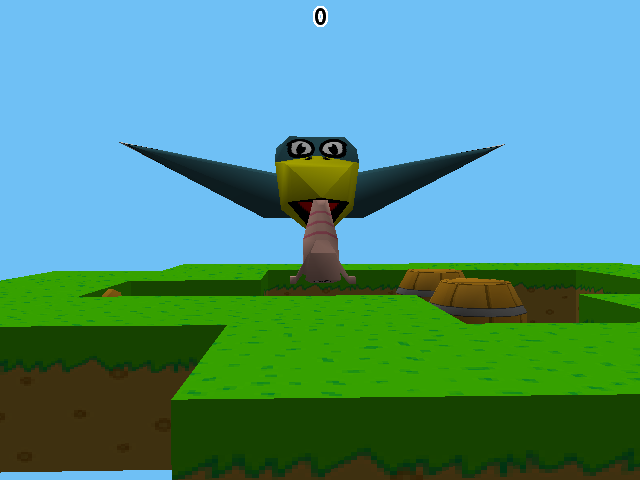
The game’s pacing is set by an ever-ticking clock, adding a layer of tension to each puzzle. Throughout a level you can collect Clocks to extend your time, but every second counts: if the timer runs out, a bird swoops in to end your adventure prematurely. This countdown turns what could be a purely cerebral exercise into a thrilling, sometimes nerve-wracking race against time. It’s a small but effective way to inject urgency without overwhelming the puzzle design.
Beyond barrels and clocks, Bait peppers its levels with Apples for bonus points and Trampolines that fling you across chasms in unexpected ways. Learning to use these tools—especially the Trampolines—becomes an exercise in trial and error. Early levels serve as a gentle tutorial, while the final set under the “hard” difficulty will test even seasoned puzzle solvers. The three-tier difficulty structure (Easy, Medium, Hard) ensures players of all skill levels can find a comfortable challenge.
Controls are straightforward: directional movement, push action for barrels, and a single button for trampoline jumps. This minimalism keeps the focus squarely on puzzle-solving rather than mastering complex input. Save points at the start of each level mean you can experiment freely, making failure feel like progress as you gradually discover the right combination of pushes and jumps to escape each field.
Graphics
Bait embraces a charming, cartoony aesthetic that immediately sets a playful tone. The worm protagonist is rendered with simple but expressive animations—wriggling, springing, and even quivering when the bird’s shadow passes overhead. Though the art style is minimalistic, vibrant color palettes distinguish each difficulty tier, with Easy levels featuring lush greens and yellows, and Hard levels drenched in deeper blues and purples.
The environments are crisp and uncluttered, ensuring every barrel, hole, apple, and trampoline stands out clearly against the terrain. This clarity is crucial in a puzzle game where one misinterpreted tile can spell failure. Subtle visual cues—such as cracked ground around holes or gleaming highlights on collectible items—help guide your eye without resorting to intrusive arrows or hotspots. For players who value readability and clean design, Bait delivers perfectly.
Animations are kept short and sweet, minimizing downtime between moves. When the worm pushes a barrel, you can nearly feel its weight; when it bounces on a trampoline, the little squash-and-stretch effect injects personality. Even the bird that comes to eat you has a comical flair, swooping in with exaggerated wings before delivering the game-over screen. While the graphics won’t win any awards for technical prowess, they excel at charm and functionality.
The user interface adheres to the same philosophy of simplicity. A small HUD in the corner shows your remaining time, bonus items collected, and current level number. Menus are intuitive, with clear icons and brief tooltips. In a genre that often demands precision, Bait’s graphical presentation strikes the perfect balance between form and function.
Story
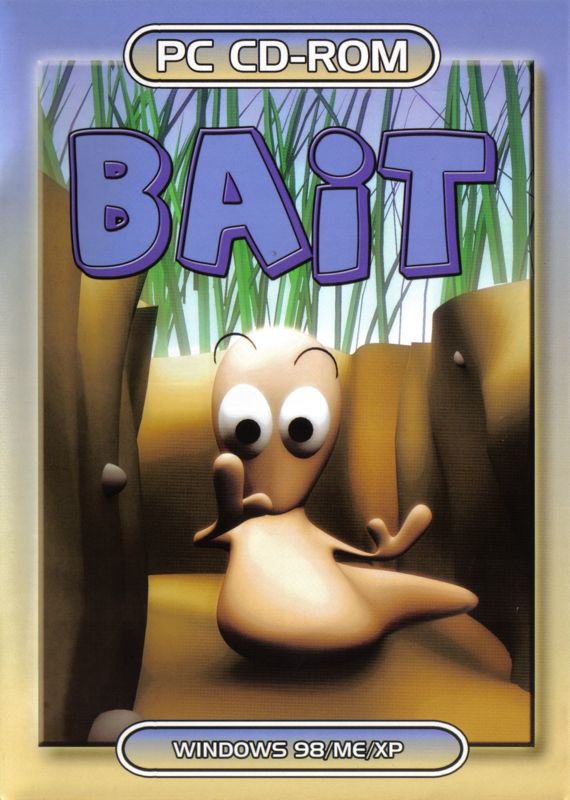
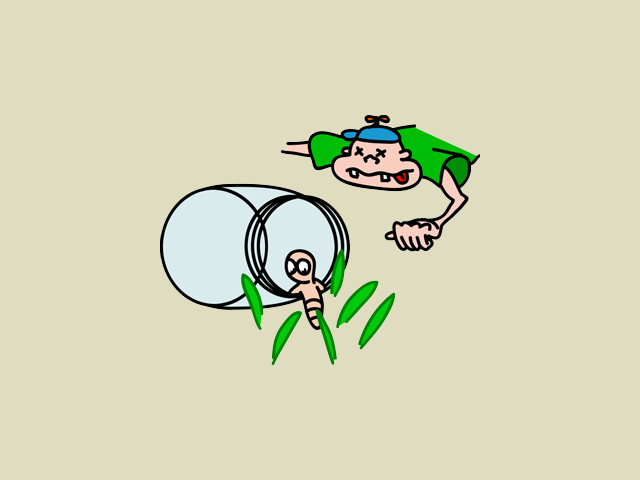
At its heart, Bait spins a delightfully absurd yarn: you are a humble worm, minding your own business, when an ugly-looking kid snatches you up as fishing bait. Before you can be skewered, the kid trips and you wriggle free, embarking on an odyssey across a sprawling field. It’s a premise so simple it borders on the absurd, but that lighthearted setup infuses every puzzle with a sense of purpose.
Story beats are delivered through brief cutscenes before and after each difficulty tier. You’ll see the worm narrowly escaping—with a flourish of cartoonish bravado—and sometimes pausing to nibble an Apple or eye a distant door. While there’s no deep narrative twist waiting at the end, the charm lies in seeing your tiny hero persevere against increasingly complex obstacles, fueled by nothing but sheer worm determination.
Environmental storytelling also plays a subtle role: scattered flower patches, small critter cameos, and background hints of the kid searching for you add a playful context to each level. The field transforms from a sunny meadow into a moonlit glade on later stages, suggesting the time spent on your escape is more extensive than you might first imagine. It’s a clever way to weave a narrative tapestry without burdening the game with heavy exposition.
Ultimately, Bait’s story is light on plot but heavy on personality. It doesn’t aim to be a narrative tour de force, but rather a charming backdrop to its engaging puzzles. If you’re seeking an emotional epic with branching storylines, you might look elsewhere—but if you appreciate wry humor and whimsical scenarios, Bait’s premise will keep you smiling from start to finish.
Overall Experience
Bait delivers a tightly focused puzzle adventure that strikes a rare balance between challenge and accessibility. The combination of time pressure, varied obstacles, and straightforward controls ensures that you’re never bored, even if you find yourself replaying a level multiple times. Each success feels earned, and each failure, while occasionally frustrating, feels like an invitation to learn.
The game’s 30 levels provide several hours of engaging play, with the three difficulty tiers acting as natural checkpoints for casual and hardcore players alike. Collecting all the Apples and finishing under the par time adds replay value for completionists, while the core puzzle path remains compelling throughout. The solo design means there’s no multiplayer distraction, allowing you to immerse yourself fully in the worm’s quest for freedom.
Sound design complements the visuals perfectly: a light, melodic soundtrack underscores the puzzles without demanding your attention, and sound effects—like the thunk of a barrel or the warp-whistle of a trampoline—provide satisfying feedback. There are no voiceovers or dramatic music cues; instead, the audio palette reinforces Bait’s modest, focused ambitions.
In the end, Bait is a polished, charming puzzle game with just enough personality to stand out in a crowded genre. Whether you’re a veteran Soko-Ban enthusiast or a newcomer seeking a lighthearted brainteaser, this little worm’s journey makes for an engaging and satisfying ride. Just watch out for that bird!


Reviews
There are no reviews yet.