 Retro Replay Retro Replay gaming reviews, news, emulation, geek stuff and more!
Retro Replay Review
Gameplay
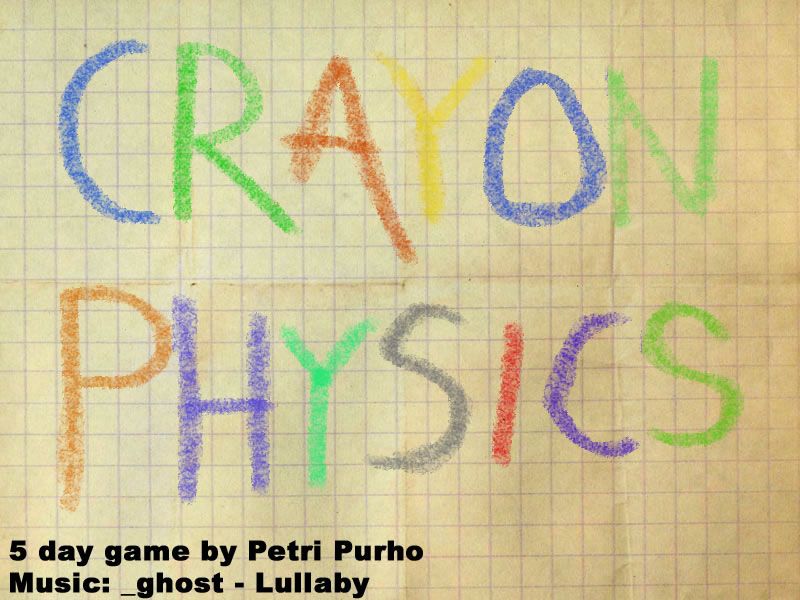
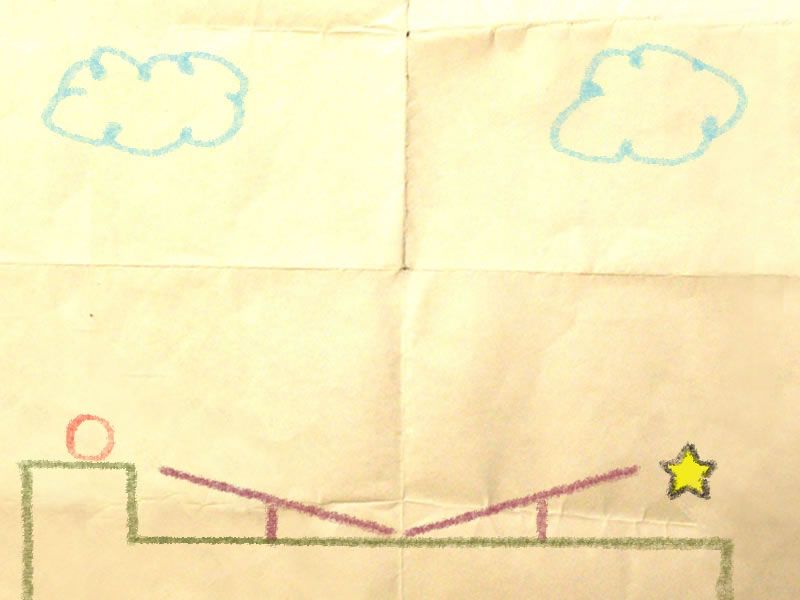
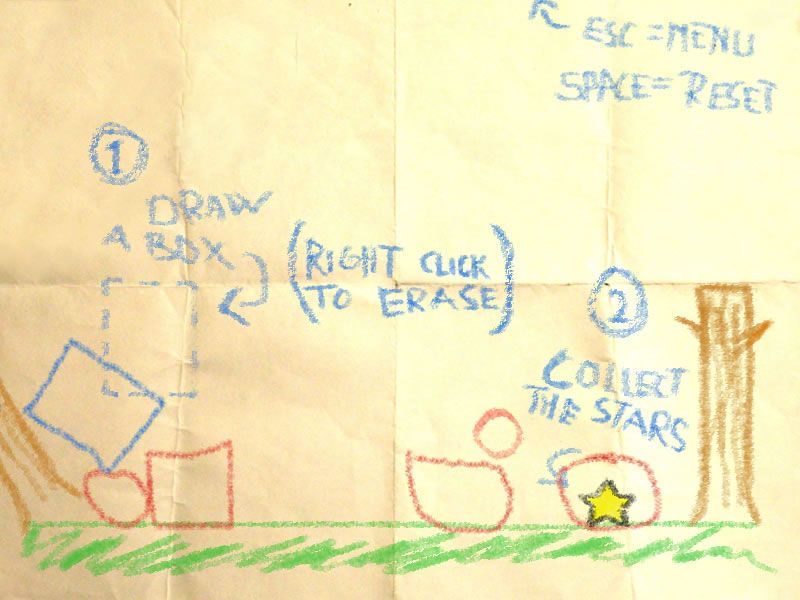
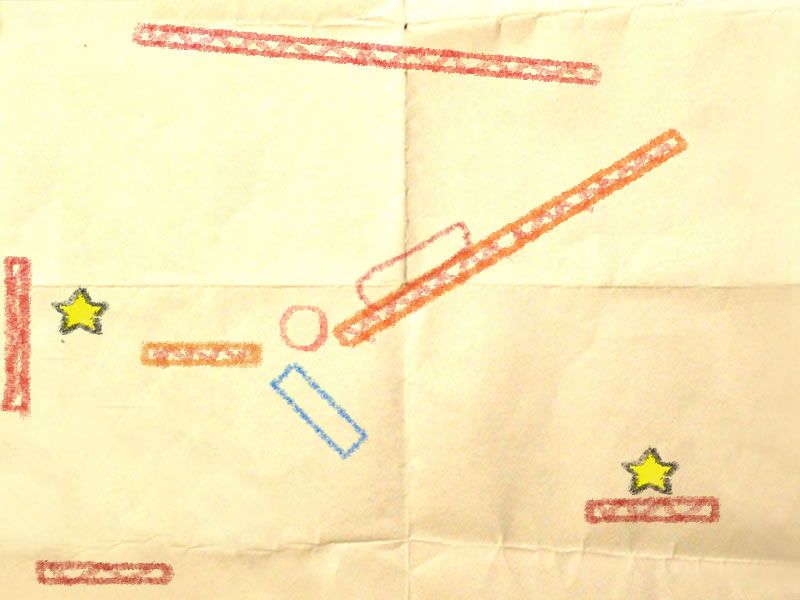
Crayon Physics delivers a refreshing twist on traditional puzzle games by putting the power of creation directly into the player’s hands. Instead of moving pre-made pieces, you use the mouse to draw physical objects—ramps, blocks, levers—on a digital “scrap paper” canvas. Each stroke behaves like real crayon wax, obeying gravity and colliding with other shapes in a delightfully tactile way. The objective is simple yet endlessly engaging: guide a red ball to touch all the stars in a level.
(HEY YOU!! We hope you enjoy! We try not to run ads. So basically, this is a very expensive hobby running this site. Please consider joining us for updates, forums, and more. Network w/ us to make some cash or friends while retro gaming, and you can win some free retro games for posting. Okay, carry on 👍)
The controls are intuitive. The left mouse button lets you draw shapes in various colors, each color representing a different element in the physics engine. Blue shapes might slide, red shapes stay rigid, and so on, depending on how you want to manipulate the ball’s path. If you make a mistake or need a fresh start, the right mouse button erases objects, and there’s a level reset option that instantly clears the board. This low-friction loop encourages experimentation, inviting you to test wacky contraptions and inventive solutions without fear of punishment.
Over the seven levels, Crayon Physics steadily ramps up the challenge by introducing new obstacles—moving platforms, floating blocks, and gravity wells that force you to rethink your drawing strategy. Early puzzles can be solved with a simple ramp; later ones demand more elaborate structures like multi-step chain reactions or precisely balanced seesaws. Each success brings a satisfying click as the ball rolls, bounces, or drops exactly where you intended, turning every completed puzzle into a miniature victory dance.
What sets Crayon Physics apart is its open-ended nature. There’s more than one way to collect the stars, and the game doesn’t punish you for unconventional designs. That freedom sparks creativity and makes each puzzle feel like a blank canvas rather than a rigid obstacle course. Whether you’re an experienced puzzler or a casual gamer, you’ll find yourself drawing, erasing, and drawing again until you discover a solution that’s as elegant as it is effective.
Graphics
The visual style of Crayon Physics is charmingly minimalistic, evoking the nostalgia of doodles on a notebook page. The entire game feels like it’s drawn with real crayons on recycled paper, complete with rough edges and faint smudge marks. This hand-drawn aesthetic isn’t just skin deep; it reinforces the core mechanic of drawing objects and gives every creation an organic, imperfect feel that digital art often lacks.
Against the textured backdrop of lined “scrap paper,” the vibrant colors of your sketches stand out beautifully. Reds, blues, greens, and yellows pop against the muted tan background, making it easy to distinguish different elements at a glance. The simple, high-contrast palette also helps new players quickly grasp which shapes will behave as rigid bodies, which will slide, and which will pivot—all vital information in a physics puzzle.
Animations are smooth and fluid despite the intentionally crude art style. When a shape you’ve drawn crashes into another, you can almost hear the soft scratch of crayon on paper. The ball itself rolls and bounces in a convincingly weighty manner, with realistic arcs and momentum. Small visual flourishes—like the shake of pencil lines when an object is under stress—add personality and feedback without overcomplicating the screen.
Story
Crayon Physics doesn’t have a traditional narrative with characters or dialogue, but it tells its story through play. Each level you complete is a new page in your personal puzzle-solving adventure, and the progression from simple ramps to complex contraptions feels like advancing through chapters in a book. The “story” emerges from how you choose to tackle each challenge, making your journey uniquely your own.
The absence of a linear plot is intentional, placing the emphasis on creativity rather than cutscenes. You’re not following a hero on a quest; you are the hero. Armed with only colorful crayons and a heap of paper, you transform raw potential into mechanical marvels. This sandbox-style approach encourages imagination, letting you spin your own mini-tales about how that hanging block became the perfect anchor for a swinging bridge.
Despite its simplicity, there is a gentle sense of progression: early puzzles teach you the mechanics, later ones test your mastery, and optional sandbox modes let you break free of constraints entirely. In this way, the game’s “narrative” is one of learning and discovery, where every failure is a lesson and every success a triumphant plot twist in your self-authored saga.
Overall Experience
Crayon Physics is a delightful marriage of simplicity and depth, where the act of drawing becomes a core gameplay loop. The intuitive controls, forgiving reset options, and open-ended puzzles create an inviting atmosphere for both casual players seeking a quick diversion and enthusiasts craving a creative outlet. Few puzzle games allow you to feel like an inventor, and even fewer do it with such playful charm.
The unique crayon aesthetic and precise physics engine combine to offer endless replayability. Once you’ve solved the main seven levels, you’ll find hours of fun tinkering in sandbox mode, drawing intricate Rube Goldberg machines or challenging friends to beat your cleverest solutions. The game’s minimal system requirements mean you can enjoy it on almost any PC, making it an accessible addition to your library.
In short, Crayon Physics is more than a puzzle game—it’s a creative toolkit wrapped in a scrapbook-style package. If you’ve ever doodled in a notebook and wondered what would happen if those sketches could move, collide, and interact in real time, this title delivers that daydream in spades. It’s a must-try for anyone who values imagination, experimentation, and the simple joy of watching a red ball roll into a star.


Reviews
There are no reviews yet.