 Retro Replay Retro Replay gaming reviews, news, emulation, geek stuff and more!




Retro Replay Review
Gameplay
Crysis delivers a dynamic first-person shooter experience centered around the revolutionary Nanosuit, a high-tech combat exoskeleton that lets you toggle between enhanced armor, strength, speed, and cloaking modes on the fly. These suit abilities encourage creative approaches to each encounter, whether you prefer stealthy infiltrations by turning invisible or all-out assaults with bullet-spraying vigor. Managing the suit’s energy reserves becomes a tactical layer, forcing you to weigh the benefits of rapid movement or temporary invulnerability against moments when you’ll need to recharge and recover.
(HEY YOU!! We hope you enjoy! We try not to run ads. So basically, this is a very expensive hobby running this site. Please consider joining us for updates, forums, and more. Network w/ us to make some cash or friends while retro gaming, and you can win some free retro games for posting. Okay, carry on 👍)
The mission structure alternates between solo excursions and brief AI-supported objectives. While most of your time is spent alone on the lush Pacific island, your squadmates pop in during key cutscenes, giving narrative context and reminding you that you’re part of a Delta Force operation. Although the AI teammates don’t accompany you through every firefight, their presence helps drive the story forward, and they’ll rejoin for larger set-piece battles against both North Korean forces and the emergent alien threat.
Weapon variety and customization play a major role in Crysis’ gameplay. From standard assault rifles and shotguns to advanced gauss guns and alien freeze-beam weapons, each gun can be equipped with attachments like silencers, laser sights, or underbarrel grenades. You can only carry a limited number of weapons, so scavenging ammo and swapping fallen enemies’ firearms becomes second nature. The game also features drivable vehicles—jeeps, tanks, patrol boats—and environmental tools like binoculars and a real-time radar, broadening the tactical options available in every sandbox map.
Graphics
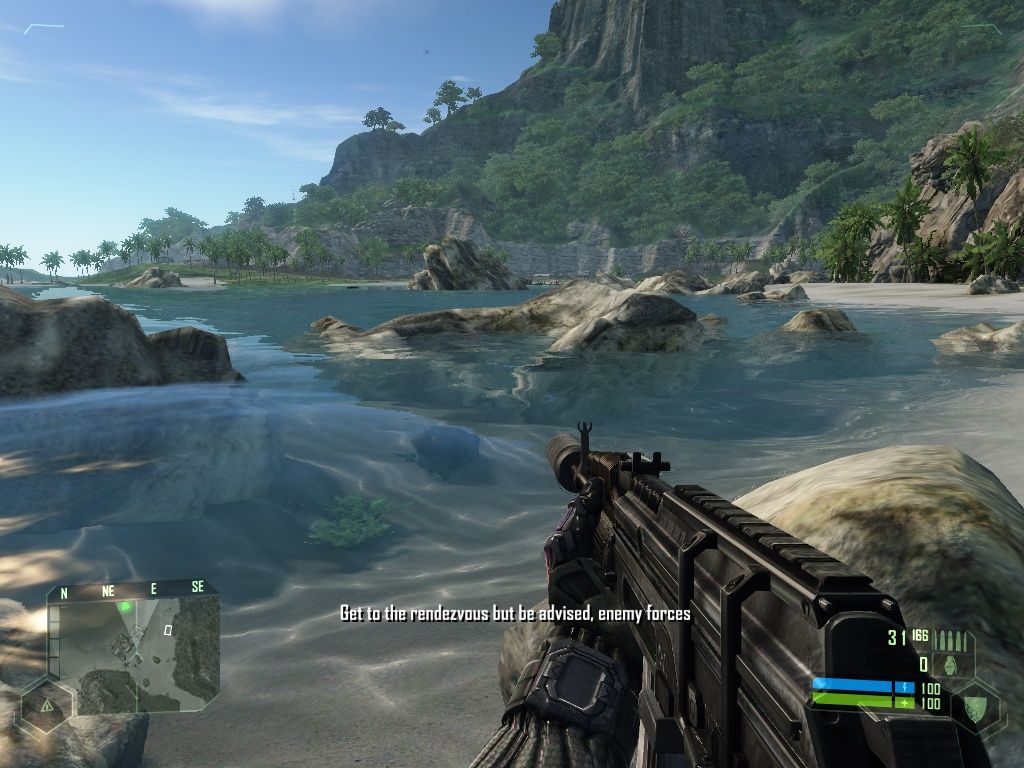
Upon release, Crysis set a new benchmark for graphical fidelity thanks to Crytek’s CryEngine 2. The tropical island is rendered in breathtaking detail, from the gently swaying palm trees and rustling undergrowth to the crystal-clear water that reflects sunlight across the shoreline. Day-night cycles and dynamic weather effects further enhance immersion, making each locale—from dense jungle to snowy alien ship interior—feel alive and unpredictable.
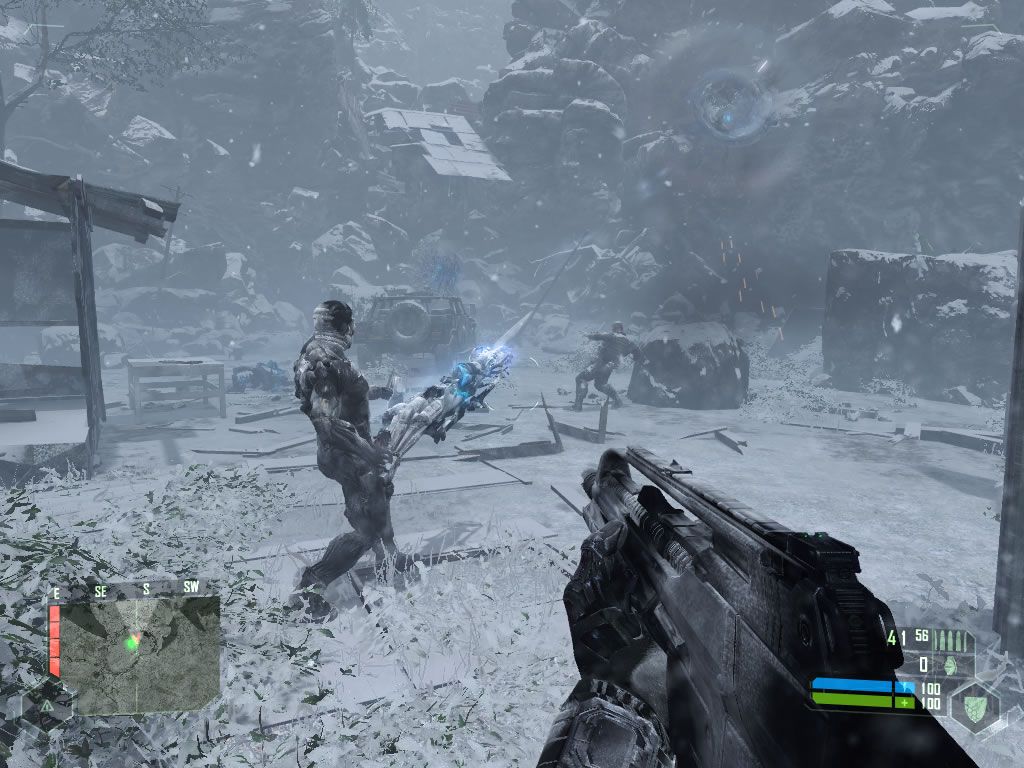
Lighting and particle effects are another highlight. Explosions illuminate nearby foliage, casting realistic shadows that dance across the terrain, while water splashes and sprays react convincingly when bullets ricochet or vehicles plow through shallow streams. The alien xenoforming process introduces icy crystalline structures that glint with phantasmal light, creating a stark contrast to the verdant island and underscoring the otherworldly menace.
Character models and textures receive meticulous attention, from the creases in Jake Dunn’s Nanosuit to the rugged uniforms of North Korean soldiers. Enemy animations—whether a trooper ducking for cover or an alien hunter lunging at you—are fluid and varied, avoiding repetitive combat routines. While Crysis remains a demanding title for its time, the payoff is an audiovisual spectacle that continues to impress even years after its debut.
Story
Set in the near future of 2020, Crysis begins as a conventional military rescue operation: a Delta Force team, led by US soldier Jake Dunn, is dispatched to a remote Pacific island to retrieve kidnapped archaeologists and investigate an excavated meteorite. The initial skirmishes against the entrenched North Korean army serve as a familiar backdrop for introducing the Nanosuit’s capabilities and establishing the game’s high-stakes tension.
The narrative takes a thrilling turn when the meteor reveals a massive alien vessel and triggers a xenoforming event that blankets parts of the island in ice. Suddenly, former enemies—the Americans and the North Koreans—must ally against a common extraterrestrial threat. This shift injects fresh energy into the campaign, transitioning from tactical guerrilla warfare to desperate survival against technologically superior alien machines.
Throughout the single-player campaign, pacing is carefully handled to balance stealthy infiltration missions, large-scale firefights, and cinematic zero-gravity sequences inside the alien ship. Short cutscenes with your AI teammates reinforce character motivations and maintain narrative momentum without overshadowing the gameplay. While the story occasionally leans on shooter tropes, the escalating intensity and unique sci-fi twist make for a memorable journey.
Overall Experience
Crysis remains a landmark title for FPS enthusiasts who value freedom, innovation, and high production values. The interplay between the open world’s sandbox design and the Nanosuit’s abilities allows for near-limitless approaches to combat scenarios—whether you moonwalk across enemy lines at superhuman speed or crouch in the underbrush, invisible and lethal. The mission variety keeps gameplay fresh from the tropical shores to the chilling interiors of an alien spacecraft.
On the flip side, the game’s steep hardware requirements at launch earned it the reputation of “Can it run Crysis?” This means that to experience its full visual glory, a more powerful PC is necessary. However, if your system can handle it, the gorgeous landscapes, dynamic weather, and detailed particle effects deliver an immersive world few shooters can match today.
Beyond its single-player campaign, Crysis offers objective-based multiplayer for up to 32 players and a robust sandbox editor for creating custom levels. While console editions lack these extras, the PC version benefits from modding communities that have kept the game alive with new maps, tweaks, and even updated visuals. For players seeking a long-lasting FPS experience that combines tactical depth, sci-fi thrills, and stunning presentation, Crysis remains an essential purchase.



Reviews
There are no reviews yet.