 Retro Replay Retro Replay gaming reviews, news, emulation, geek stuff and more!
Retro Replay Review
Gameplay
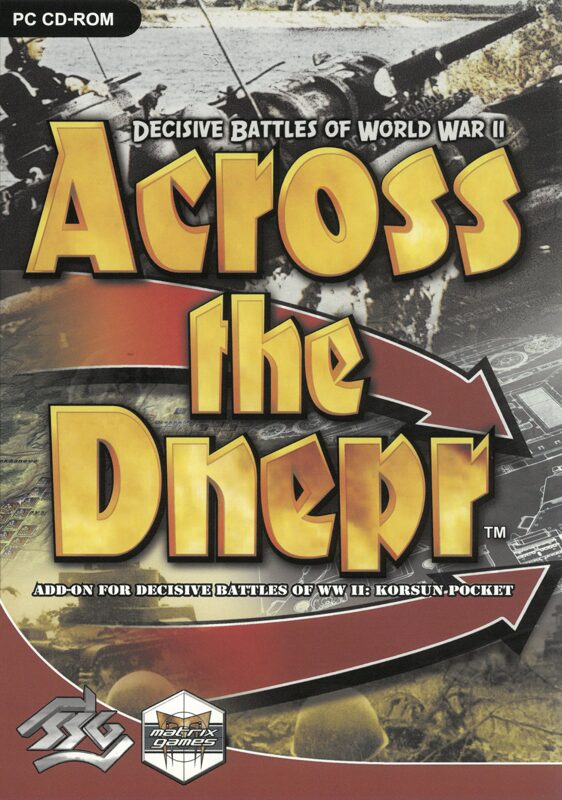
Decisive Battles of WWII: Across the Dnepr builds on the solid foundation laid by Korsun Pocket, offering a tightly focused 24-day campaign that immerses players in the ferocious clash of Operation Barbarossa. You can command either the advancing German Wehrmacht or the determined Soviet defenders as they battle for control of key river crossings and strategic towns west of Smolensk. The scenario’s day-by-day pacing ensures every decision—from supply allocation to timing of armored thrusts—carries weight.
(HEY YOU!! We hope you enjoy! We try not to run ads. So basically, this is a very expensive hobby running this site. Please consider joining us for updates, forums, and more. Network w/ us to make some cash or friends while retro gaming, and you can win some free retro games for posting. Okay, carry on 👍)
The interface retains the classic hex-based map and counter system aficionados expect, but subtle refinements make unit movement and combat resolution feel smoother than in its predecessor. Supply lines are more dynamic, forcing you to plan your offensives carefully; overextend, and your spearheads can quickly grind to a halt. The AI adapts to your tactics, reacting to breakthroughs or stubborn defenses, which keeps each playthrough fresh and challenging.
Tactical depth is a hallmark of Across the Dnepr. Combined-arms coordination becomes critical when German Panzers punch through the Soviet lines and must be supported by infantry and artillery to hold captured ground. On the Russian side, well-timed counterattacks and prepared defensive lines along the Dnepr River can blunt the enemy’s momentum. The scenario’s historical objectives—seizing river fords or stalling advances—are clearly defined, guiding both sides toward meaningful goals.
For newcomers to the series, a comprehensive tutorial and detailed in-game help screens demystify advanced mechanics like bridge demolition, air recon, and division-level command. Veterans will appreciate the nuanced improvements in stacking rules and winter attrition modeling, which add layers of realism without bogging down the flow of play. Overall, Across the Dnepr delivers a deep, historically faithful wargaming experience that rewards strategic foresight and adaptive tactics.
Graphics
The visual presentation of Across the Dnepr remains true to its hex-based wargame roots, with clear, crisply drawn maps and well-defined terrain features. Forests, towns, rivers, and rail lines stand out distinctly, ensuring that critical chokepoints and avenues of advance are instantly recognizable. The muted color palette evokes the grim atmosphere of the Eastern Front, while unit counters—adorned with period insignia—offer visual clarity when organizing your forces.
Animations are kept to a minimum, focusing instead on functional readability. Combat sequences unfold through numerical overlays and brief unit icons flashing on the map, which keeps the pace brisk without sacrificing the sense of scale. Bridge destruction and river crossings receive modest graphical flourishes that underscore their tactical importance. Though not flashy by modern standards, the graphics are more than sufficient for a game of this genre, emphasizing clarity over spectacle.
UI elements are logically arranged around the map view, with tooltips and pop-up windows delivering vital information—unit strength, combat factors, supply status—without obstructing your planning. The scenario briefing screens feature historical photographs and period maps that ground you in the setting before you launch into play. Overall, the visual design prioritizes functionality and historical immersion over high-end 3D rendering.
Performance remains rock-solid, even on modest hardware. Loading times between turns are negligible, and scrolling across the expansive 24-day campaign map is fluid. Zoom levels allow you to inspect individual unit counters or survey the entire front at a glance. In short, Across the Dnepr’s graphics do exactly what they need to: support strategic decision-making and evoke the harsh realities of the 1941 campaign.
Story
While primarily a tactical wargame, Across the Dnepr weaves a compelling narrative through its scenario structure and briefing materials. Before the first turn, you’re presented with historical context: the urgency of the German push toward Smolensk, the desperate Soviet orders to hold the Dnepr line, and the high stakes for both sides. This framing grounds every maneuver in a larger story of ambition and survival.
Each day of the campaign is prefaced by updated situation reports and annotated maps, which recapture the ebb and flow of the real Operation Barbarossa. As the German commander, you experience the exhilaration of rapid armored advances, tempered by logistical headaches and the threat of overextension. On the Soviet side, the narrative becomes one of resilience, with improvised defenses and counterstrikes reflecting the Red Army’s fight to slow the invaders.
The game’s event-driven scripting—bridge demolitions, unexpected weather shifts, or spur-of-the-moment counterattacks—injects dramatic twists that echo historical uncertainties. These moments reinforce the storyline without turning the game into a scripted affair; you remain the architect of each victory or retreat. The anthology of daily reports you generate by the campaign’s end forms a personal chronicle of decisions made under pressure.
Although there are no cinematic cutscenes, the combination of historical notes, authentic unit names, and dynamic in-game events creates a strong sense of involvement. You come away feeling as though you’ve steered key phases of the July 1941 offensive, whether as the relentless attacker or the embattled defender. It’s a narrative experience rooted in historical authenticity rather than glossy presentation.
Overall Experience
Across the Dnepr stands out as a finely tuned expansion to Korsun Pocket, delivering a standalone campaign that captures the intensity of the initial stages of Operation Barbarossa. The balance between accessibility for newcomers and depth for series veterans is impressive; streamlined interfaces and tutorials ease you in, while advanced mechanics and a challenging AI keep seasoned wargamers fully engaged.
Replayability is high, thanks to the dual German and Soviet perspectives and the dynamic nature of event triggers. Tactical approaches vary widely depending on weather, terrain, and supply constraints, making each run feel unique. Multiplayer hotseat adds another layer of competition and cooperation, allowing friends to test their strategic mettle against one another.
Minor quibbles lie in the game’s austere presentation—no voiceovers or high-end cinematics—and the learning curve for the most intricate logistics rules. However, these are small trade-offs when measured against a robust simulation that faithfully recreates one of WWII’s pivotal operations. Historical buffs and hex-and-counter enthusiasts will find plenty to admire and challenge them.
For anyone seeking a deep, historically grounded wargame that balances strategic complexity with engaging pacing, Decisive Battles of WWII: Across the Dnepr is an outstanding choice. It not only honors the legacy of its predecessor but also stands on its own as a compelling depiction of the battle for Smolensk in July 1941. Ready your staff cars and supply lines—this campaign demands your full tactical attention.


Reviews
There are no reviews yet.