 Retro Replay Retro Replay gaming reviews, news, emulation, geek stuff and more!

Retro Replay Review
Gameplay
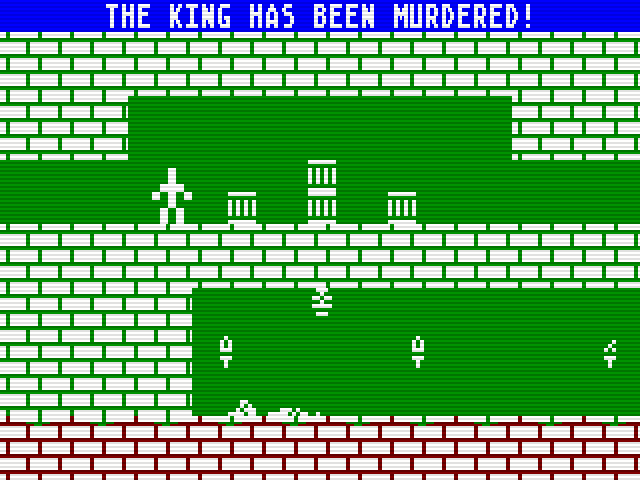
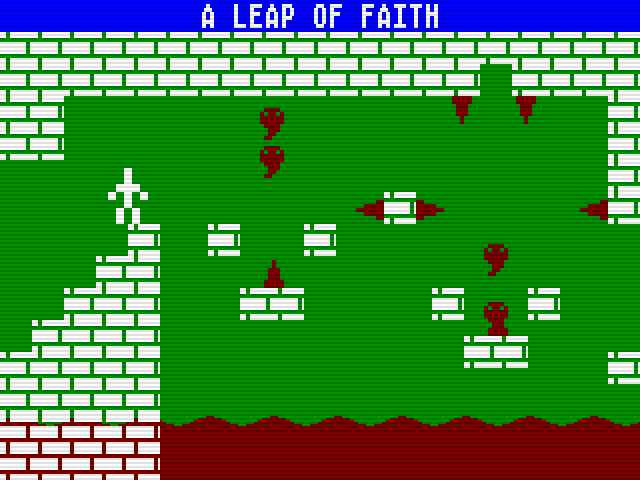
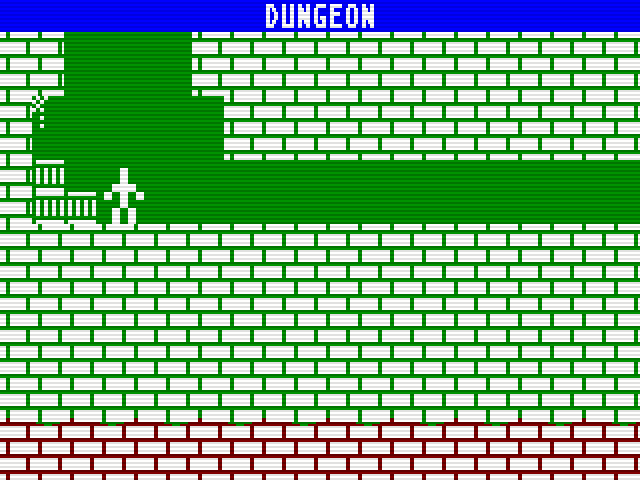
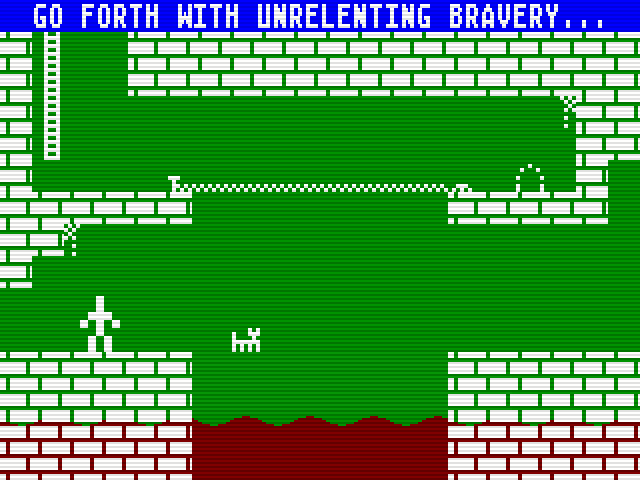
Dungeon offers classic platforming mechanics that will feel immediately familiar to veteran players. You guide a lone white-clad adventurer through a series of trap-laden corridors, timing your jumps over pits, avoiding spikes, and navigating pools of deadly water. The controls are tight and responsive, ensuring that precise leaps feel fair—even when the obstacles grow more elaborate.
(HEY YOU!! We hope you enjoy! We try not to run ads. So basically, this is a very expensive hobby running this site. Please consider joining us for updates, forums, and more. Network w/ us to make some cash or friends while retro gaming, and you can win some free retro games for posting. Okay, carry on 👍)
In its original release, Dungeon became notorious for its unpredictable “social experiment” twist. Each player’s experience could radically differ: some would breeze through levels, while others found certain rooms simply impassable or experienced the game running in slow motion. This randomness added a layer of suspense (and occasional frustration) that kept discussions lively among early adopters.
With version 2.0, the developers removed these hidden quirks and refocused on pure platforming enjoyment. Checkpoints were reintroduced, room layouts standardized, and performance stabilized. While this change sacrifices some of the game’s avant-garde mystique, it delivers a more consistent challenge that newcomers can appreciate without second-guessing whether the game itself is toying with them.
Boss-like encounters and varied enemy patterns further enrich the gameplay loop. Armored knights, dart-throwing gargoyles, and slithering dungeon creatures each demand different strategies. Coupled with collectible keys and secret pathways, Dungeon encourages replayability as you hone your reflexes and master every jump.
Graphics
Visually, Dungeon adopts a retro pixel-art aesthetic that pays homage to classic 16-bit era platformers. Dark stone walls, flickering torches, and moss-covered floors set a suitably grim atmosphere, while enemy designs remain distinct enough to telegraph their attack patterns. The art style is simple but effective, focusing on clarity over flashiness.
Character animations are smooth and expressive, with the hero’s running and jumping motions feeling polished despite the minimal color palette. Environmental hazards—such as retractable spikes and moving platforms—are animated clearly, ensuring you can anticipate dangers rather than blame the visuals for unfair surprises.
Level-to-level variety is achieved through subtle palette shifts and new background elements, preventing the dungeon from feeling monotonous. Water segments use shimmering aqua tiles, while lava zones pulse with orange-red hues. Though Dungeon doesn’t push graphical boundaries, its consistent visual language supports fast-paced play and quick readability.
On higher-end systems, options for enhanced particle effects and ambient lighting can be toggled on, adding depth without compromising the retro charm. These extras demonstrate that the developers cared about presentation, even within a deliberately old-school framework.
Story
Dungeon’s narrative framework is intentionally sparse: you are an unnamed explorer venturing into an ominous labyrinth in search of an undisclosed prize. This minimalistic storytelling leaves room for player interpretation, allowing you to project your own motivations onto the hero’s journey. Occasionally, text hints at a darker backstory—breadcrumbs suggesting past adventurers have met grim fates—but the details are left up to your imagination.
The real story behind Dungeon lies in its original design as a “social experiment.” Early versions secretly tweaked difficulty, performance, and even level names on a per-player basis, sparking debates about fairness, game design ethics, and the relationship between developers and their audience. This meta-narrative became as much a talking point as the in-game action.
Version 2.0 streamlines the meta-layer, but traces of that experiment still echo in the game’s ethos. The stripped-down presentation and straightforward challenge can feel like an homage to an era when game manuals did the storytelling while the gameplay spoke for itself. In that sense, Dungeon’s story is part gameplay and part design philosophy.
For players who enjoy uncovering developer secrets and community lore, exploring Dungeon’s patch notes and early forum reactions adds an intriguing dimension. While the in-game storytelling is minimal, there is a broader narrative about creative risk-taking and the dialogue between creators and players.
Overall Experience
Dungeon delivers a lean yet satisfying platforming experience that balances nostalgia with modern sensibilities. The removal of the original random twists in version 2.0 ensures that what you see is what you get: challenging levels, fair mechanics, and a steady progression curve. This makes it an excellent choice for those who appreciate old-school difficulty without unpredictable gimmicks.
The game’s retro graphics and tight controls will appeal to platformer purists, while the fragmented lore around its early development provides fodder for gaming communities and speedrunners. Discovering hidden passageways, mastering enemy patterns, and perfecting speed runs all offer reasons to revisit the dungeon long after the credits roll.
Though Dungeon’s story is minimal, the sense of atmosphere created by its pixel art and ambient soundtrack is strong enough to keep you engaged. Occasional spikes in difficulty provide thrilling moments of triumph, and the clear visual design ensures that failures feel like personal missteps rather than unfair level design.
In sum, Dungeon stands as a worthy addition to any platformer fan’s collection. It may not revolutionize the genre, but it refines its core elements with confidence—and a dash of historical intrigue—making for a memorable descent into labyrinthine depths.


Reviews
There are no reviews yet.