 Retro Replay Retro Replay gaming reviews, news, emulation, geek stuff and more!



Retro Replay Review
Gameplay
Edmund’s gameplay is deceptively simple on the surface, yet it carries a weighty emotional impact. Players alternate control between Eddie (Edmund) and Michael, each character offering distinct strengths and vulnerabilities. Movement is confined to basic platforming—run, jump, and crouch—while a single button handles shooting and another prompts context-sensitive actions like opening doors or interacting with objects.
(HEY YOU!! We hope you enjoy! We try not to run ads. So basically, this is a very expensive hobby running this site. Please consider joining us for updates, forums, and more. Network w/ us to make some cash or friends while retro gaming, and you can win some free retro games for posting. Okay, carry on 👍)
Despite its brevity, the game introduces morally charged decision points that force you to weigh survival against conscience. These moments occur at key junctures and lead to one of several endings, giving your choices real narrative consequence. The decisions themselves are seldom easy: sparing an enemy might compromise your safety, whereas ruthless action can haunt your psyche.
The level design is split into two contrasting chapters. The first chapter takes place in war-torn jungles of Vietnam, with narrow ledges, sniper perches, and hidden traps. The second chapter unfolds in a modern urban sprawl, where tight corridors, neon-lit alleys, and office blocks replace mud and foliage. Though only two levels long, each is densely packed with combat encounters, environmental hazards, and branching paths that encourage exploration.
Controls feel weighty and purposeful. There’s no heavy combo system or elaborate skill tree—just the bare essentials needed to convey a soldier’s grim experience. In moments of combat, Eddie’s weapon sway and Michael’s hastier reload animations reinforce their differing backgrounds: one hardened by war, the other thrust into danger. This simplicity keeps the focus firmly on the narrative stakes rather than on mastering complex mechanics.
Graphics
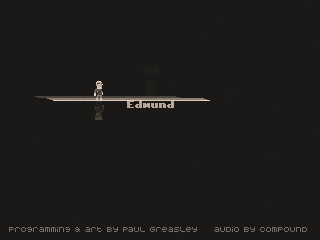
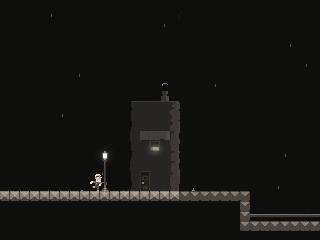
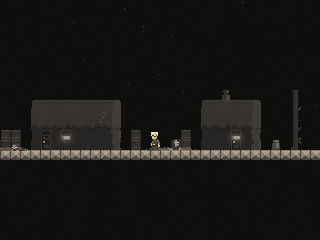
Edmund eschews vibrant color for a desaturated, gritty palette that underscores the game’s adult themes. Greens, browns, and greys dominate the Vietnam sequences, bleeding into the steel blues and harsh whites of the city levels. Subtle film-grain effects and flickering light sources lend a documentary-like realism to each scene.
Character sprites are deliberately rough around the edges, with jagged outlines and muted facial expressions that convey exhaustion and trauma. Background details—burned-out vehicles, dilapidated buildings, barbed wire fences—are sketched in broad strokes yet remain remarkably evocative. Textures often blur at the periphery, drawing your eye toward the more polished central animations.
Violent and disturbing imagery is presented without sugarcoating. Scenes of explicit violence and implied sexual abuse (non-consensual acts are suggested rather than graphically depicted) create a confrontational atmosphere reminiscent of harsh arthouse cinema. Players seeking a polished, colorful platformer may find the visuals unsettling, but those in search of a raw, unfiltered aesthetic will appreciate the bold artistic vision.
Lighting plays a crucial role in building tension. Bright daylight in the jungle chapter gives way to long shadows as dusk falls, while neon signs in the city cast erratic glows that mask lurking threats. This dynamic use of light and shadow keeps each environment feeling alive, even as you grapple with the unsettling subject matter.
Story
At its core, Edmund is a tale of trauma, guilt, and redemption. The first half thrusts you into Eddie’s memories as a Vietnam veteran who witnesses—and at times participates in—atrocities of war. These flashbacks aren’t mere set dressing; they shape your understanding of Eddie’s fractured psyche and the burdens he carries into civilian life.
The narrative pivots in the second half to a modern cityscape, where Eddie’s old wounds manifest as flashbacks and hallucinations. Here you control Michael, a foil to Eddie’s battle-hardened persona. Michael’s journey through corporate offices and back alleys reveals the ripple effects of Eddie’s past actions on the present day, tying the two timelines together in a haunting payoff.
Nonlinear storytelling elements and environmental clues encourage players to piece together the full picture themselves. There’s no hand-holding via wall-of-text lore dumps; instead, fragments of dialogue, newspaper clippings, and visual motifs hint at deeper connections. Moral choice moments are woven into the plot, forcing you to confront uncomfortable questions about justice, forgiveness, and the cycle of violence.
Despite its short runtime, the story lands with surprising emotional heft. It doesn’t gloss over the horror of its subject matter, nor does it offer easy answers. Some players may find the themes too heavy, but for those willing to engage, Edmund delivers a memorable, thought-provoking narrative experience.
Overall Experience
Edmund is not a game for casual play or lighthearted entertainment. Its confrontational themes and minimalist mechanics are designed to provoke reflection rather than offer escapism. Clocking in at under an hour for most playthroughs, it feels more like an interactive short film than a traditional platformer.
Replayability centers on the moral branching paths. A second or third playthrough reveals alternate decisions and hidden details, reinforcing how small choices can dramatically alter outcomes. Though the core gameplay loop remains the same, revisiting the game with different intentions lends fresh perspective to its mature themes.
The audio design complements the visuals and narrative perfectly. Sparse ambient sounds—wind rustling through trees, distant gunfire, city traffic—are punctuated by an ominous score that swells during moments of crisis. Voice snippets and radio chatter deepen immersion without overwhelming the sparse dialogue that does appear.
For players seeking a brief but impactful experience that tackles adult subject matter head-on, Edmund offers a uniquely challenging platforming journey. While its graphic depictions of violence and implied sexual abuse may deter some, the game’s unflinching approach and narrative ambition make it a standout entry in the edutainment niche. It’s a tough but rewarding experience that lingers long after the credits roll.



Reviews
There are no reviews yet.